
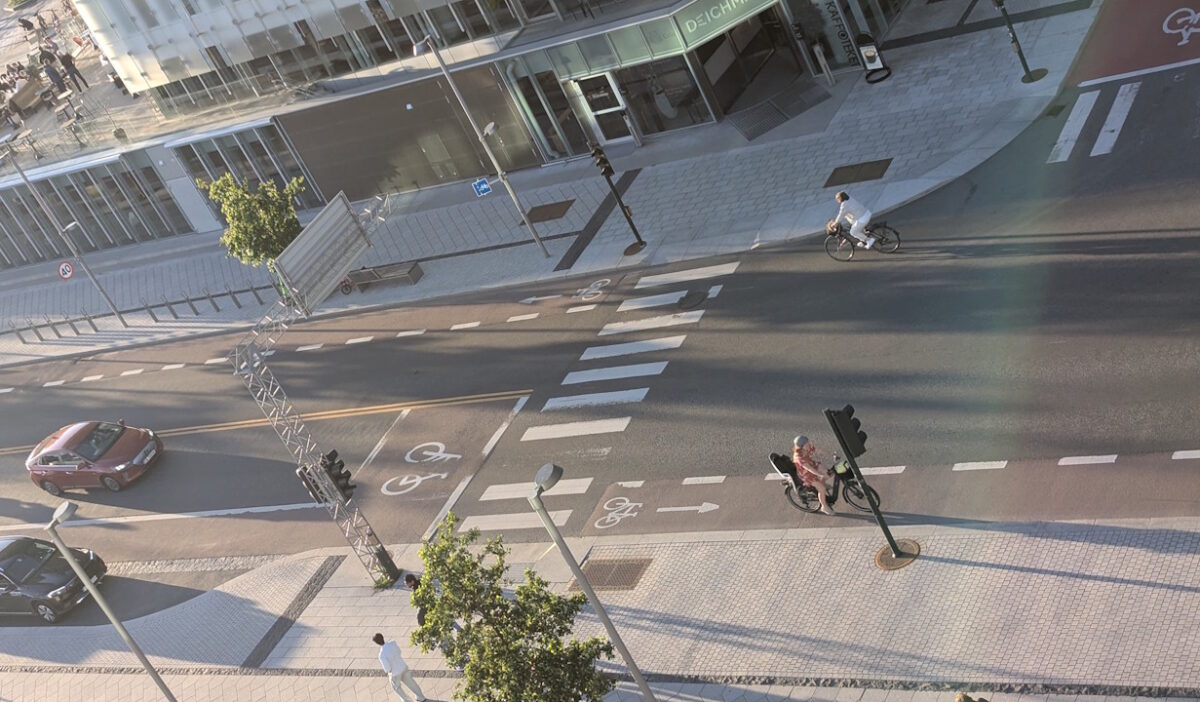
About six weeks ago, I spent a couple of days looking around the Norwegian capital of Oslo. As with many parts of Europe, Oslo has been working hard to turn itself into a better city for cycling, with the introduction of protected cycleways, car-free streets, better intersections and crossings, and lower speed limits.
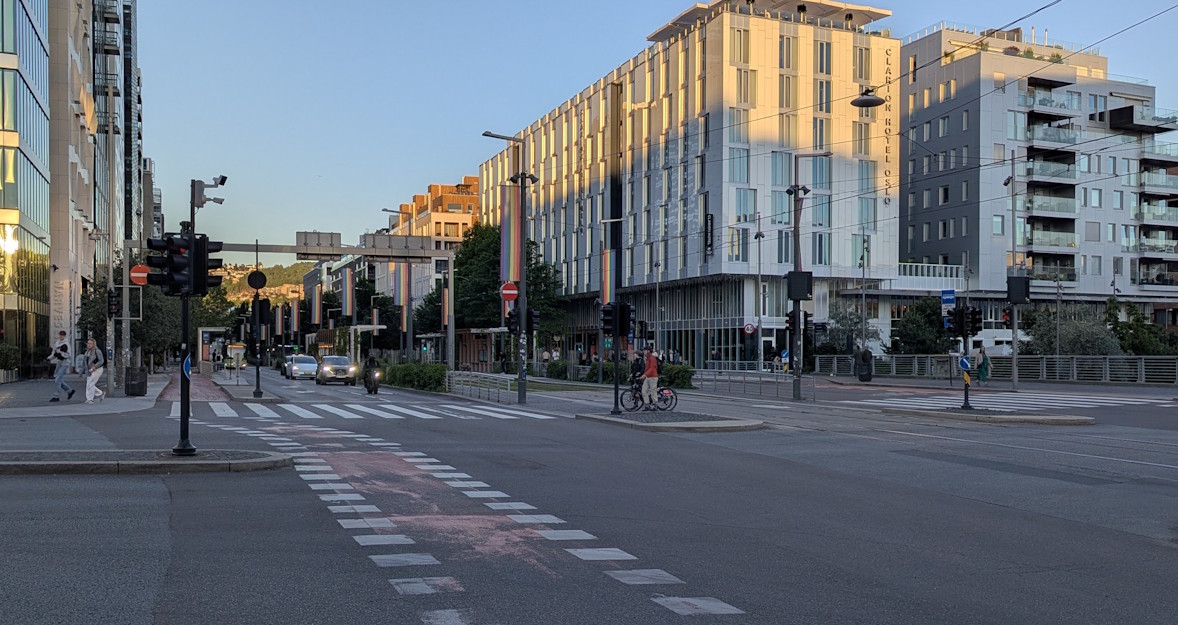
That has certainly got people noticing, with Oslo now in the top 20 cities on the Copenhagenize Index. And from a safety perspective, it has also seen a notable drop in fatal and serious injuries to cyclists (and pedestrians) over the past decade or so.
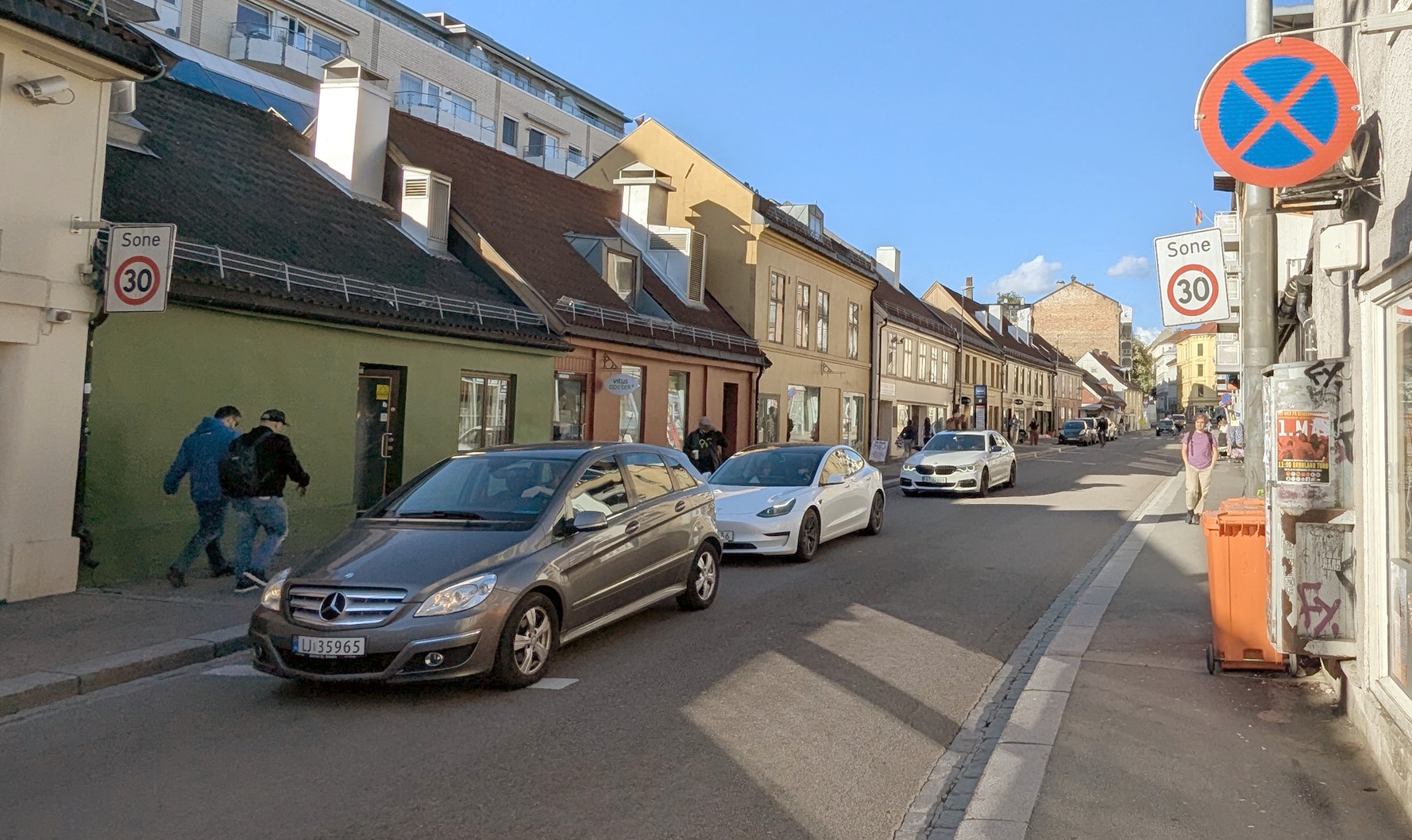
I was there near the height of summer when the days were pretty long, but at least that allowed me to get out and have a look at some of the cycling facilities on offer in the evening.
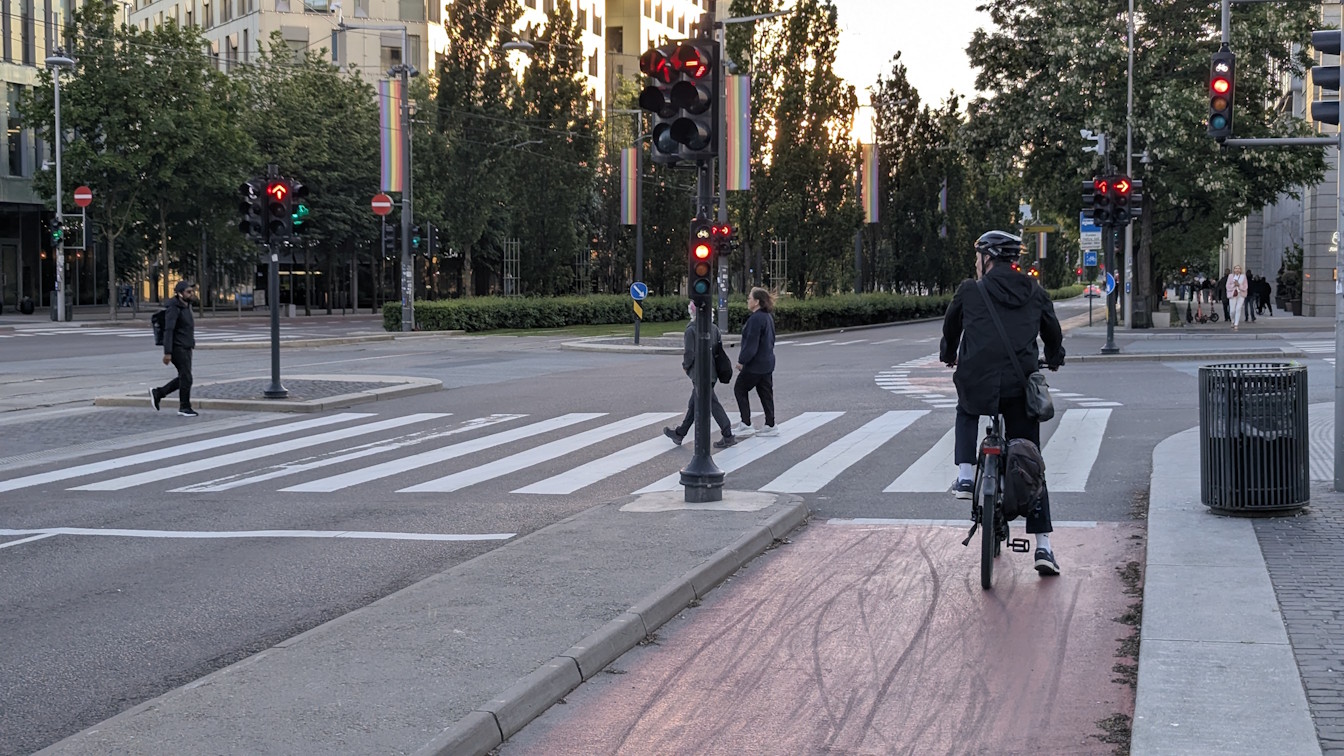
For some of my travels at least, I was able to make use of the Oslo City Bike scheme, a bike share system similar in many ways to the likes of LimeBikes and other services we saw elsewhere in Europe.
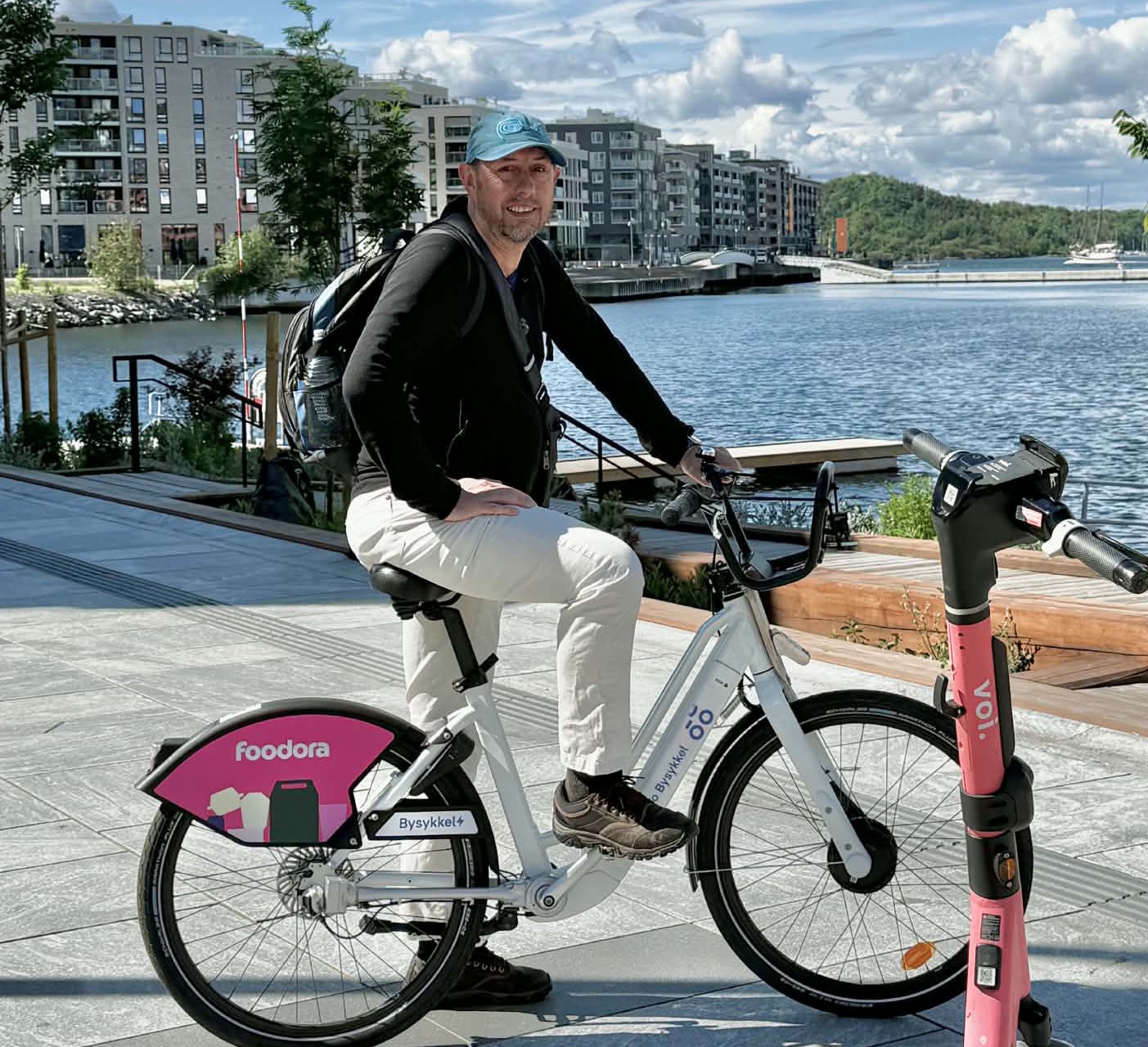
Setting up the Oslo Bike app was fairly easy, their parking areas are well spread out around the city, and they offer a mix of both electric and manual bike options.
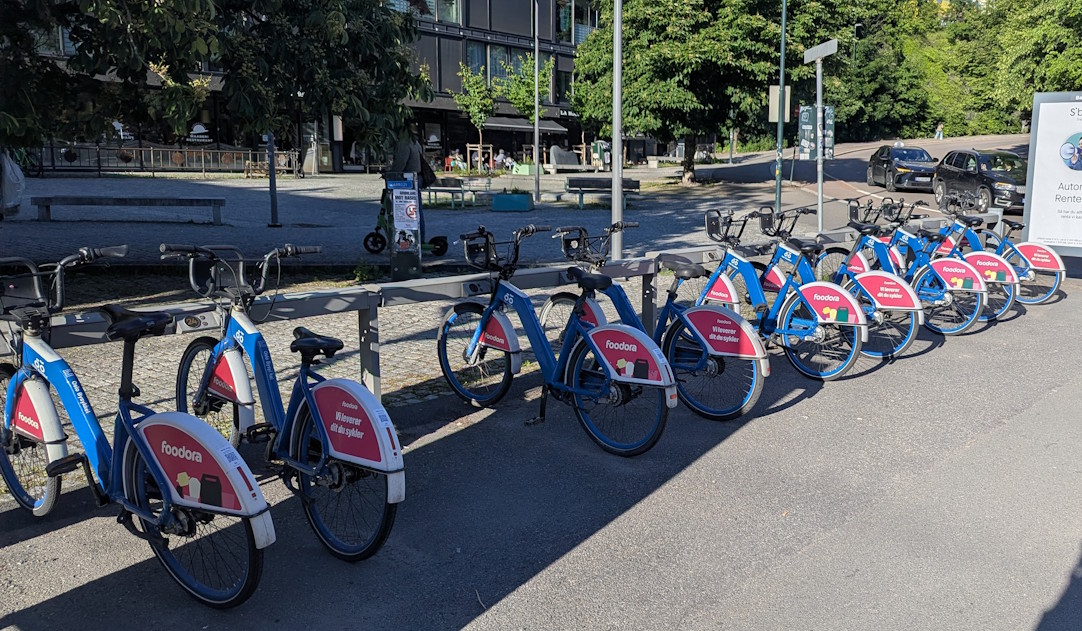
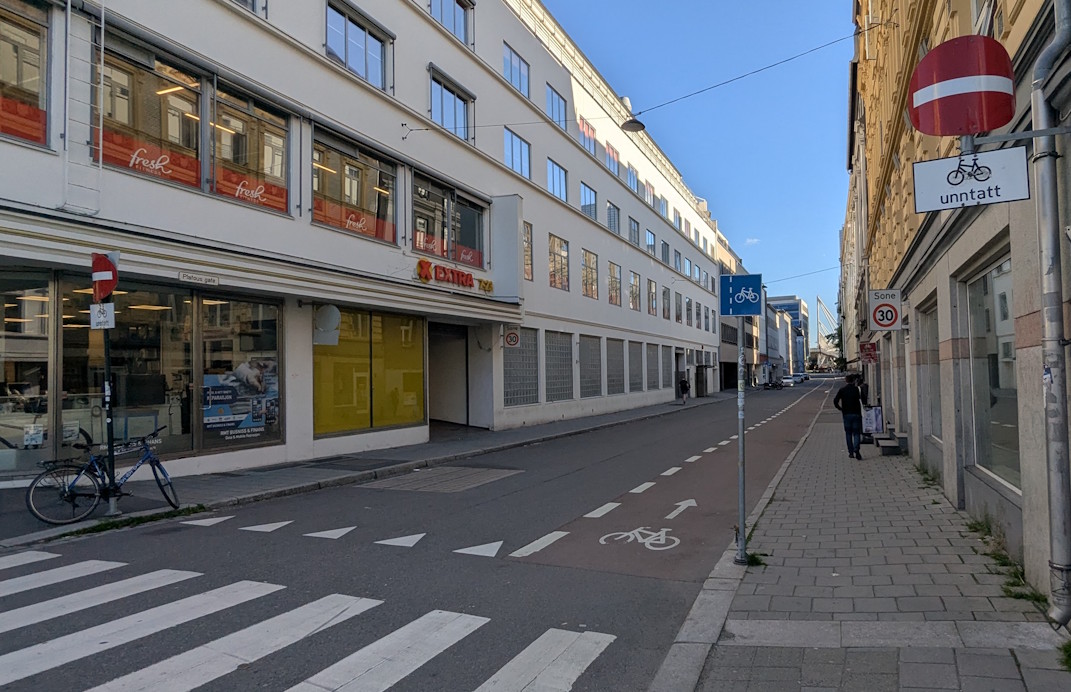
So what did I see? Well, as was often observed elsewhere in Europe, Oslo can be quite good at providing contra-flow (i.e. wrong way) options for cycling on one-way streets.
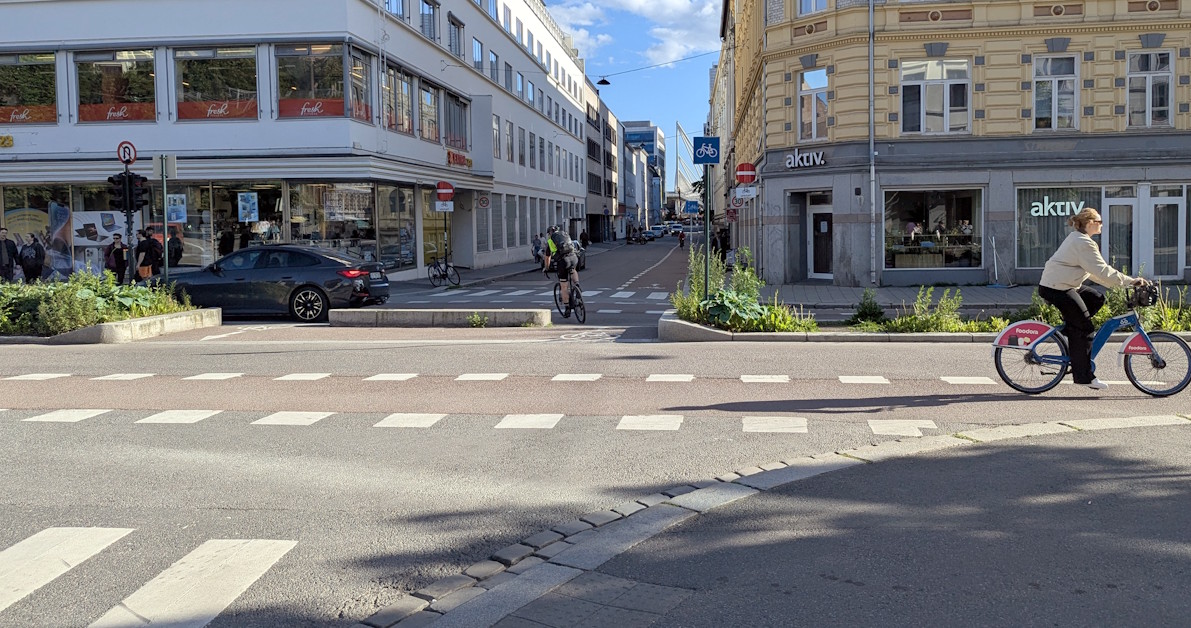
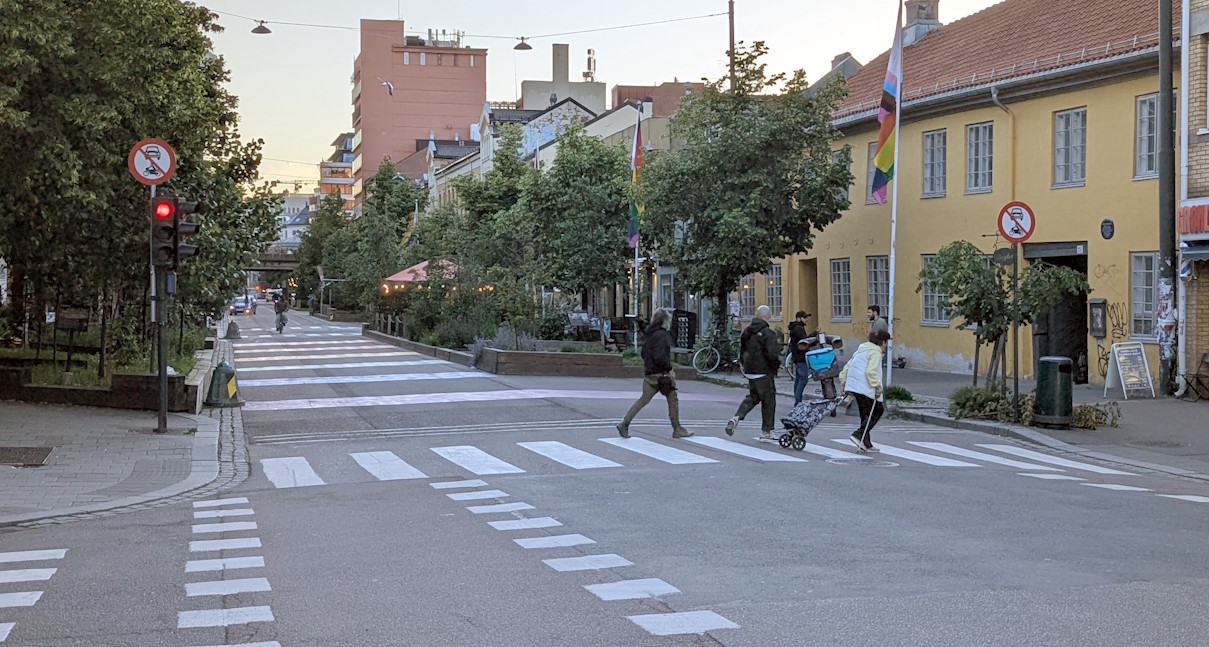
Similarly, they can also provide gaps in road medians to allow cyclists through while motor traffic can’t.
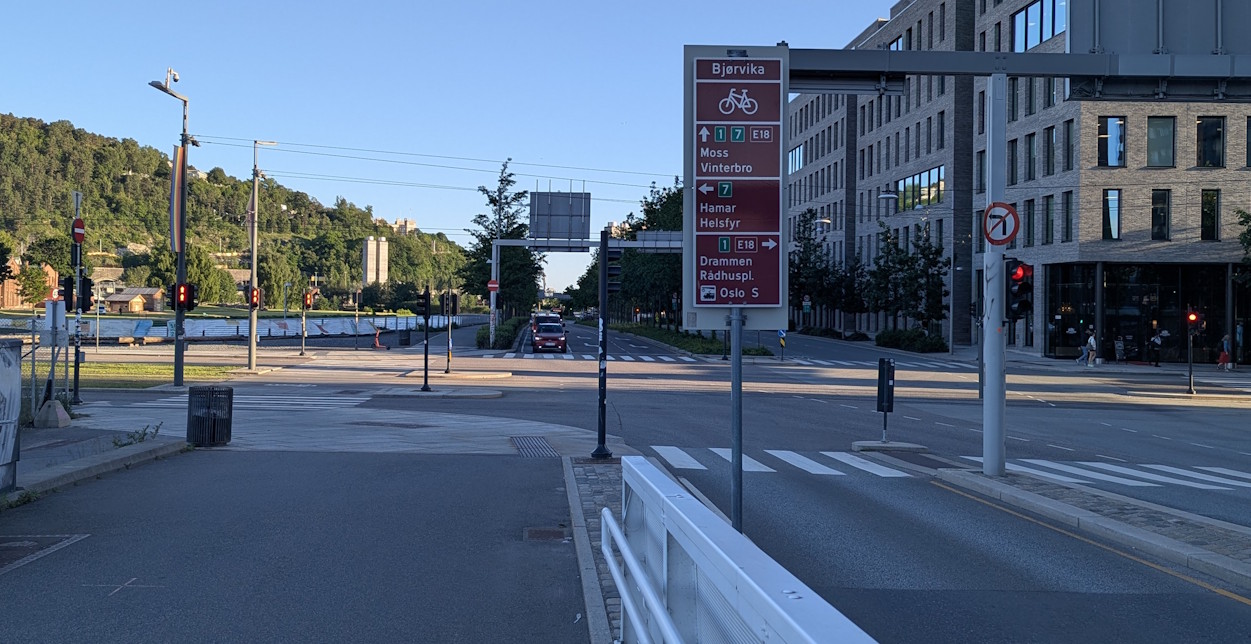
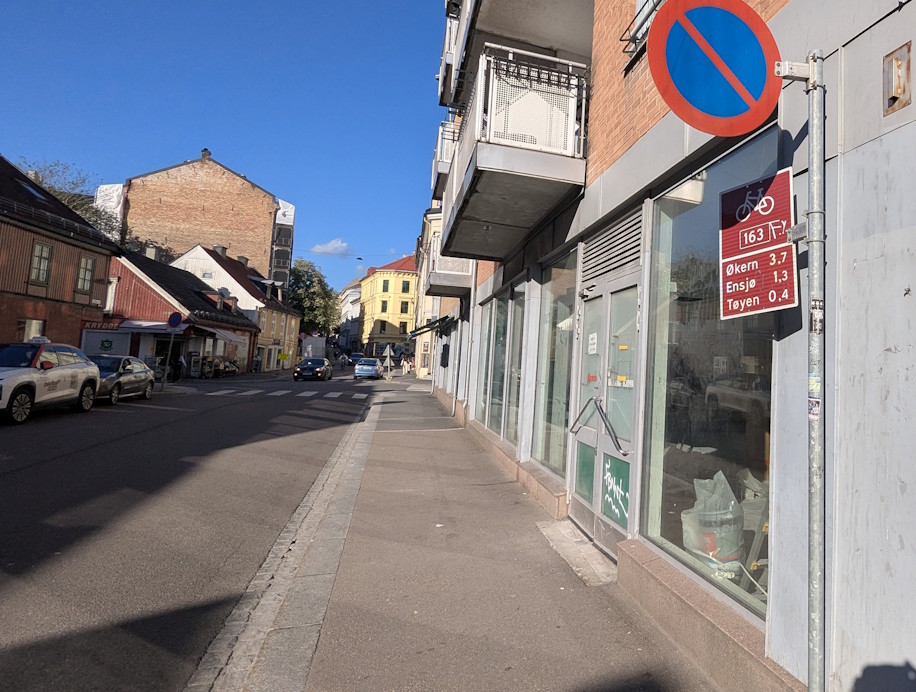
Wayfinding was also pretty good, giving you a fairly good idea (assuming you know your suburbs…) of which way to go at major intersections.
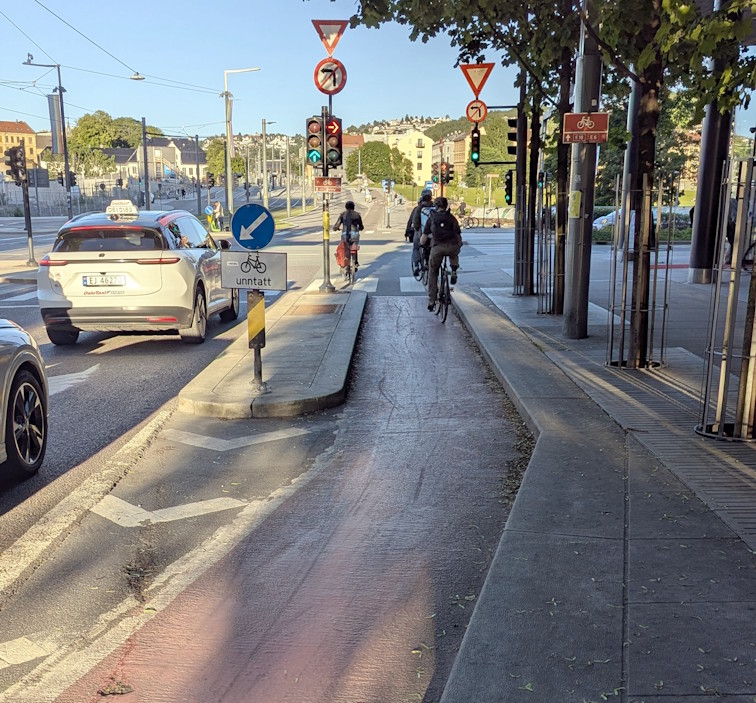
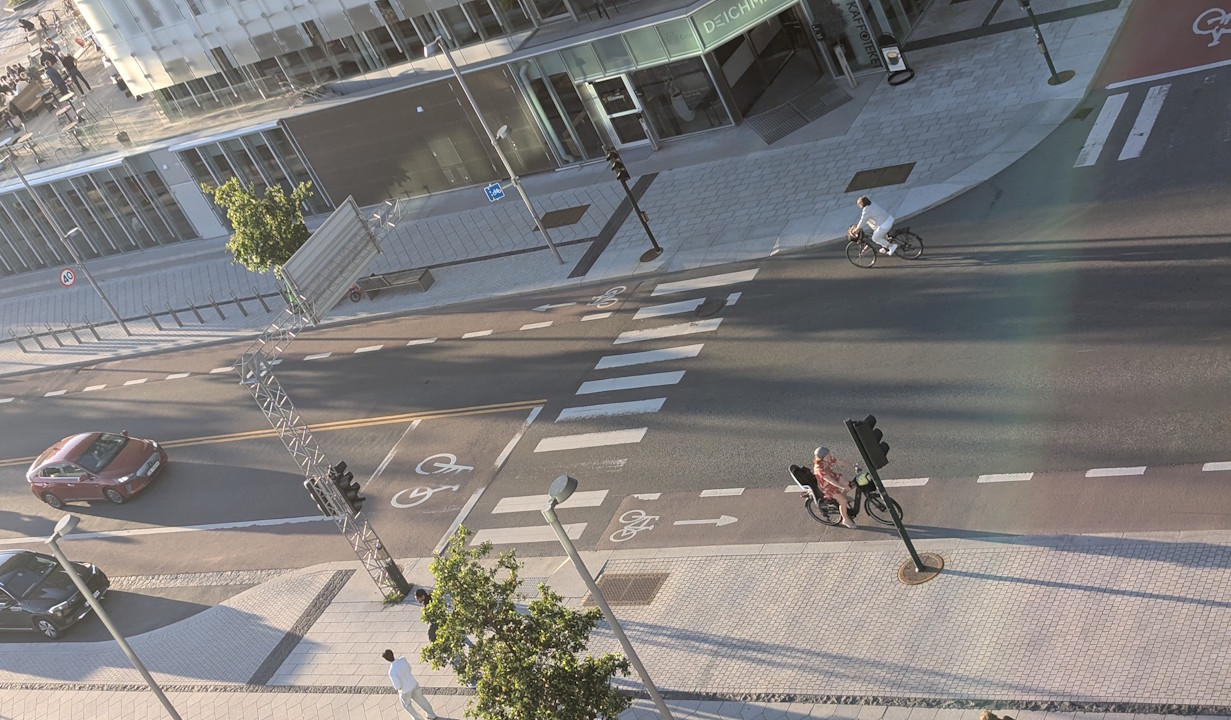
Protected cycleways are to the fore, particularly near intersections.
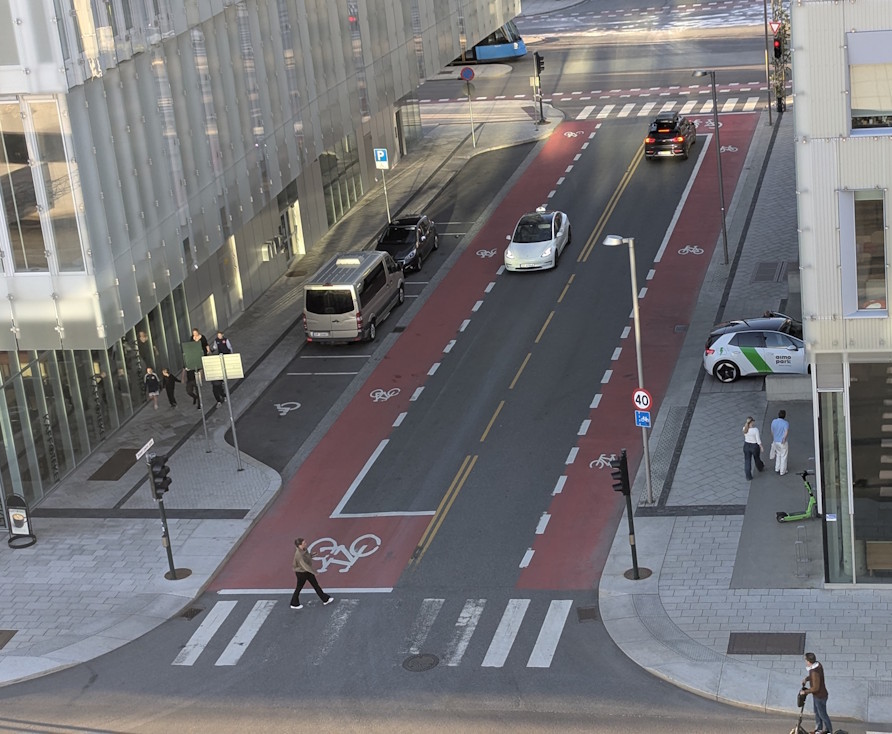
There were plenty of standard painted cycle lanes too, and they often featured advance stop boxes as well.
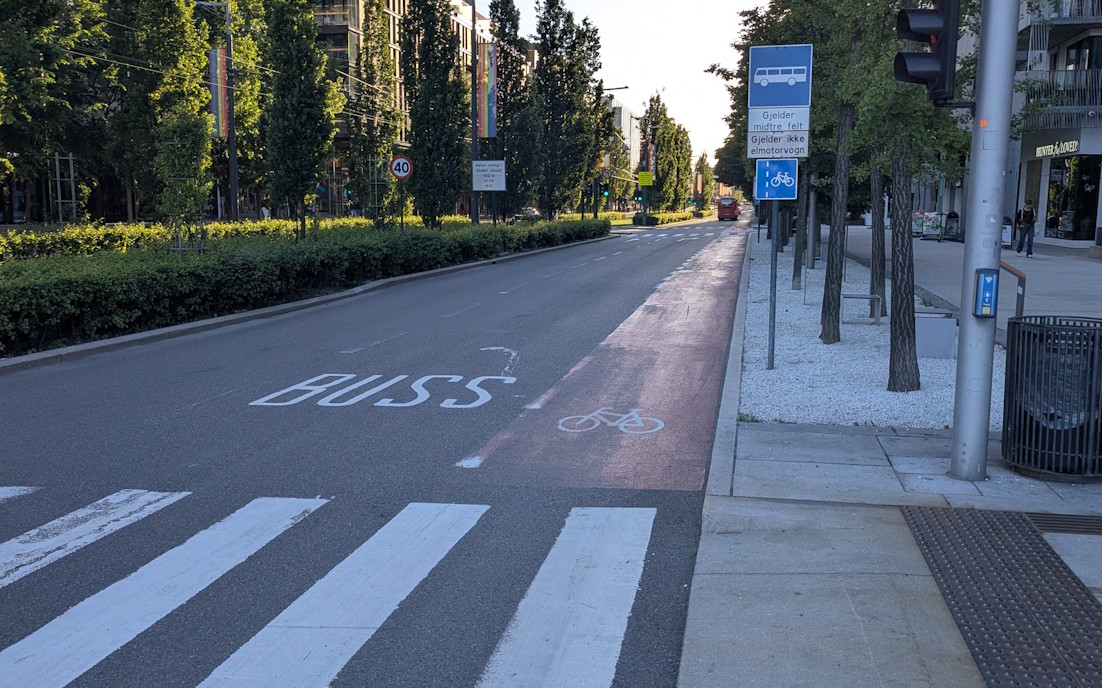
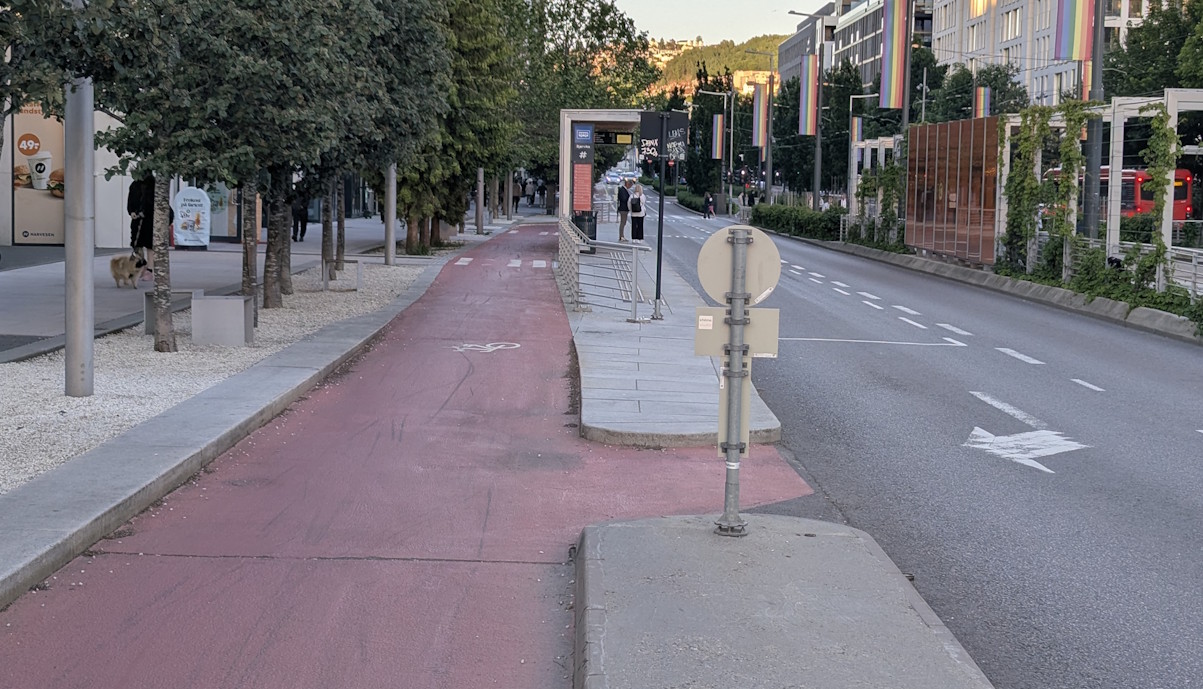
Oslo has a fairly comprehensive public transport network of both buses and trams, and even here they tend to keep cycleways separate from the busways.
When you get to the bus stops, they even steer the cycleway behind the stop platform.
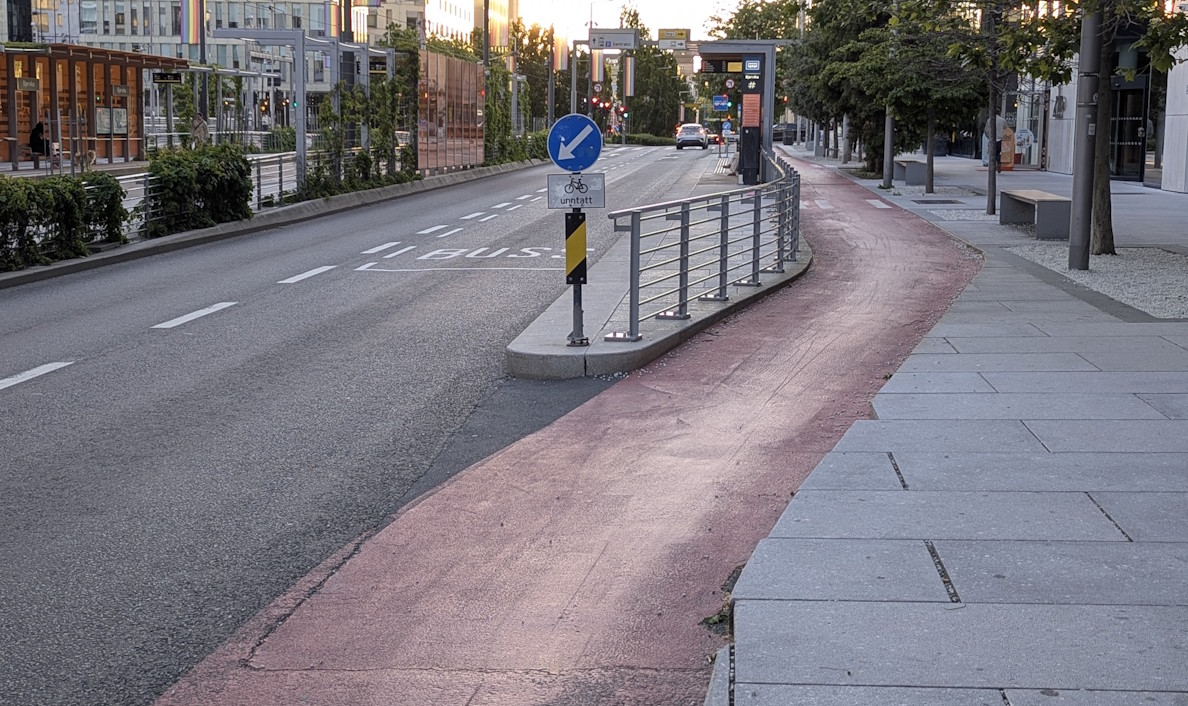
Here are a few more pictures of interesting cycle features I saw around Oslo:
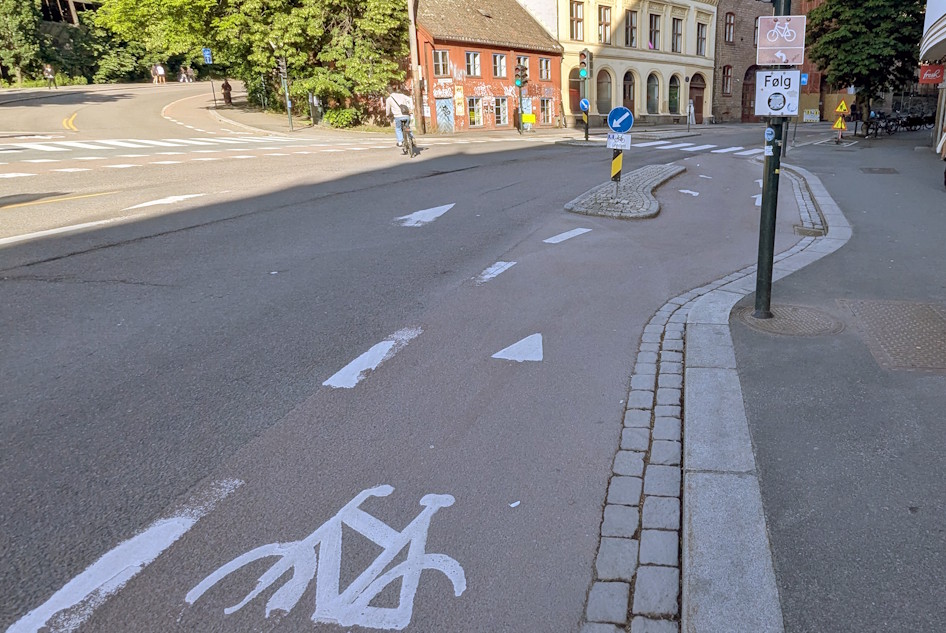
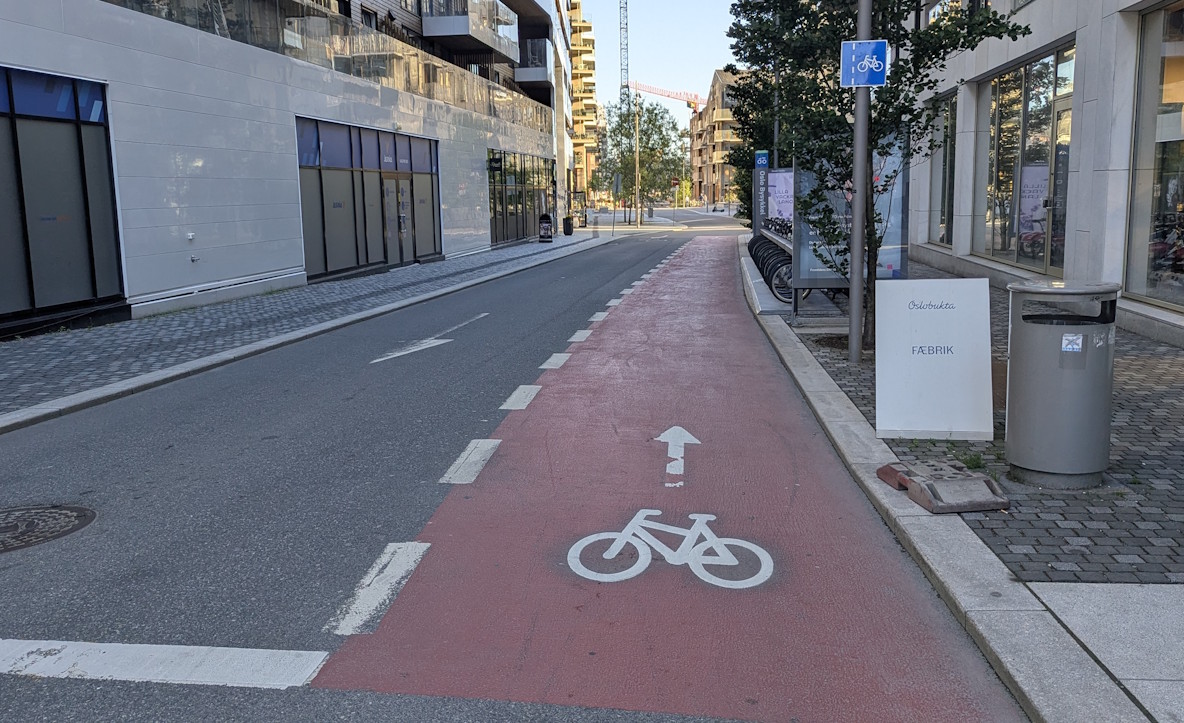
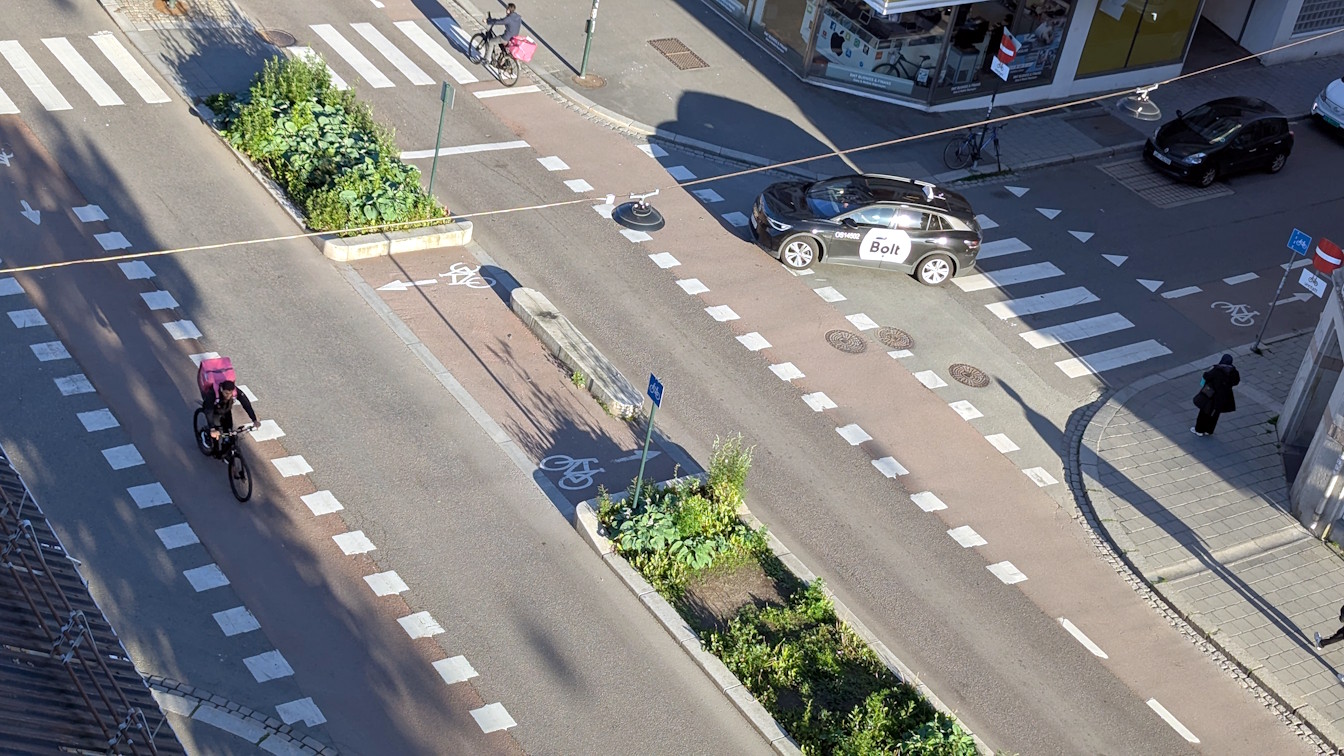
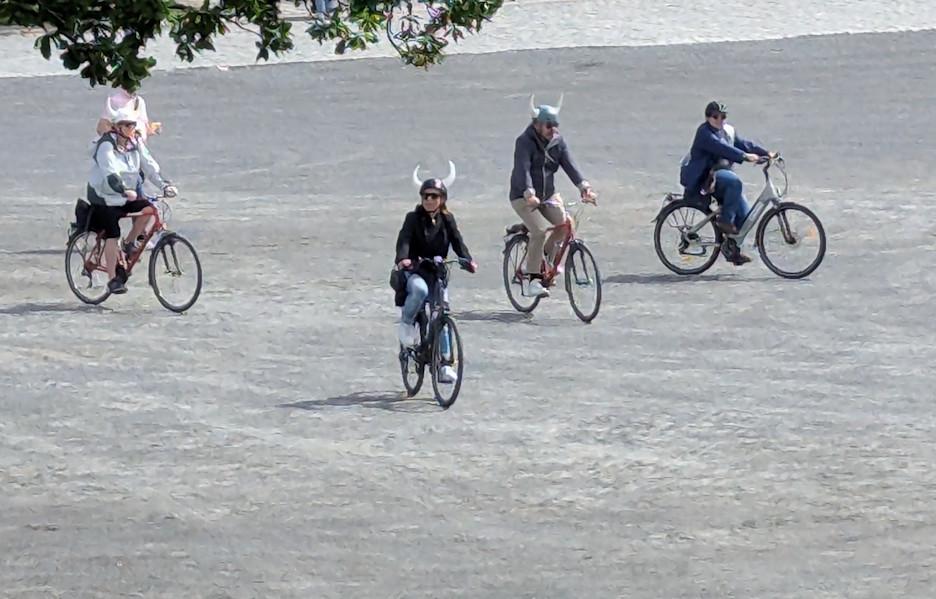
Overall, Oslo does a pretty good job of creating a cycle-friendly environment; certainly there were a healthy number of people biking everywhere.
What do you think of Oslo’s cycling infrastructure?