
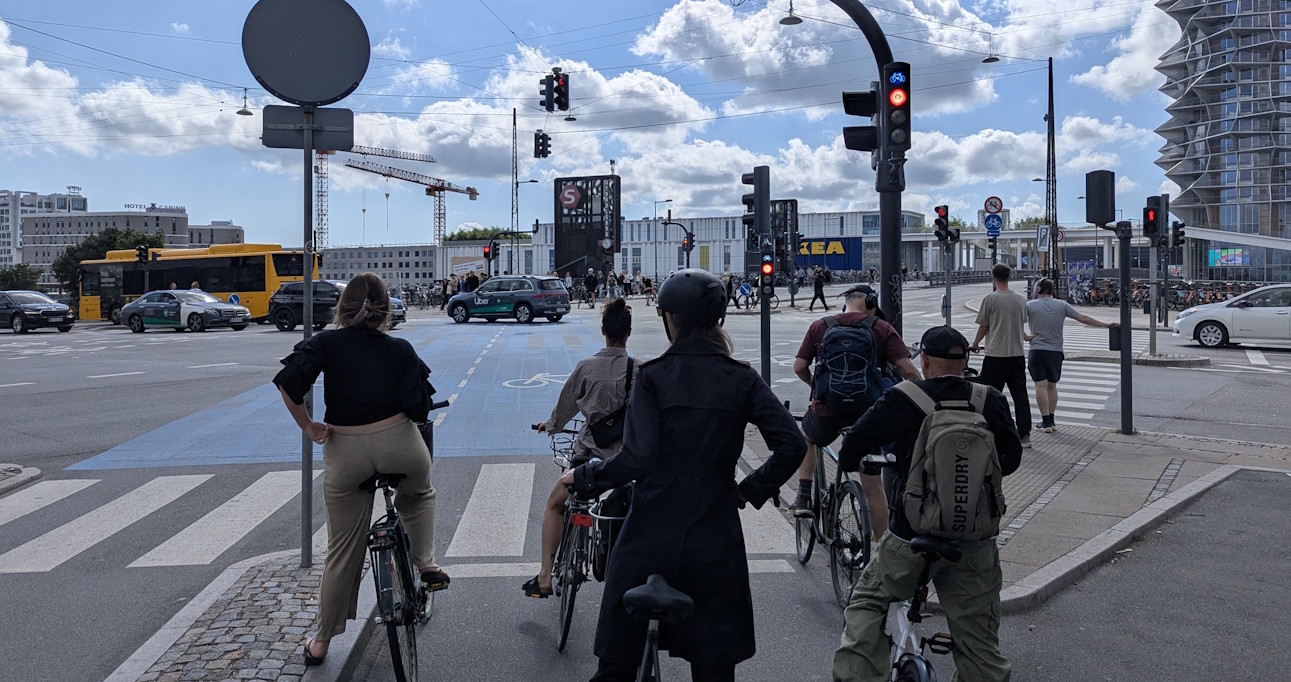
Soon after our return from Europe, I mentioned how I had managed to snap an updated photo of cyclists while at a Copenhagen intersection in early June. Having regaled you since with posts of several other cities around Europe, it’s time to round out the journey by revisiting this Danish cycling capital.
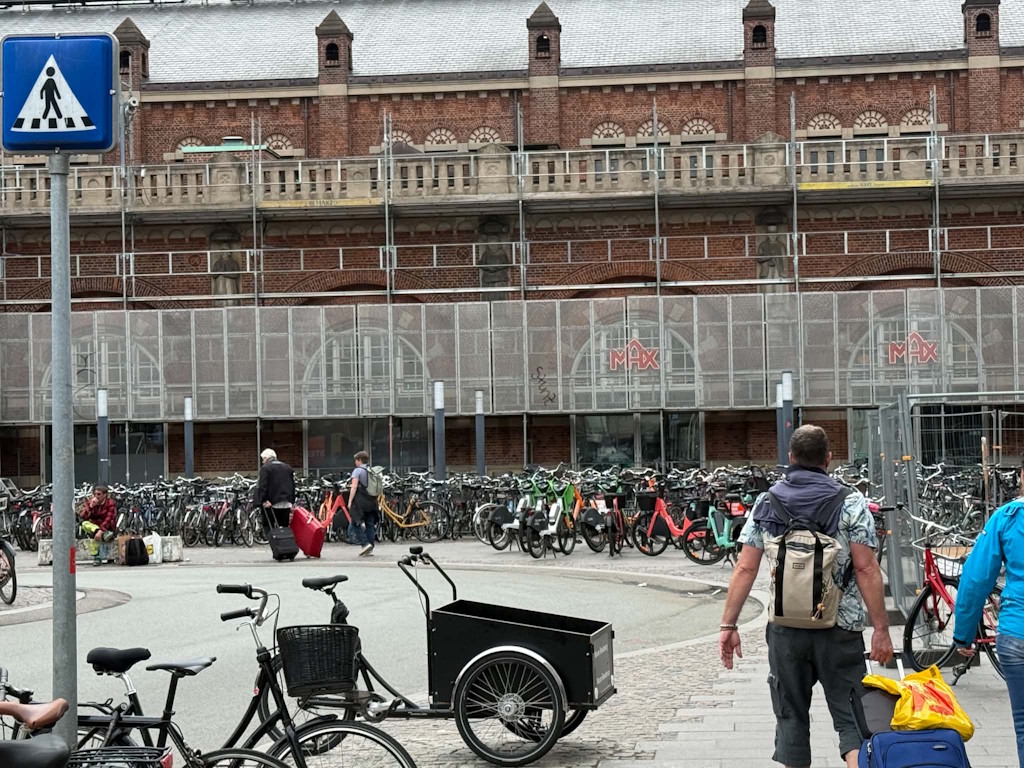
Perhaps not surprisingly for its name, Copenhagen currently ranks as the second best cycling city in the world (only behind Utrecht, NL) on the Copenhagenize Index. And while exploring the city, it was evident why that was the case.
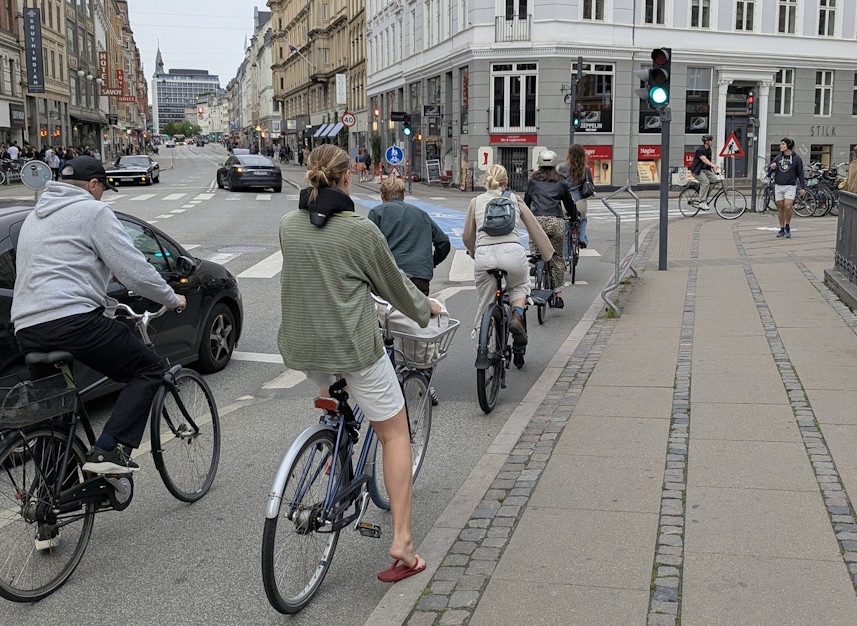
A bit like Amsterdam, you are certainly blown away by the sheer numbers of people observed cycling everywhere – and often in quite an array of different bike styles too.
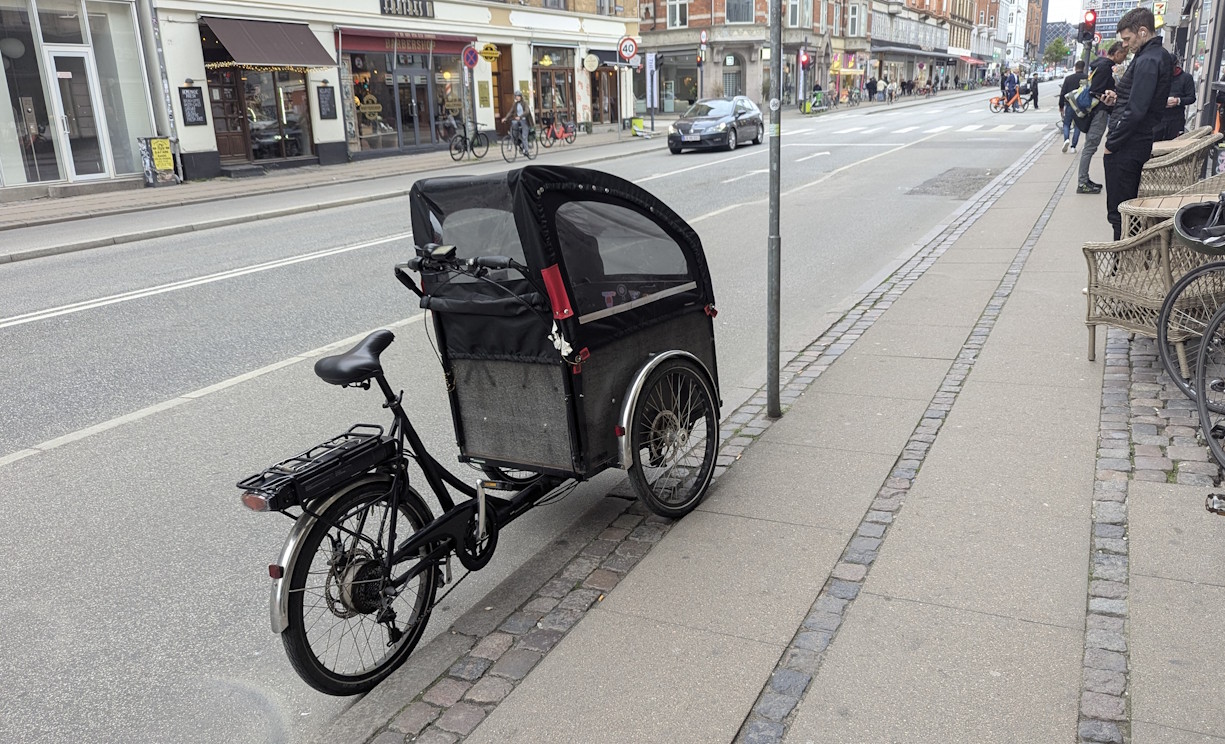
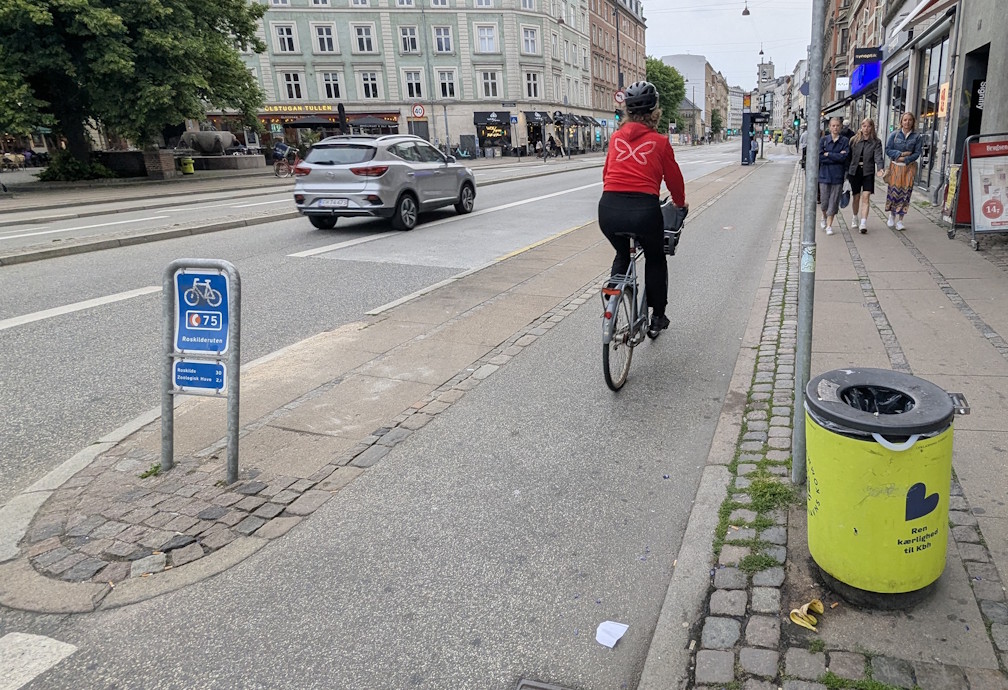
Their cycle infrastructure gives you a clue to how this has been done. Depending on where you are, you might see the famous “Copenhagen-style” stepped kerb separating riders from the adjacent roadway and footpath (somewhat similar to what we have put in central Colombo Street…).
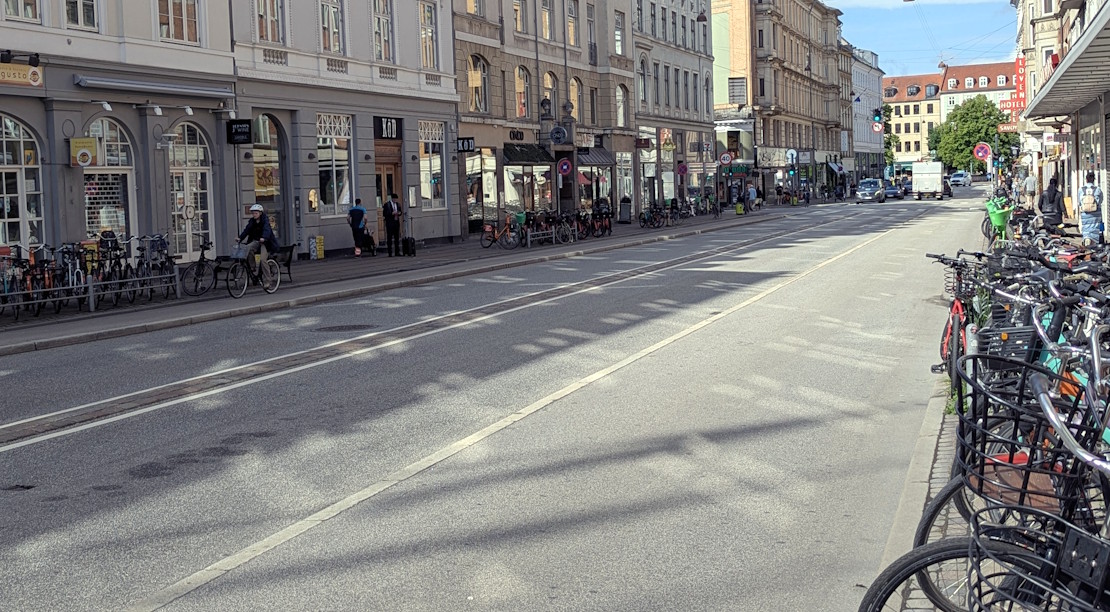
Sometimes, there might be a bit more physical separation between roadway and cycleway…
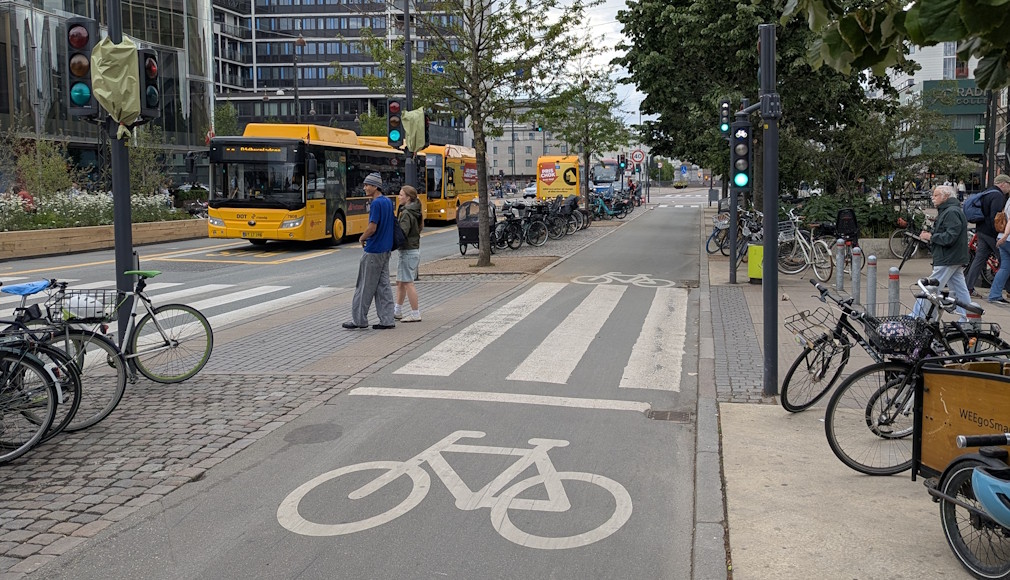
Sometimes that space is even used for cycle parking…
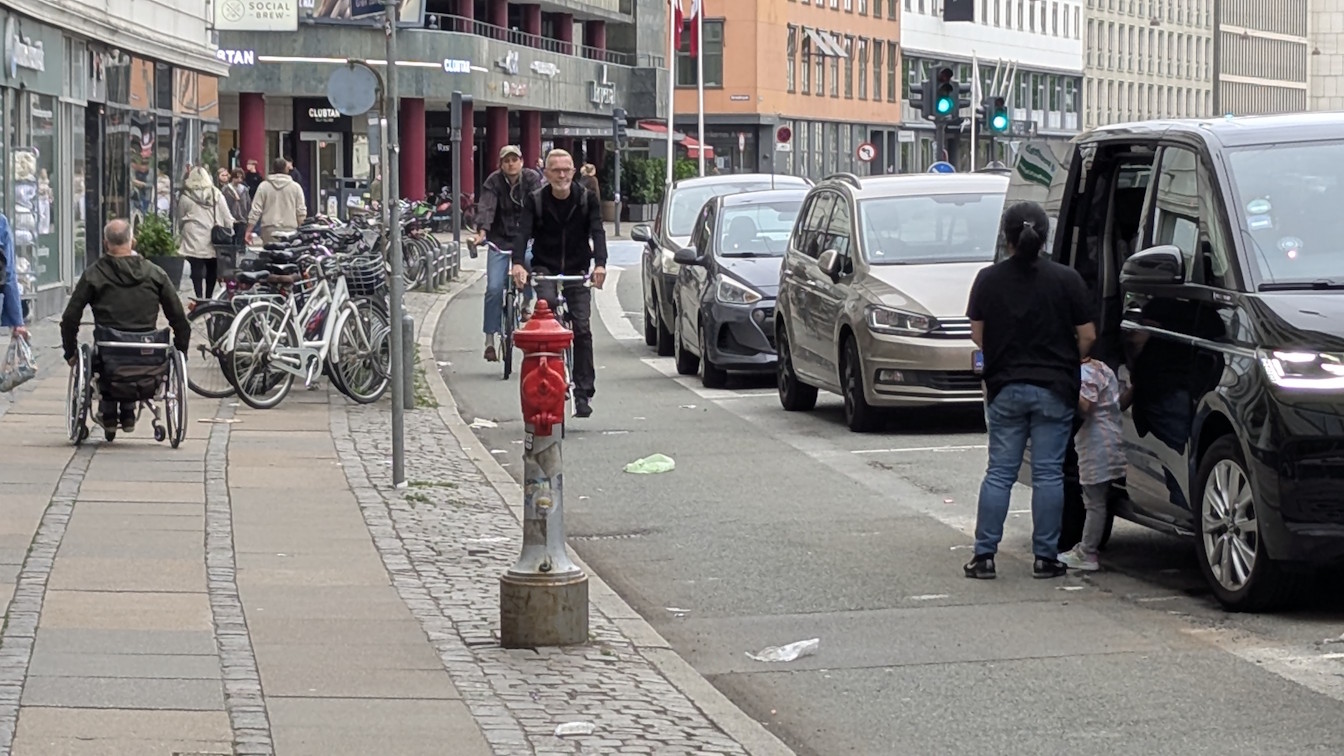
…and parked cars can also provide another form of physical protection from adjacent traffic as well.
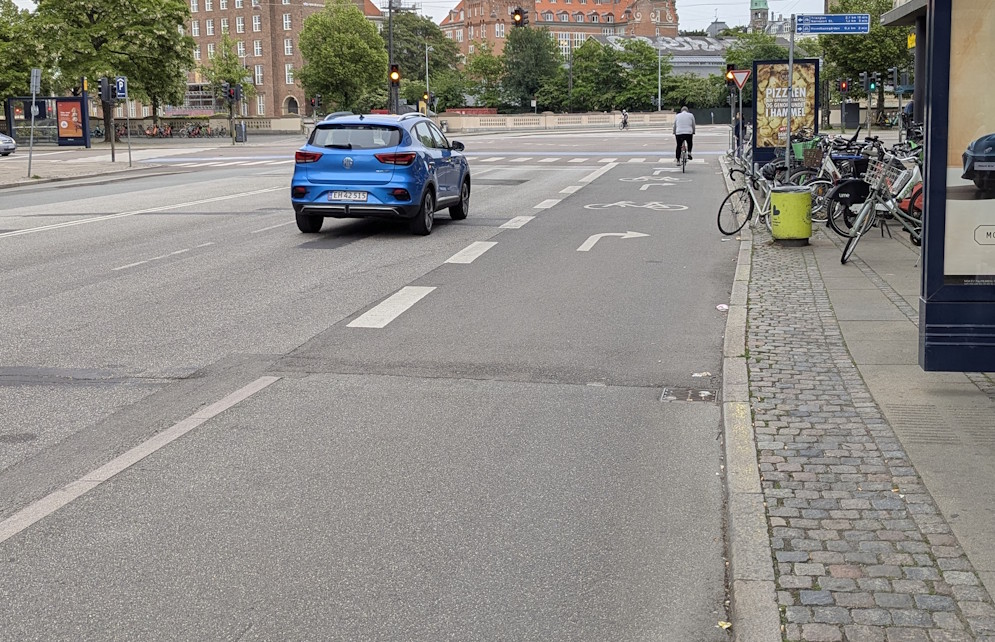
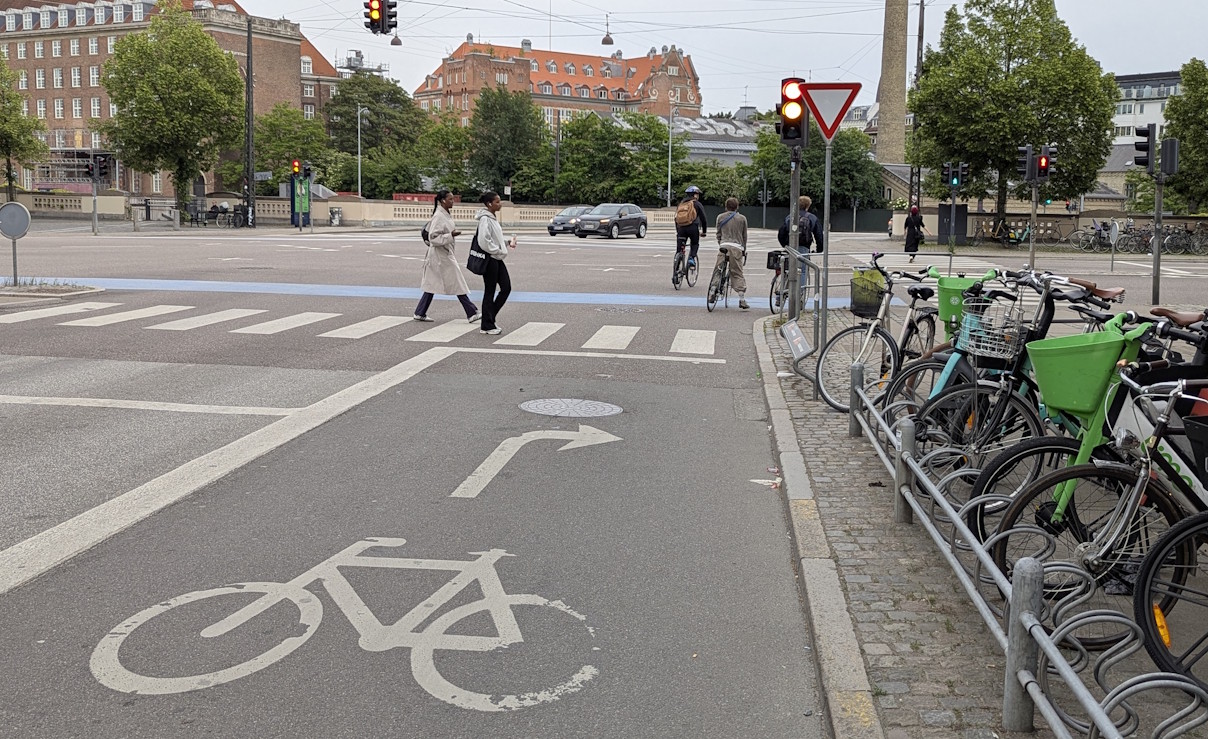
As cyclists approach intersections, the separated cycleway tends to give way to “mixing zones” where riders end up sharing the right-turning traffic lane – a fairly elegant solution to the potential problem of turning traffic “hooking” a rider to their side.
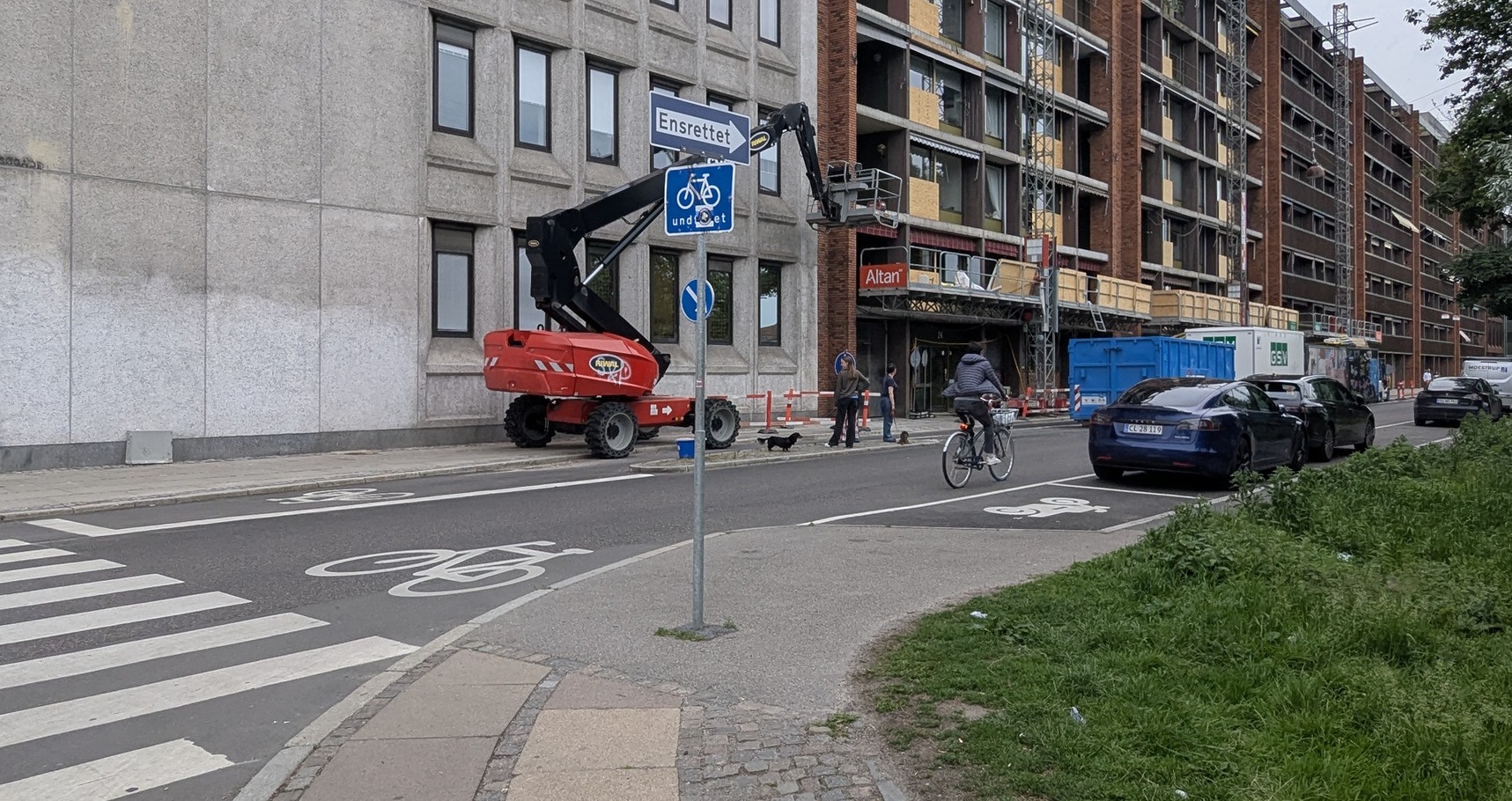
As we have seen in several other places around Europe, riders can also get some advantages over motorists by being allowed to ride contra-flow to one-way traffic.
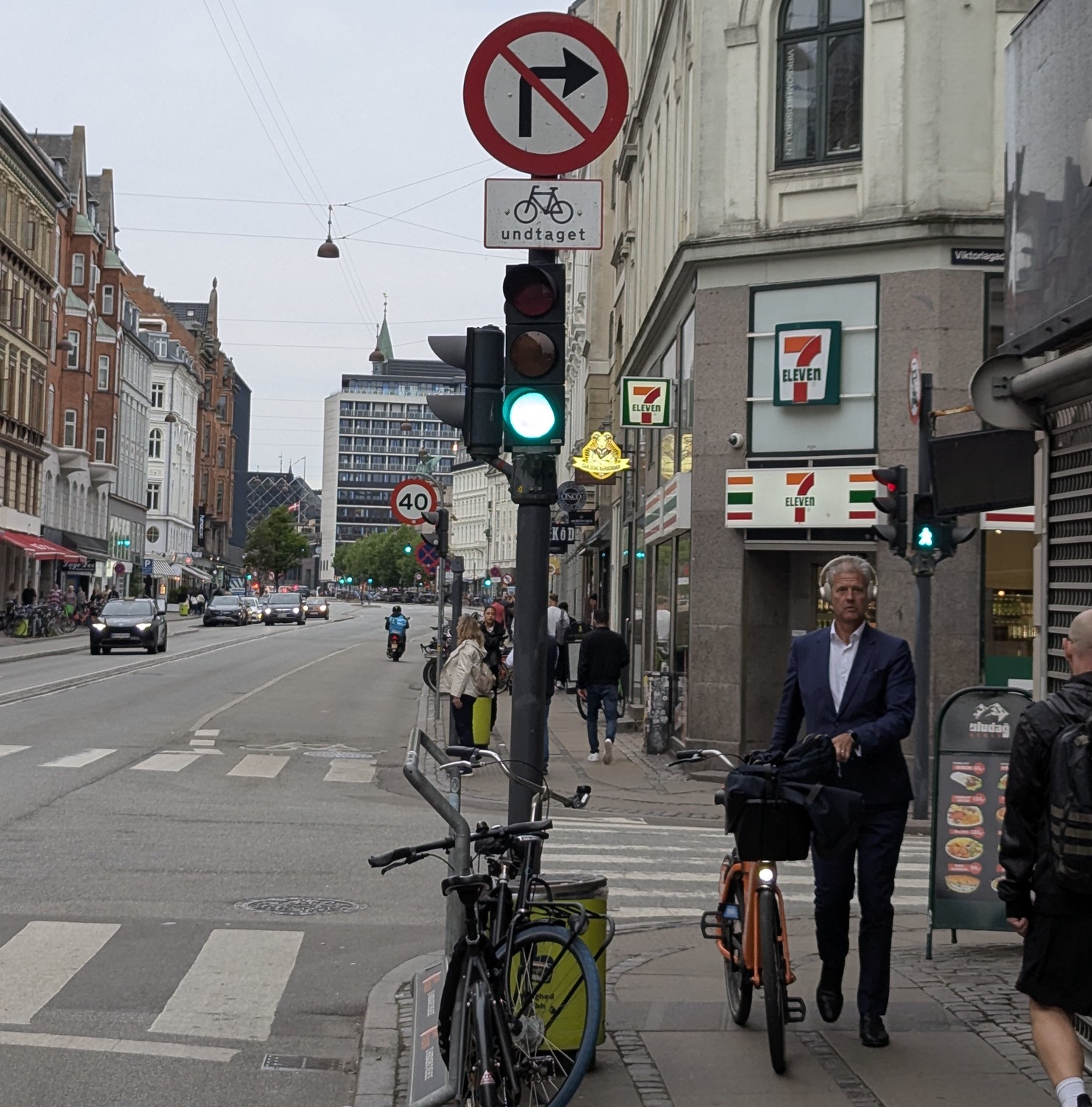
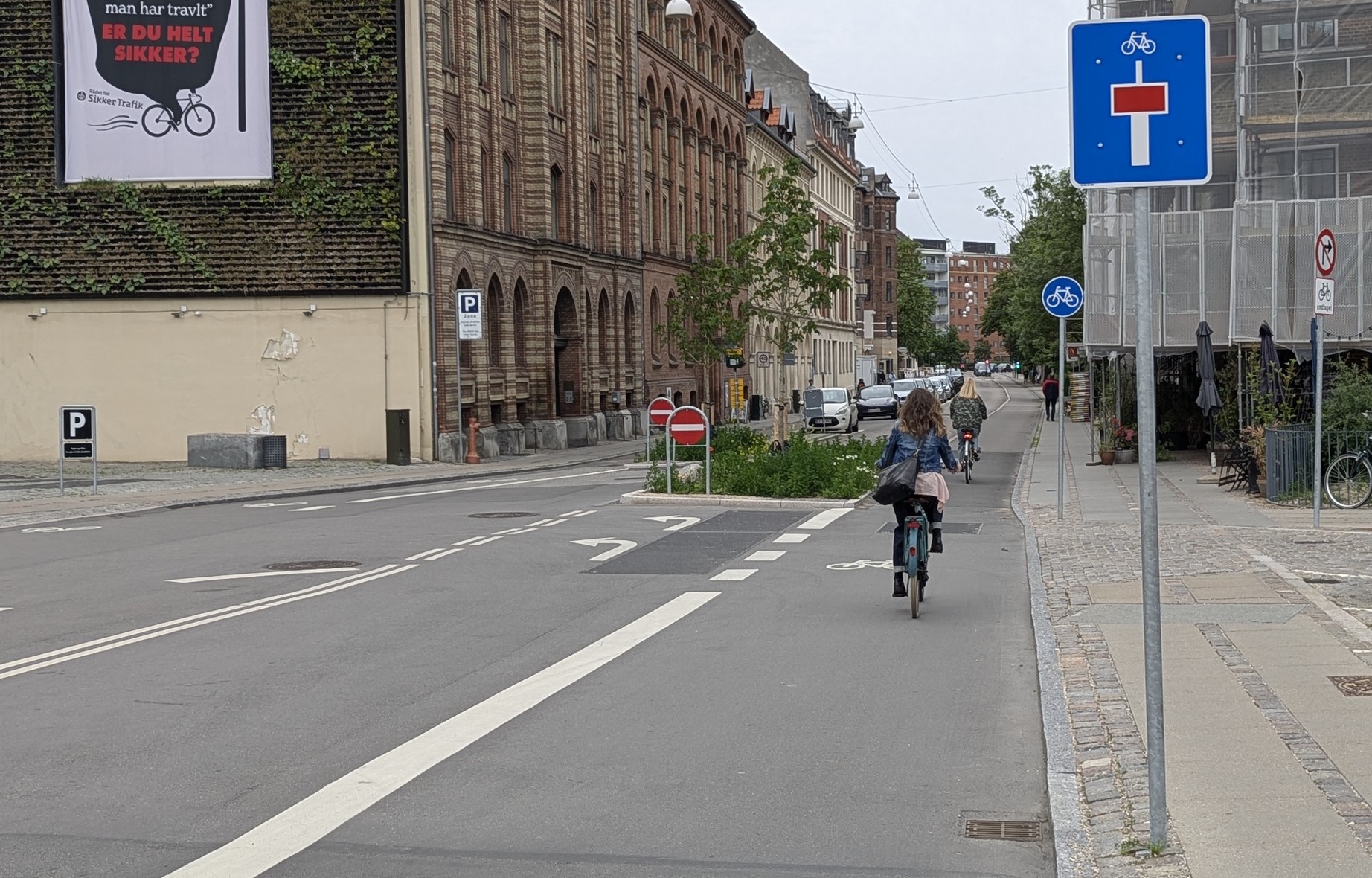
In some locations, motorists are not even allowed to enter a street – but cyclists can continue on through.
In terms of speed management, 40km/h speed limits are fairly common. There has been a push to try to get more widespread 30km/h limits across the city, but even that comes with some potential legislative hurdles (as was previously also alluded to at the Velo-City conference…).
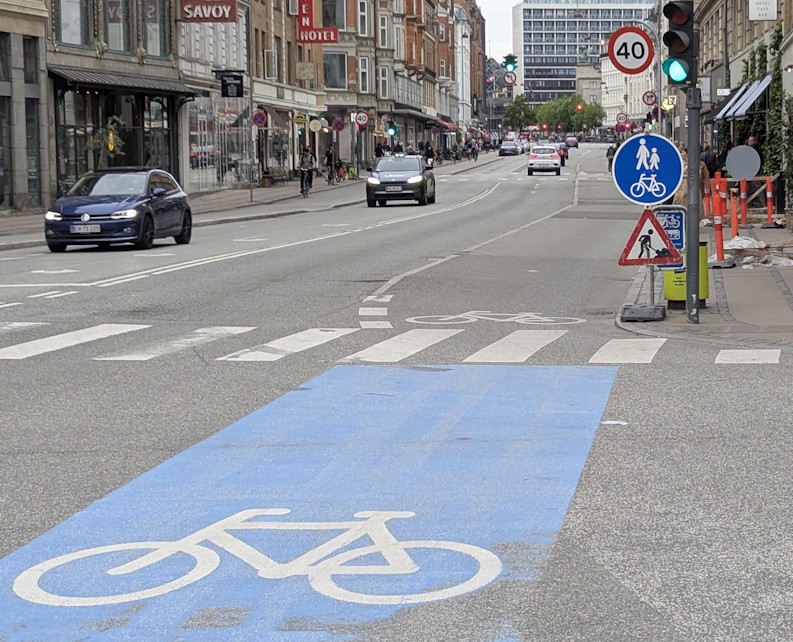
As you might have seen from my previous photos too, blue is the default colour of choice in Copenhagen for indicating where to cross at intersections and other conflict points.
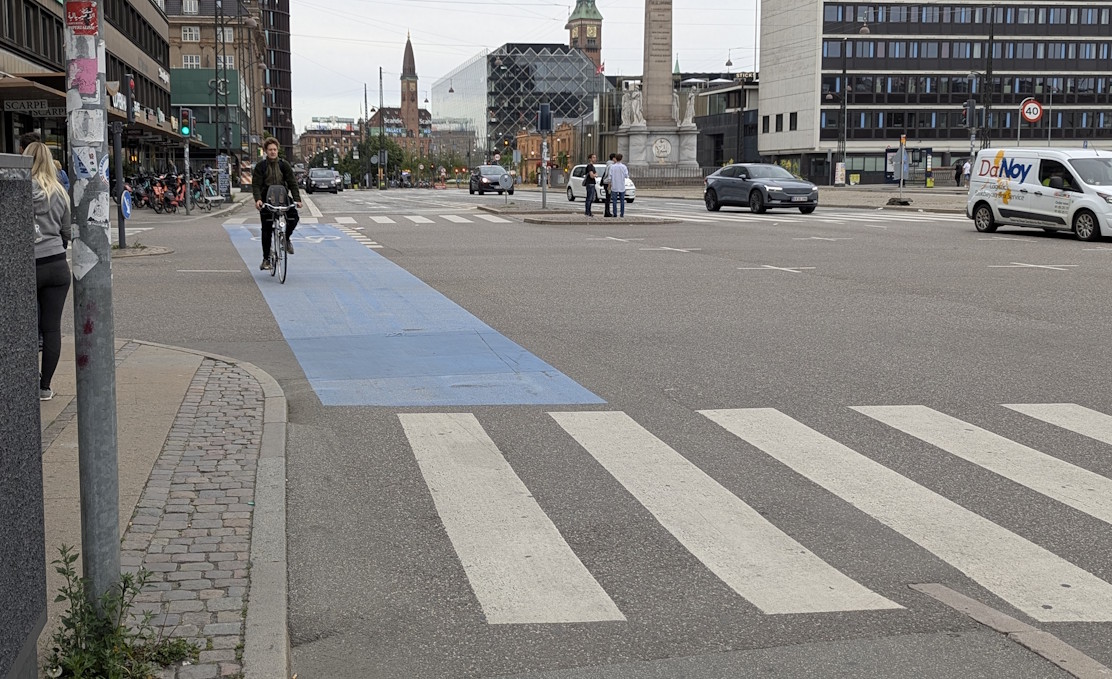
A very common cycling movement observed by many riders at intersections was the use of a hook turn manoeuvre to move off to the side and swing around ready to turn left (our right).
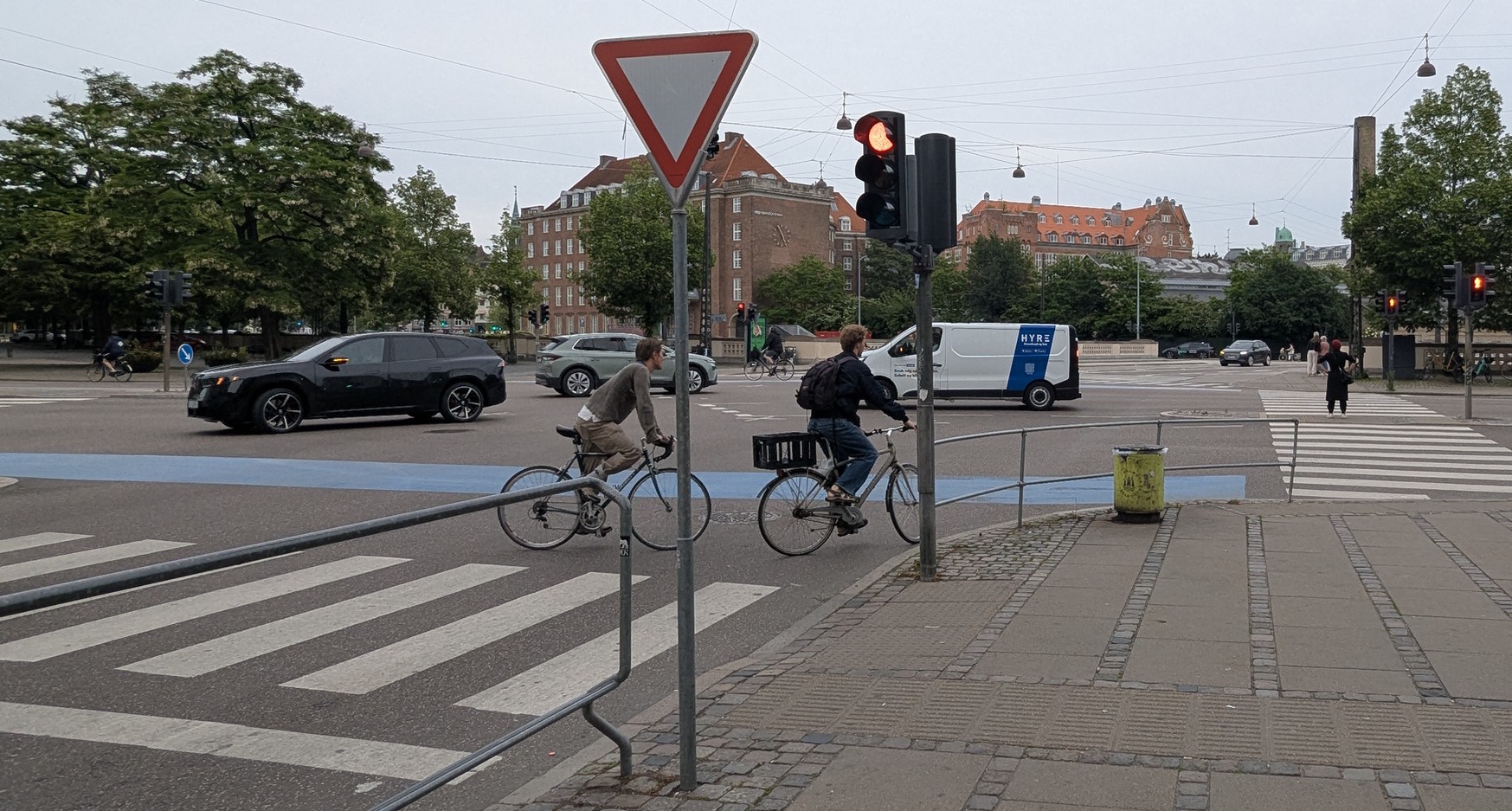
In some places, there actually was special arrow signals to allow riders to make a similar left-turn movement.
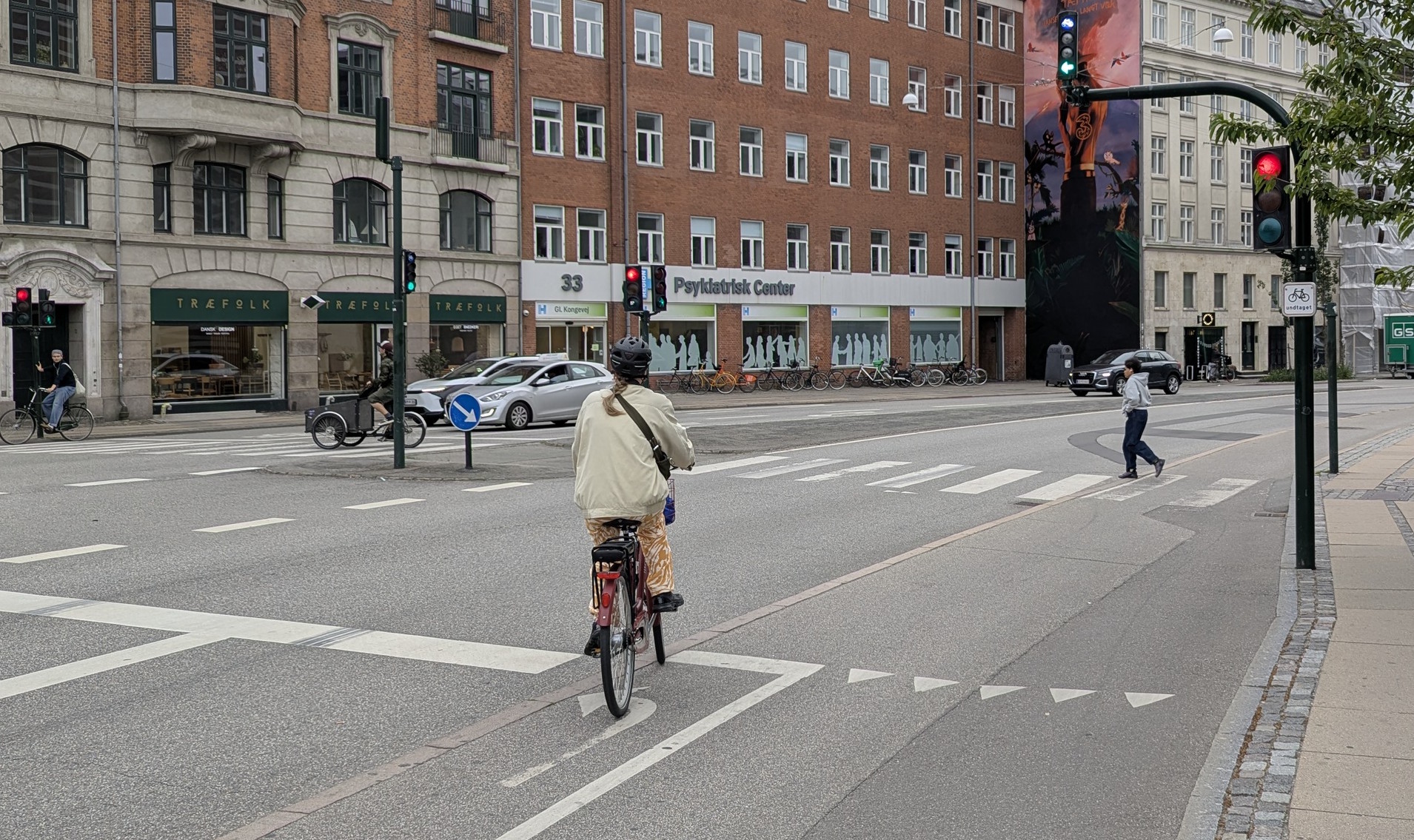
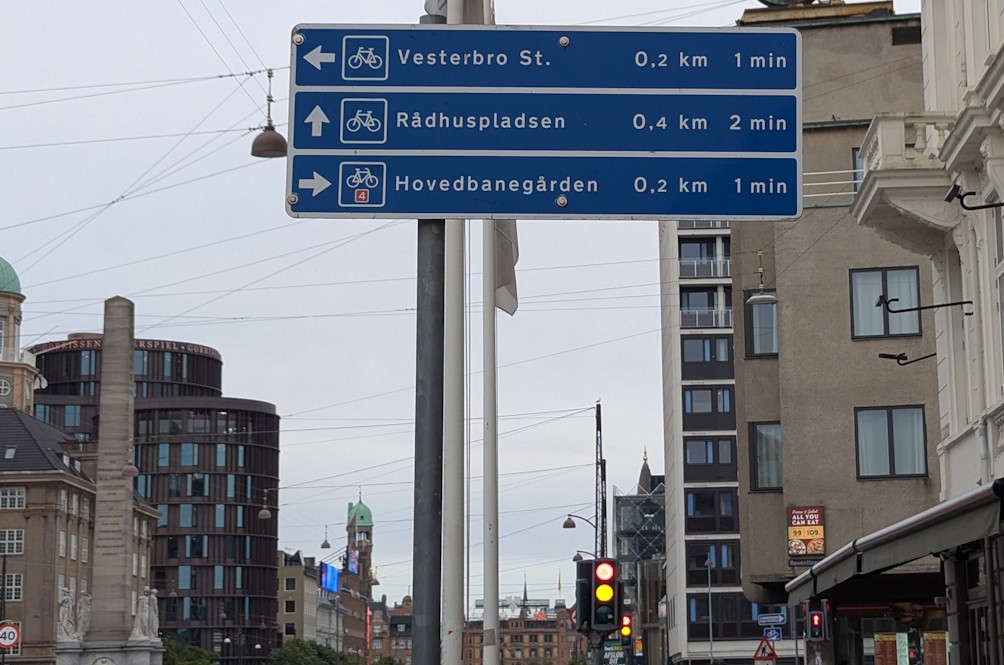
Certainly noticeable here, as well as in several other European cities was the use of a combined red-yellow “pre-signal” before giving a green signal (in fact, several riders were often already moving even when the pre-signal came on…) – do we need to do something similar here?
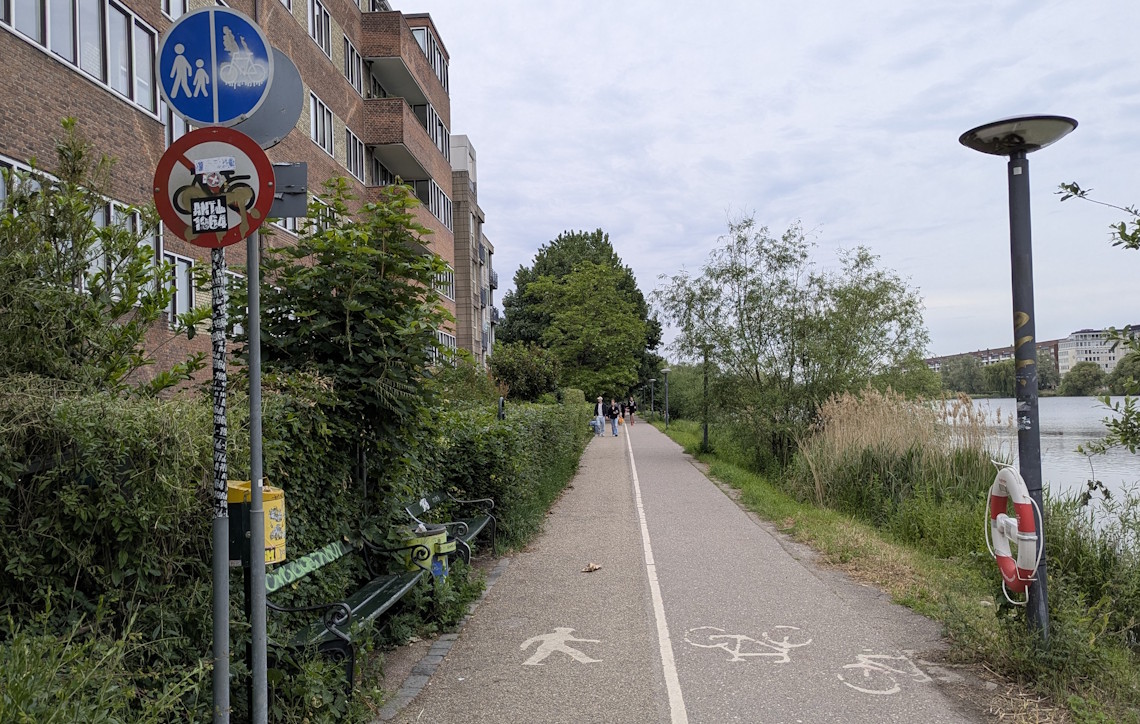
Away from the streets, there are also off-road paths, where pedestrians and cyclists are typically separated.
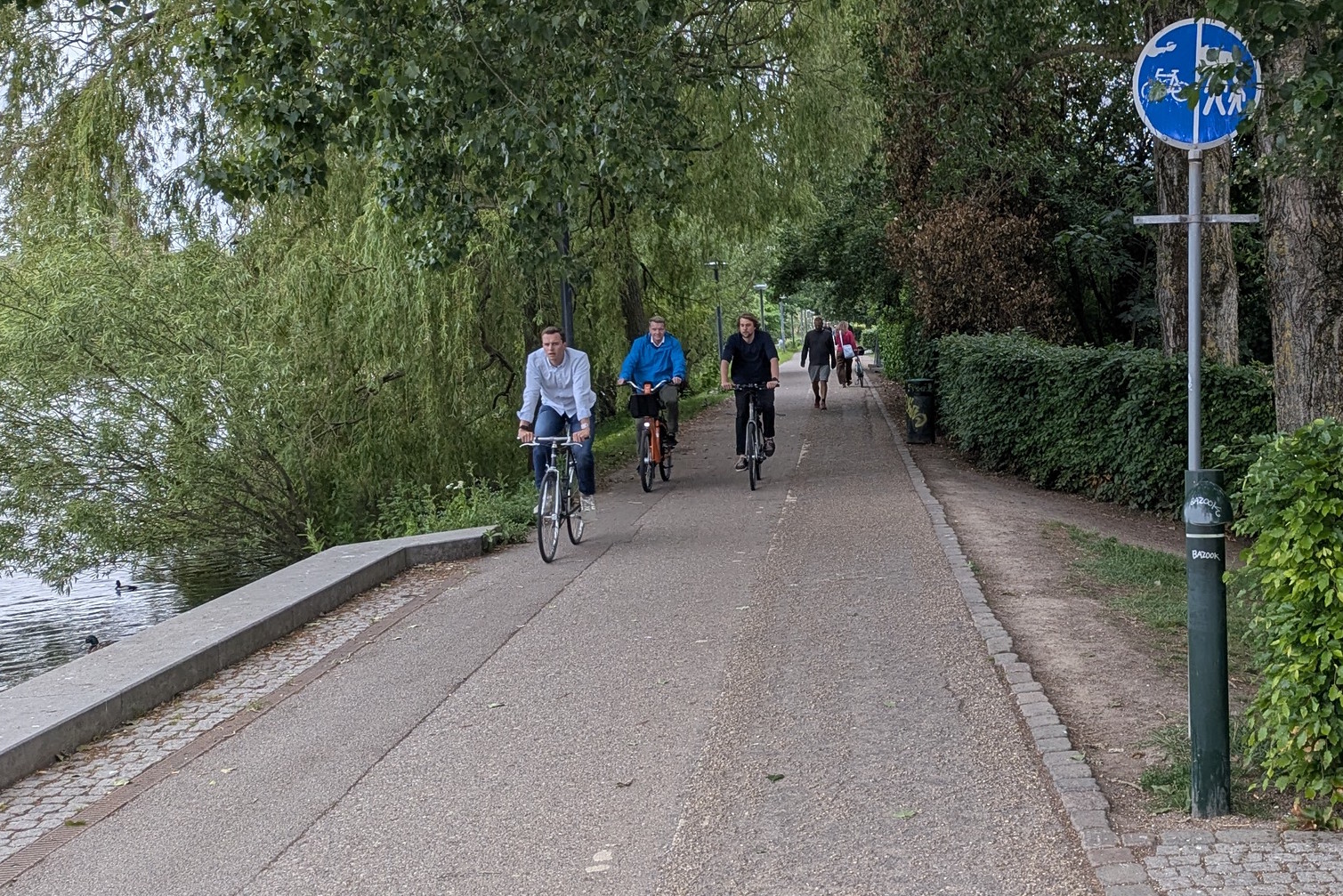
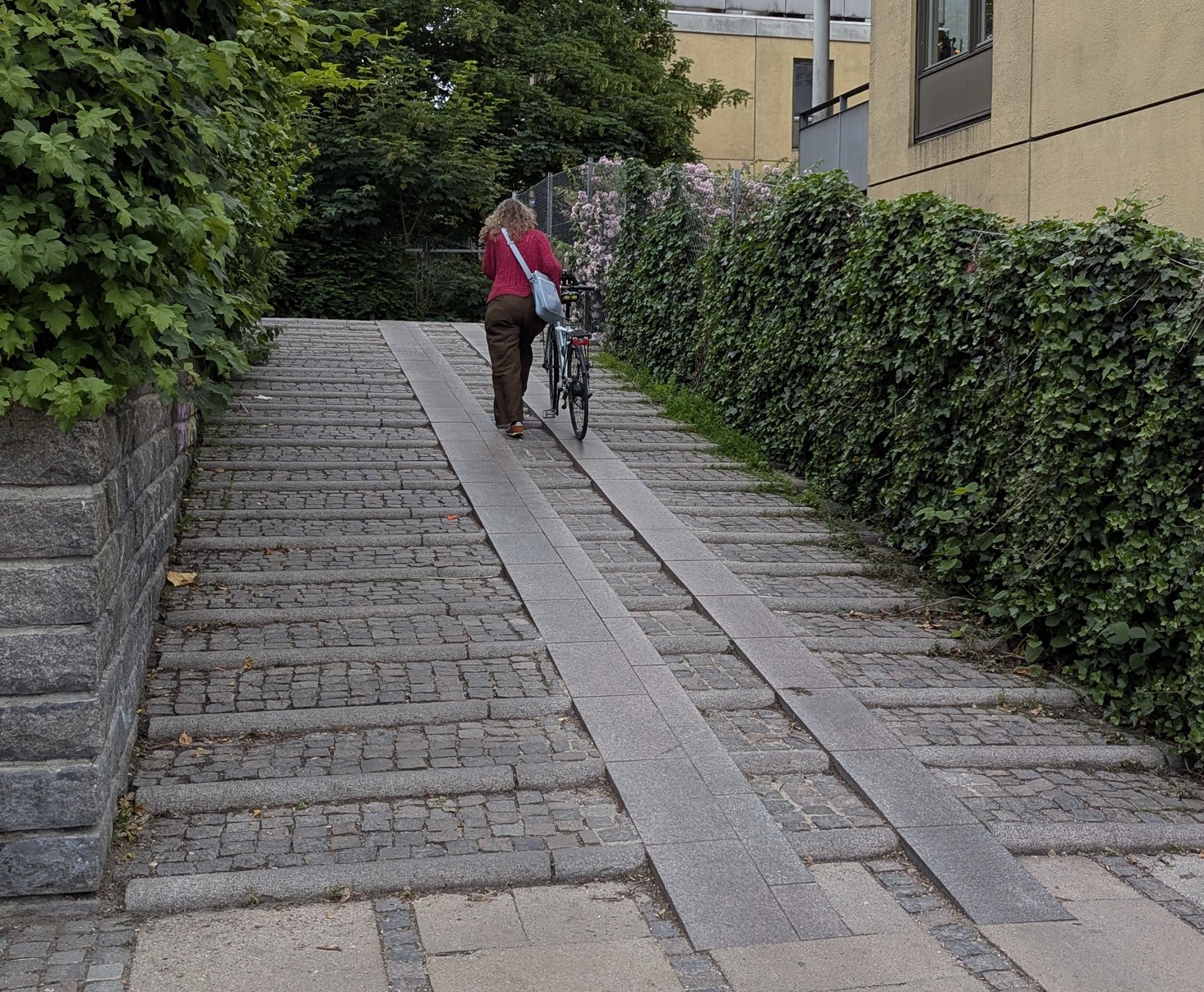
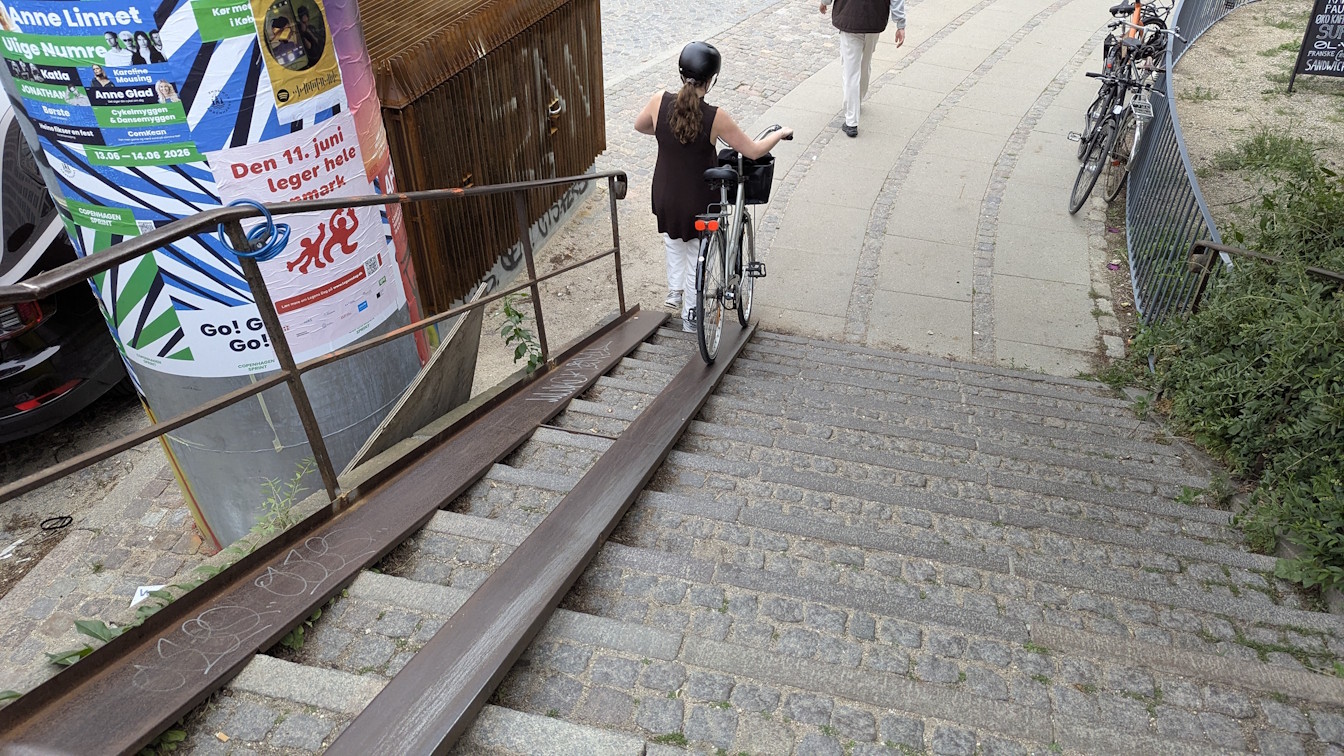
Even when these paths were a bit elevated, the obligatory wheeling ramps came in handy…
Copenhagen is surrounded by several canals and other waterways, so having practical walking and cycling connections across these are important. We saw no shortage of shared path bridges around the city.
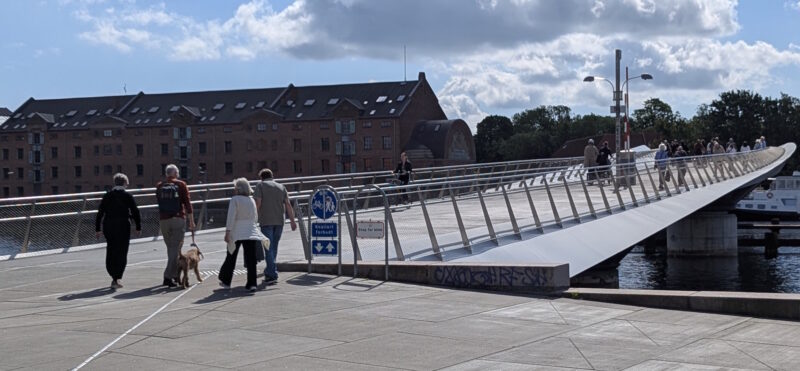
Some of them like the elegant Cykelslangen “Bicycle Snake” bridge provide a pleasant cycle-only route across an inner harbour to a second bridge.
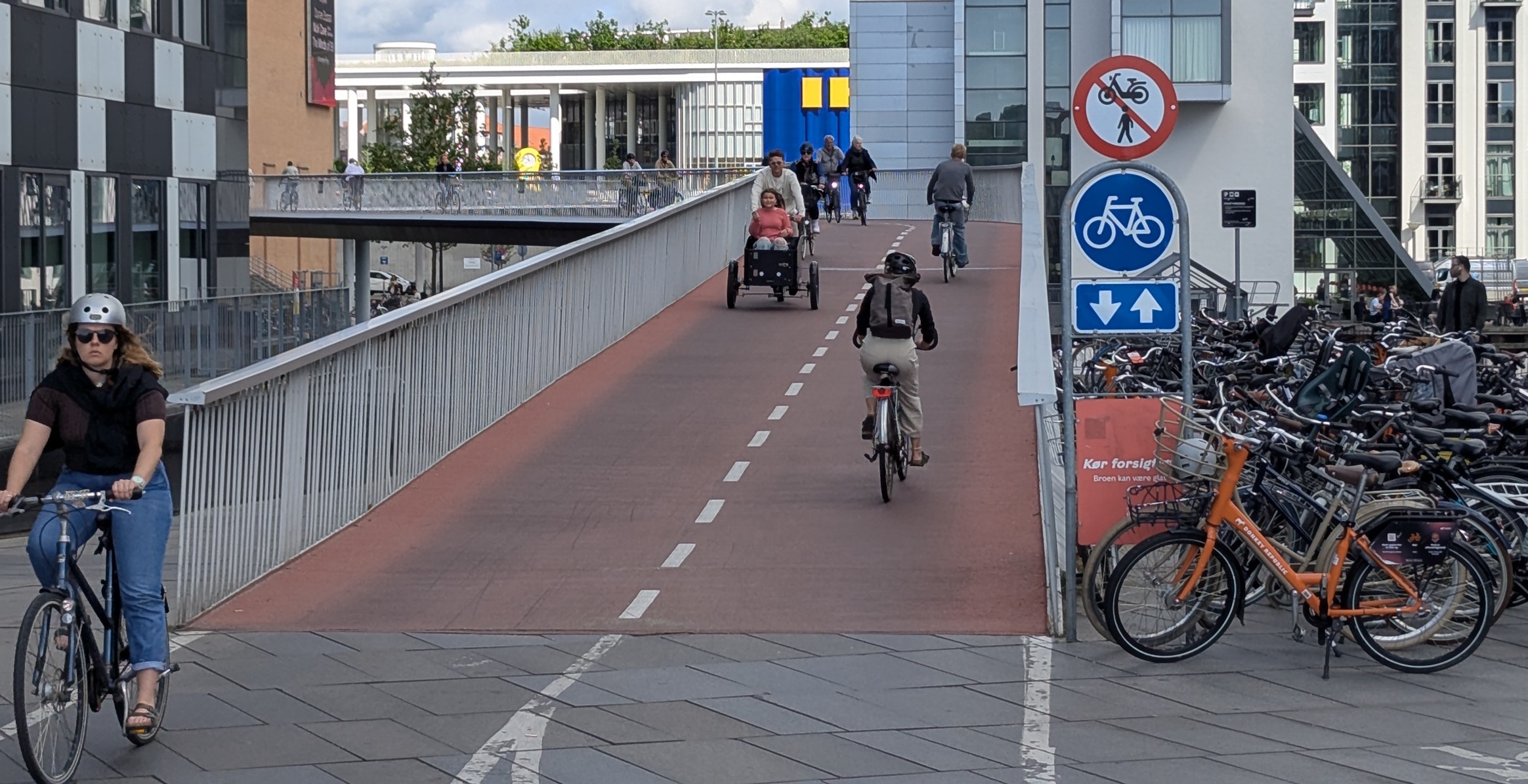
Here are a few more snaps taken around Copenhagen:
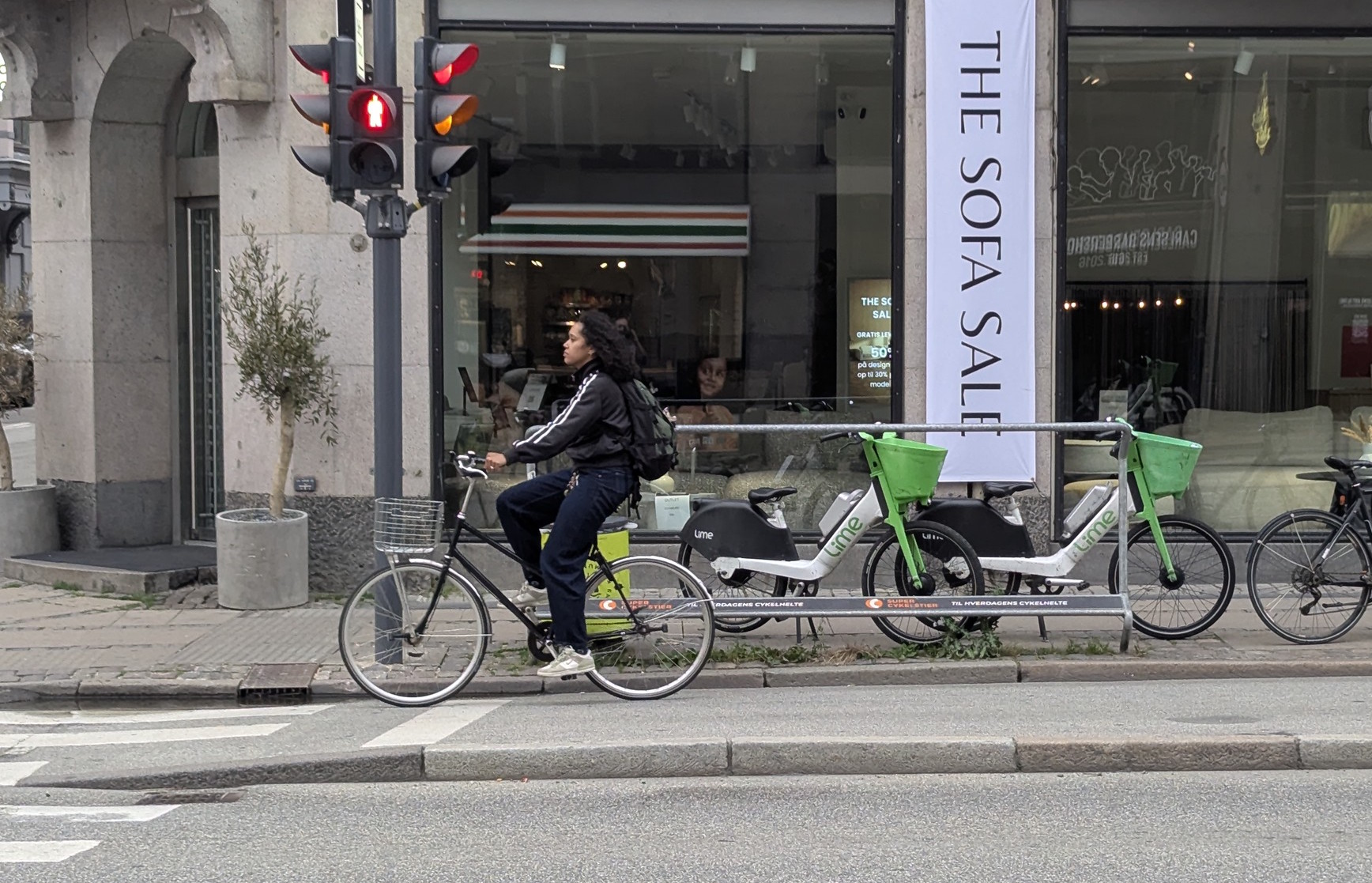
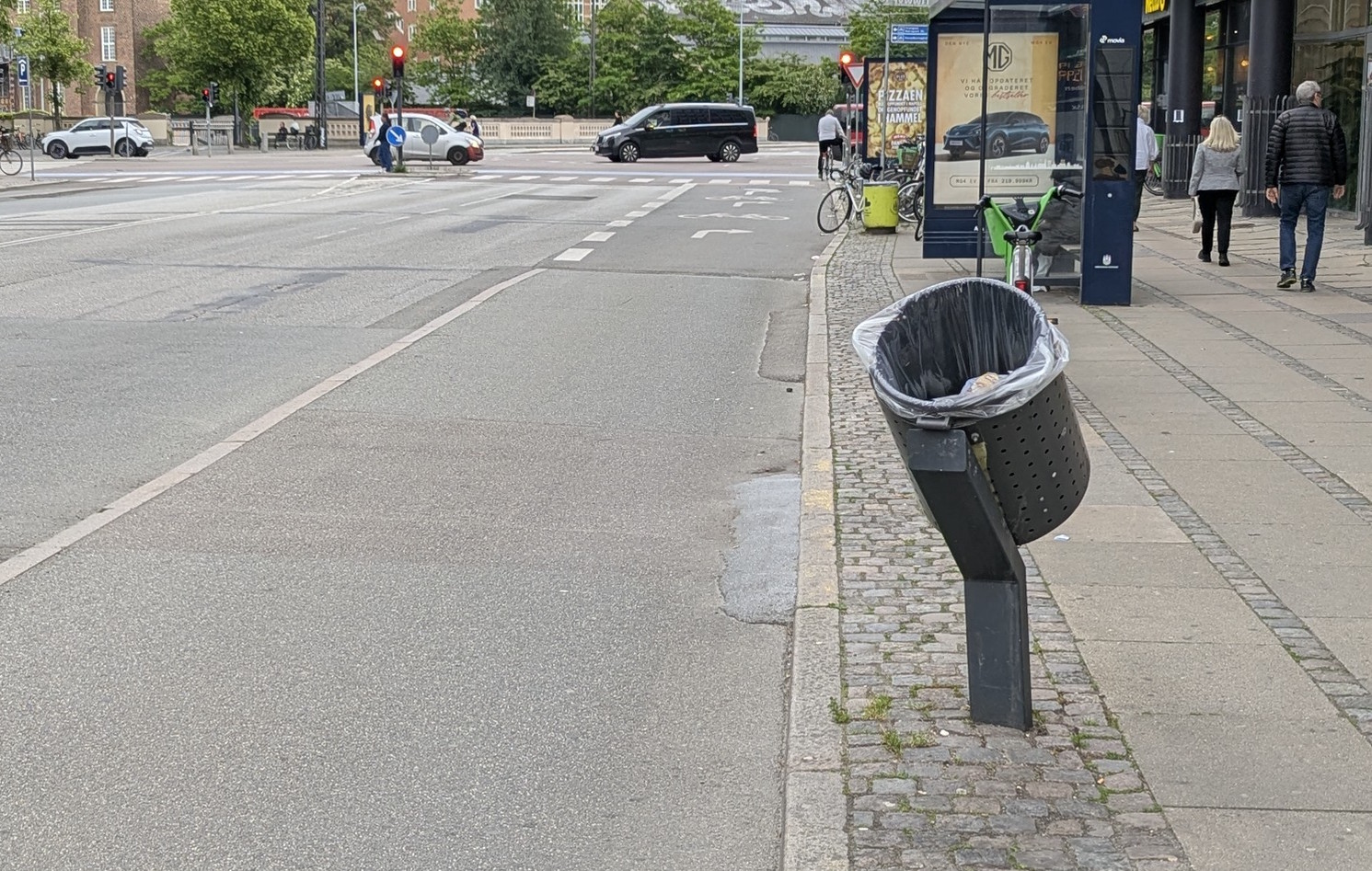
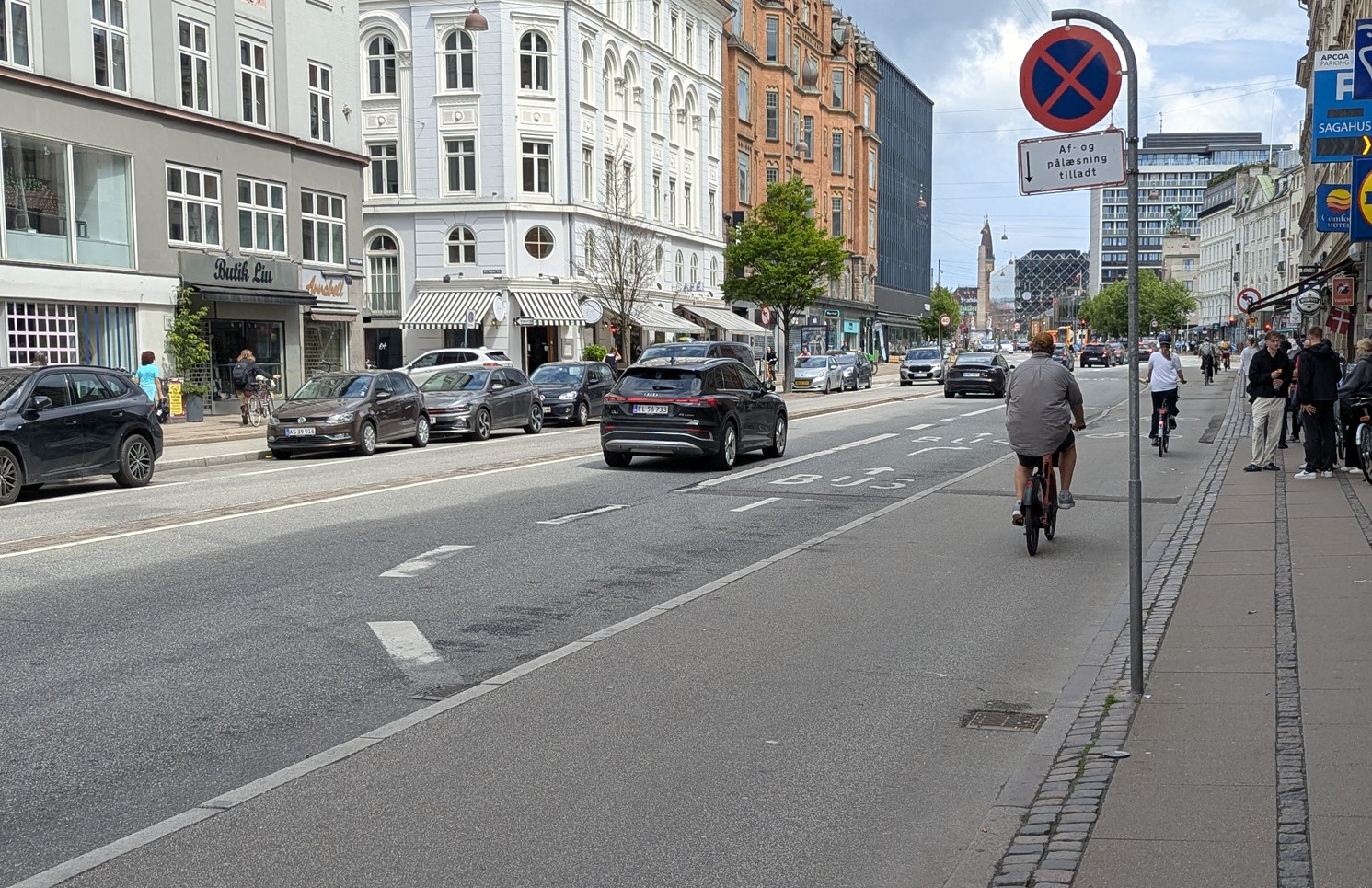
 So that pretty much concludes my explorations of cycle-friendly cities visited around Europe recently. However, if you want to learn a little more about these cities (and other places), come along next Thursday 1st October to Little Andromeda Theatre from 5pm onwards to hear me give a free Biketober presentation on “Sustainable Transport Insights from Europe”. I hope you can make it!
What do you think of cycling in Copenhagen?
I would love to see a contraflow section for cyclists on Worcester St between Park Terrace and Cambridge Terrace. Worcester St’s one-way sections both heading towards Montreal St mean a huge 3-block detour for people cycling, which could probably be avoided fairly easily with contraflow being allowed on these 2 blocks of Worcester.
From observation, currently most cyclists ride on the footpath for a block to avoid the 3-block detour, which is not ideal, especially when they ride too fast and scare people walking.
The “mixing zone” approach at intersections is especially interesting. Letting cyclists and right-turning drivers merge before the turn seems like a simple way to reduce hook conflicts, and the dedicated blue crossings and hook-turn signals make the whole system feel much more predictable.