
With the current surge of interest in cycling, it was encouraging to see the other day local advocacy group Spokes Canterbury urging Chch City Council to fast-track rolling out low-cost cycleways across the city similar in style to the Rolleston Ave / Park Tce one (BTW if you want some advice on how to implement these, check out this Research Note…). Away from Christchurch, there are several other examples of where low-cost cycleways have been rolled out fairly quickly – none more so than Wellington City (which recently received a Trafinz Sustainability Leadership Award for their bike network). Two years ago, I checked out many of the completed cycleways there, including several low-cost ones, as reported in this blog post from Apr 2024…
As mentioned a few weeks back, I was in Wellington for a holiday with my partner and we took the opportunity to jump on some bikes and have a look around the city at some of the more recent additions to their cycling network – and in the past 2-3 years there have certainly been quite a few changes…
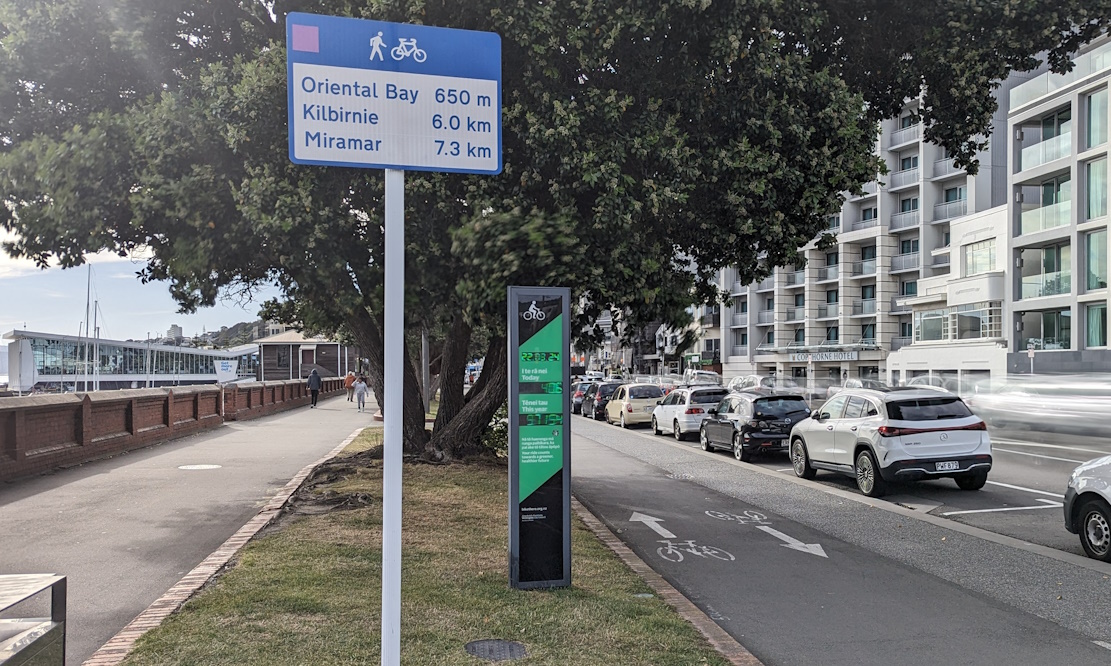
From our start at Queens Wharf, our route took in the waterfront and various eastern bays near the airport and Seatoun, then cut through Kilbirnie towards Newtown (with a brief detour up Mt Victoria), back past the Basin Reserve towards the waterfront, and finally another diversion past Parliament up to the Botanic Gardens and back – phew!
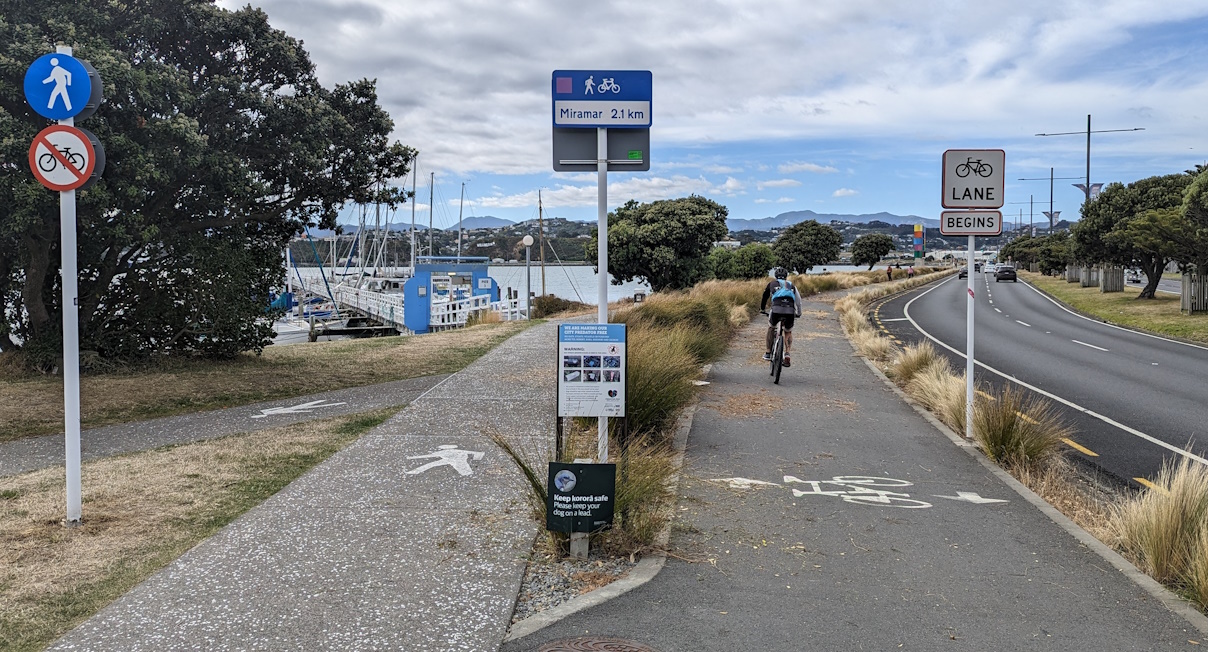
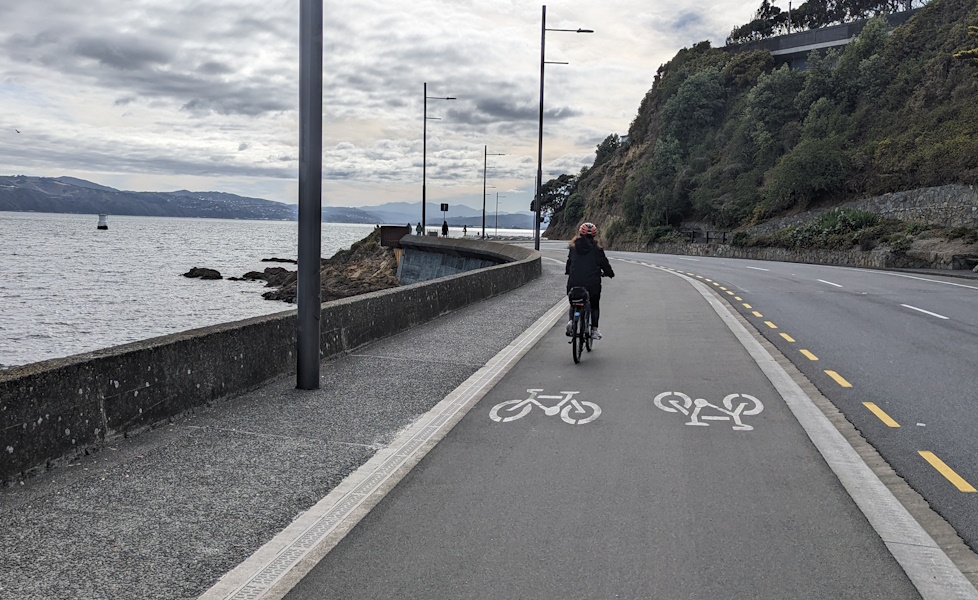
Most of our route was either on shared paths, separated cycleways, or relatively quiet roads; there were very few sections where we had to tangle with traffic.
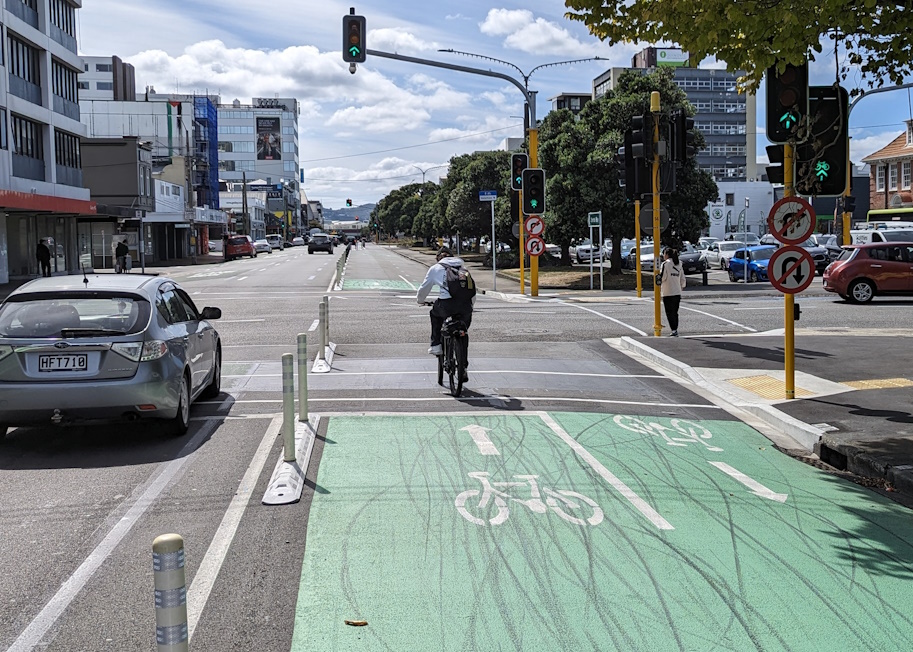
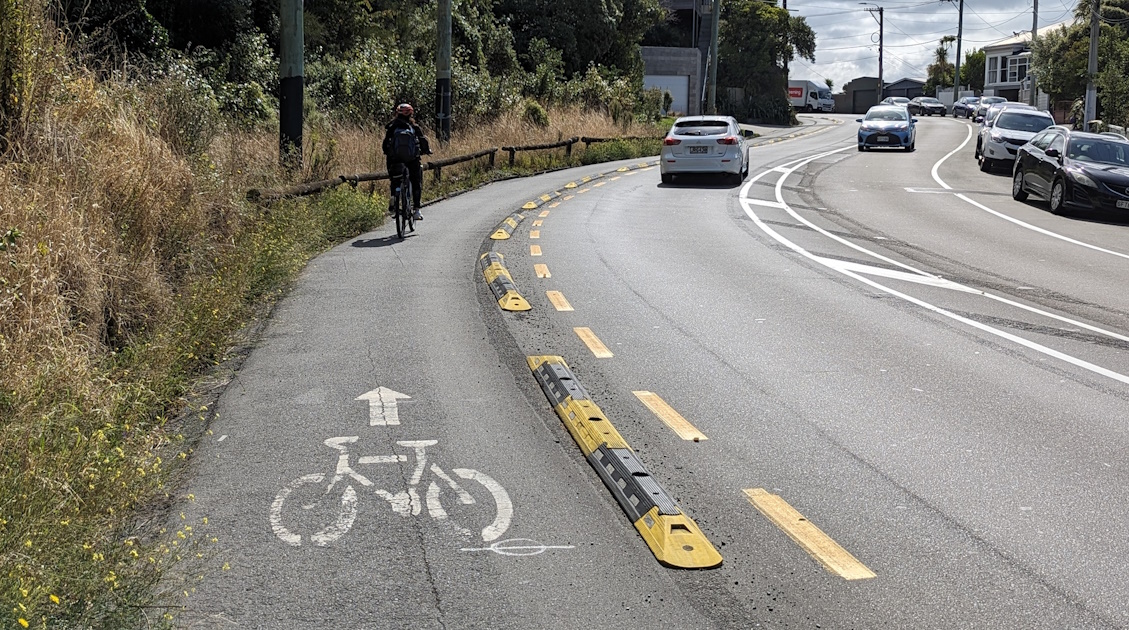
Wellington has been able to roll out quite a lot of cycleways in a fairly short time, thanks to using quick-build materials featuring low kerb separators and flexi-posts.
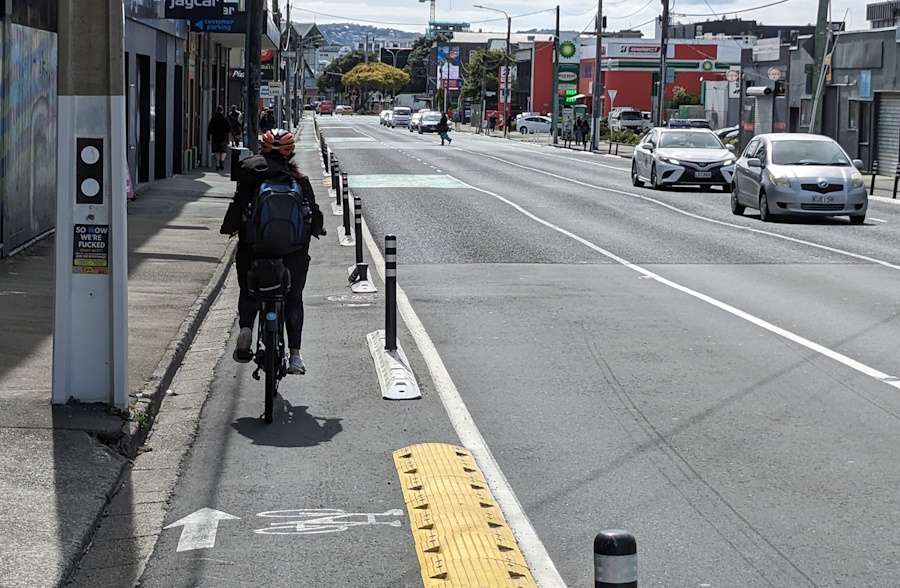
Mind you, that doesn’t mean that all of the posts are in good nick – I suspect that someone got a bit grumpy on one route and took out quite a few of them…
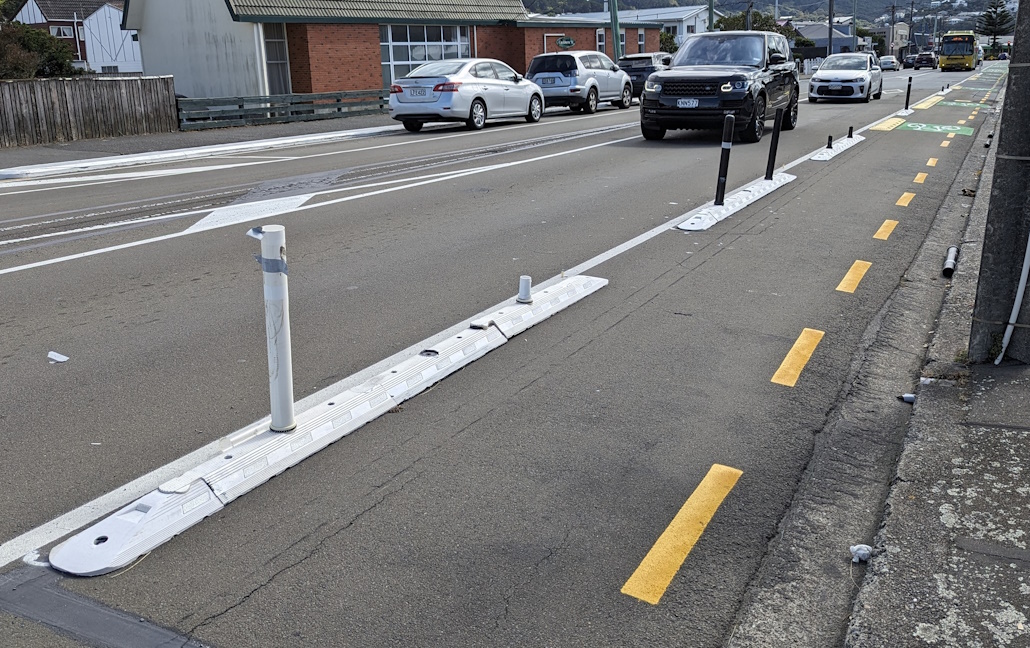
For the hilly routes in Wellington, the general approach has been to install a separated facility in the uphill direction, but to simply let downhill riders share the traffic lane, as they are likely to be travelling at similar speeds thanks to gravity. It won’t necessarily appeal to all of the less confident riders, but certainly will get plenty more people biking for now.
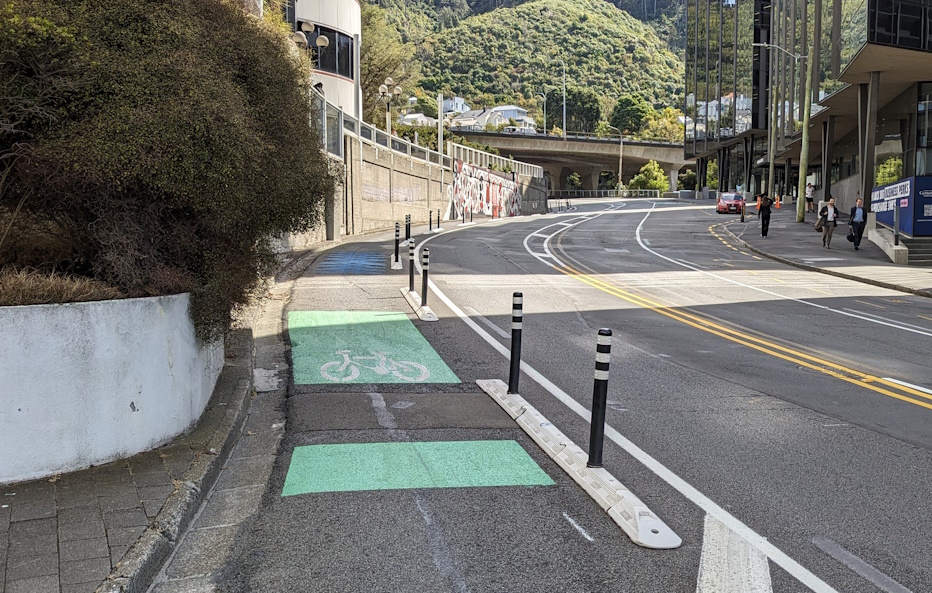
In other places, separated cycleways co-exist next to footpaths, with the two facilities being differentiated with asphalt and concrete surfaces.
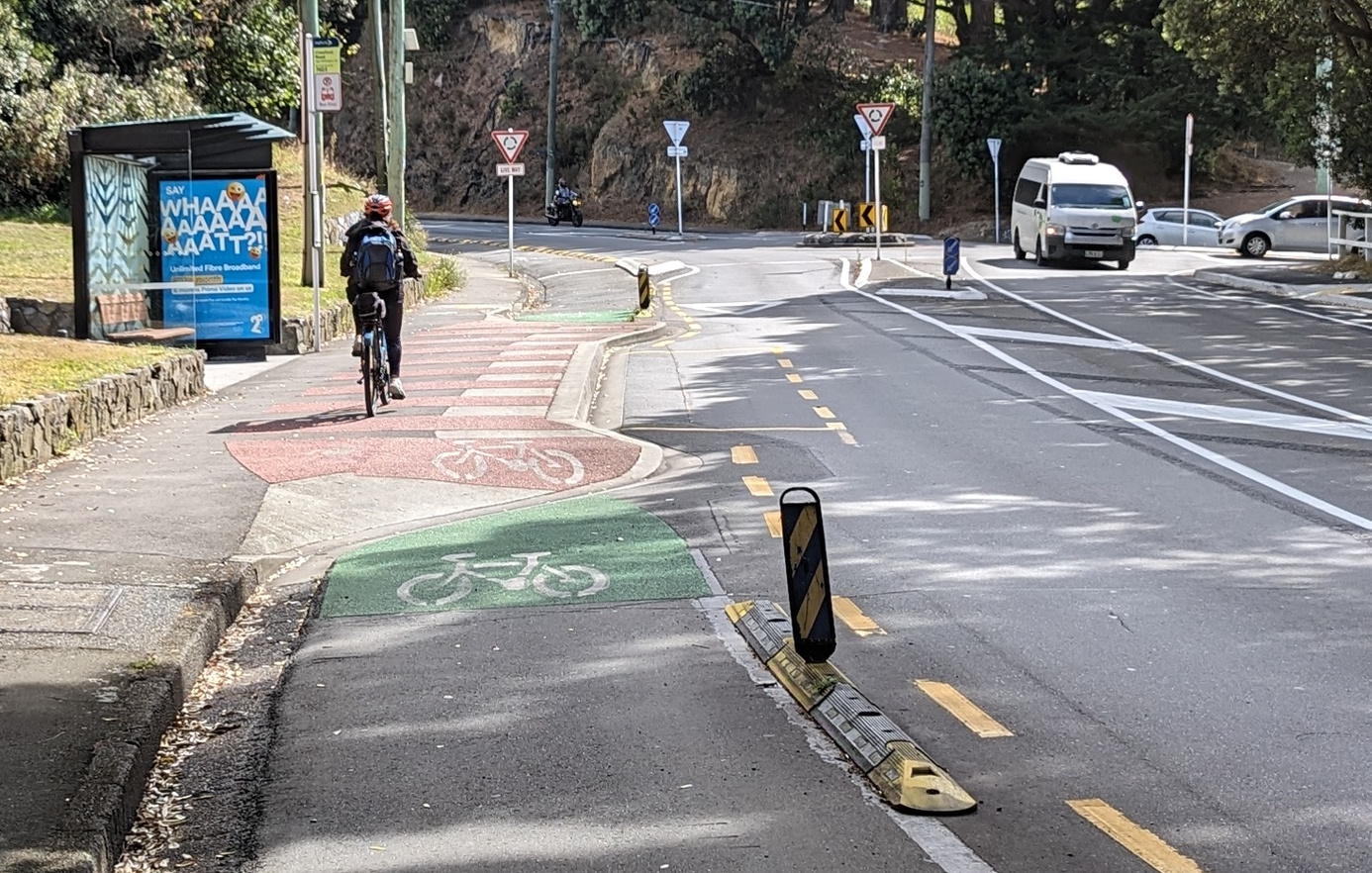
Bus stop treatments are an interesting mix, with some using temporary materials to create a raised platform for cyclists to ride through.
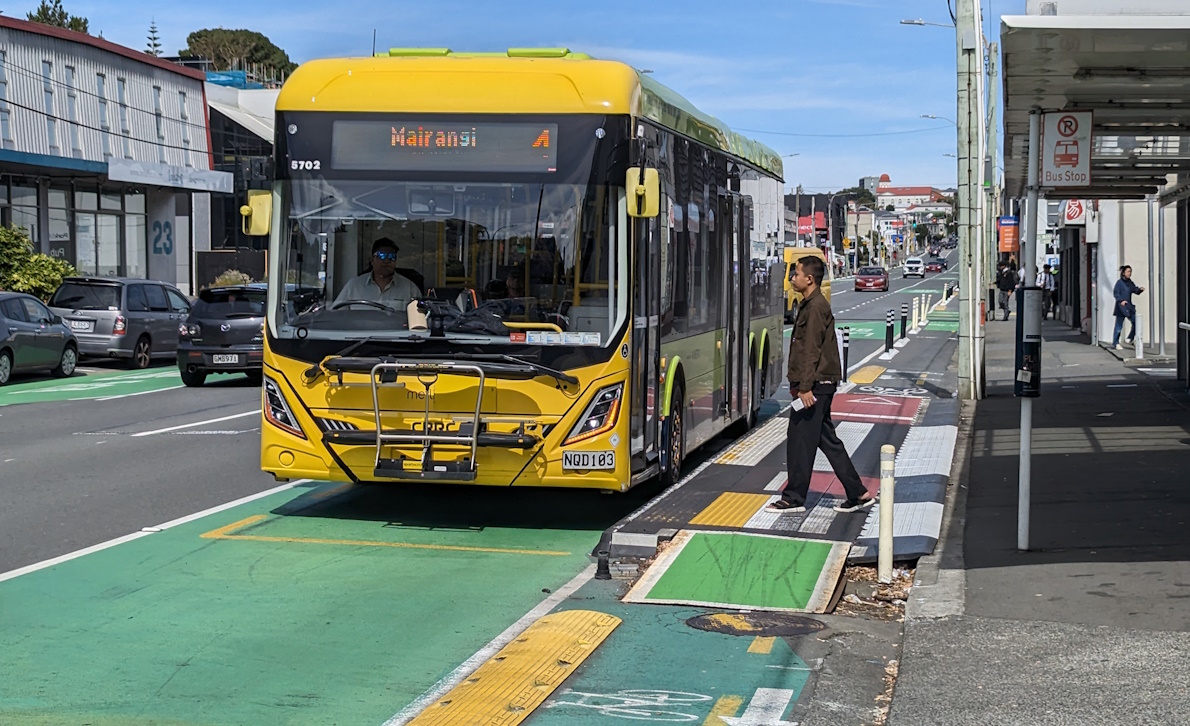
Meanwhile at other locations, cyclists briefly leave the road to share the footpath area through the bus stop zone.
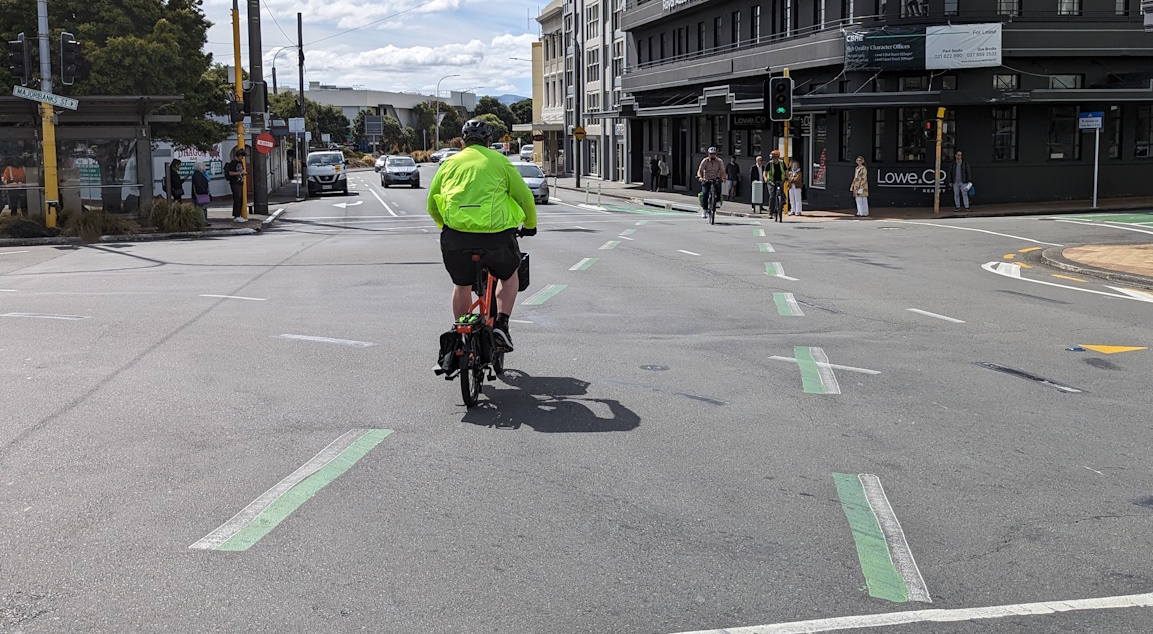
Custom cycle traffic signals help riders get through tricky intersections, although it can be a challenge sometimes to see the signals from afar. In the near future there is a proposal to trial some small lower-level cycle signals on the near-side of some intersections – watch this space…
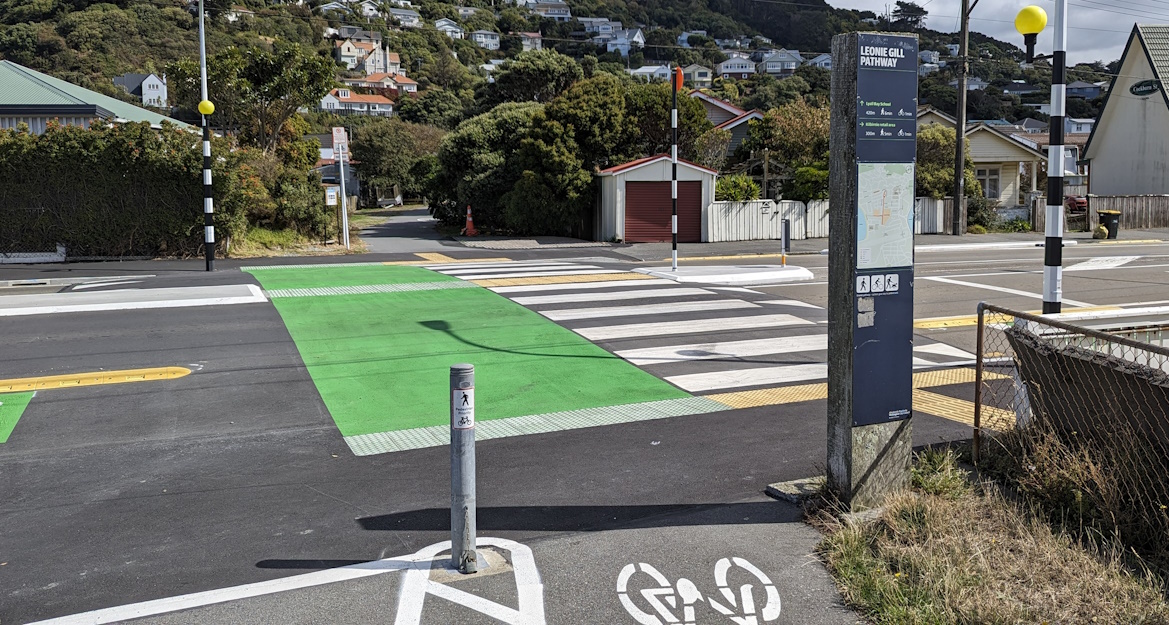
In various locations, we also saw dual crossings used where both pedestrians and cycles get priority across roadways.
In the end we completed 42kms around Wellington on our e-bikes (thanks to the good folk at Switched On Bikes for the rentals!). Afterwards, I was musing on the fact that, only a few years ago, most of our journey would have been undertaken on very unfriendly, busy traffic routes.
It’s nice to see what has been rolled out in Wellington already and we look forward to seeing the rest of the network completed in the next few years!
What do you think about rolling out more low-cost cycleways in Chch?