
In the past week, as part of some research I’ve been doing, I have had two video interviews with representatives from Sweden about their country’s impressive road safety performance over the past few decades. It’s hard to believe that it was also a little over three months ago that I was last in Sweden in their capital city Stockholm (and yes, we may have visited the ABBA Museum too…).
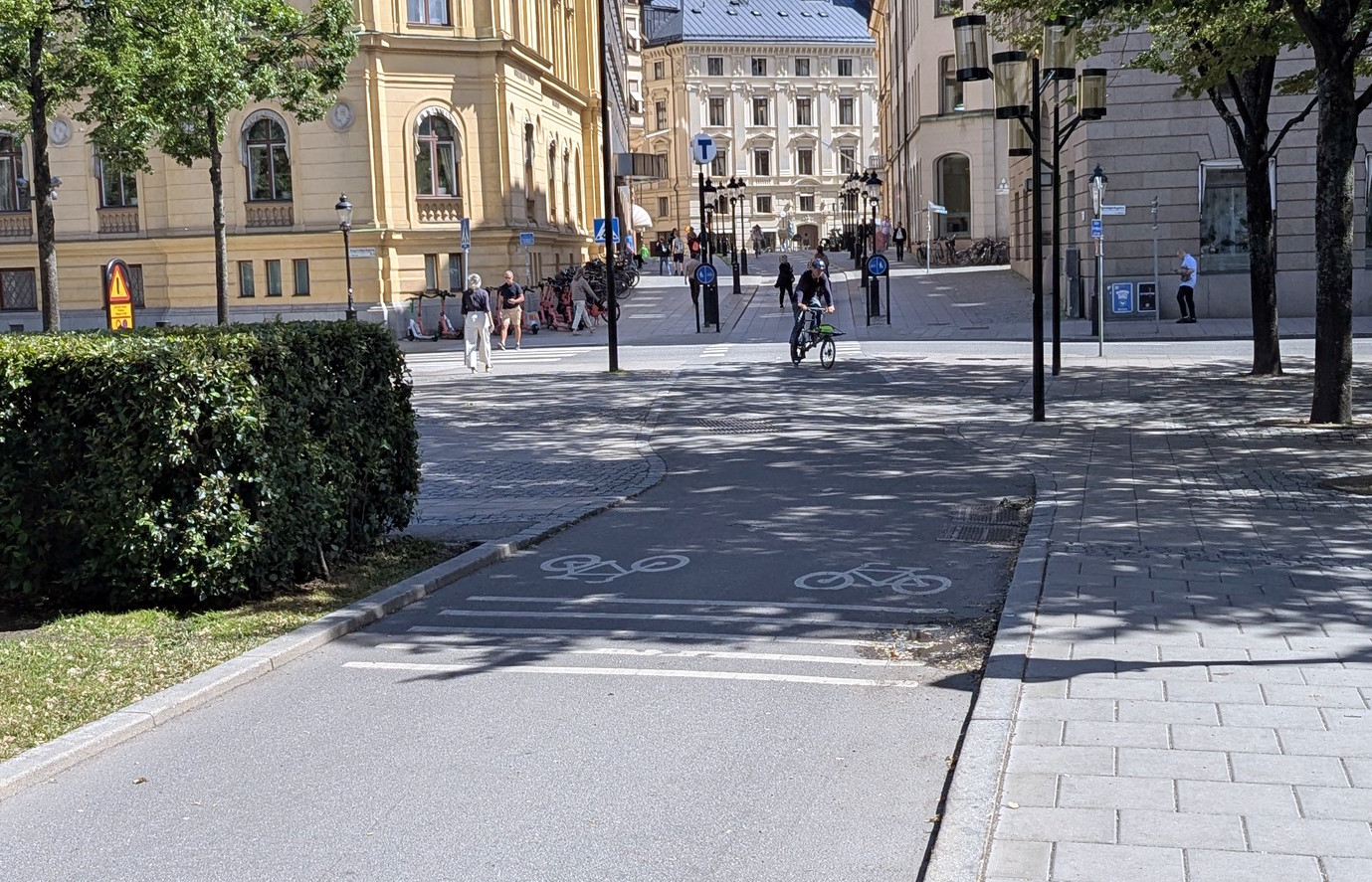
Stockholm is another example in Europe of a place with some pretty impressive cycling provision; for that reason, it is already in the Top 30 on the Copenhagenize index.
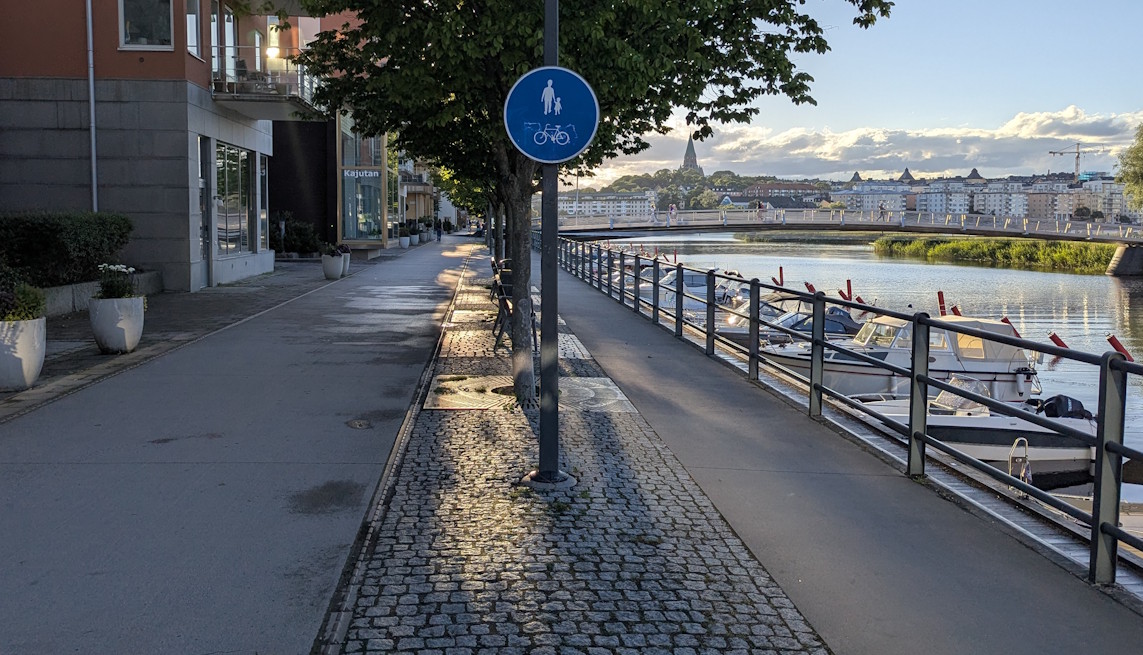
We stayed for two nights in the south part of Stockholm (Hammarby) but, as well looking around there, we did also take the opportunity to explore the districts further north in Gamla Stan and the central city itself (pretty impressive train/tram transport they have in the city too).
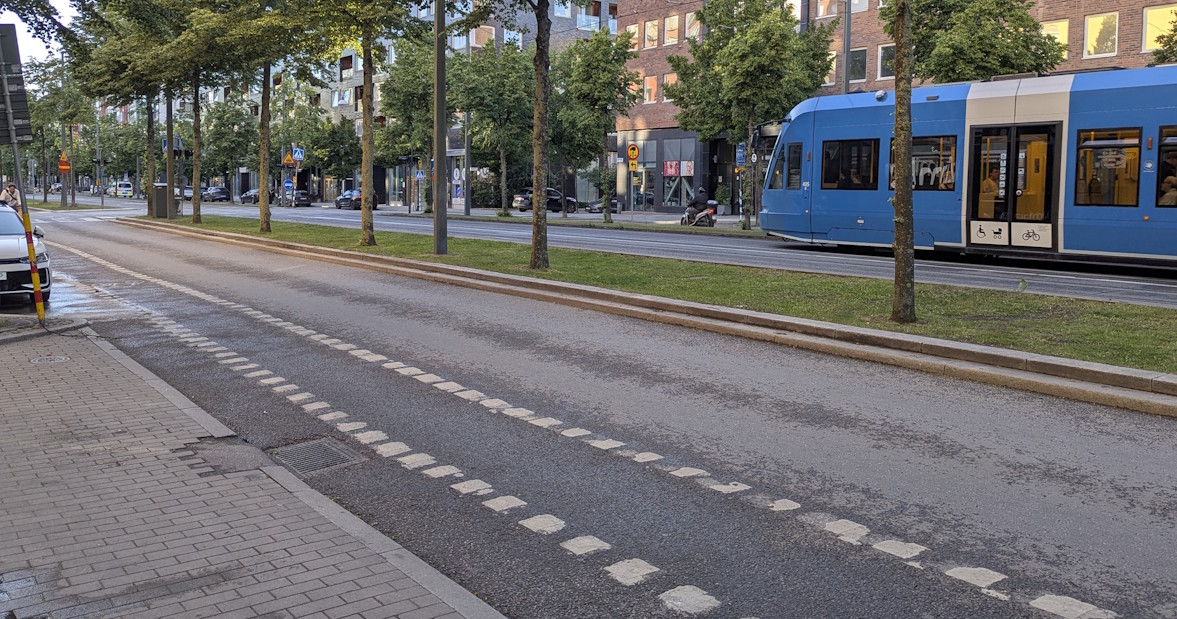
Not surprisingly, for a country that is ahead of the curve in road safety, lower speed limits are an important component of what makes Stockholm safe and cycle-friendly. Often 30km/h, but even 40km/h was common.
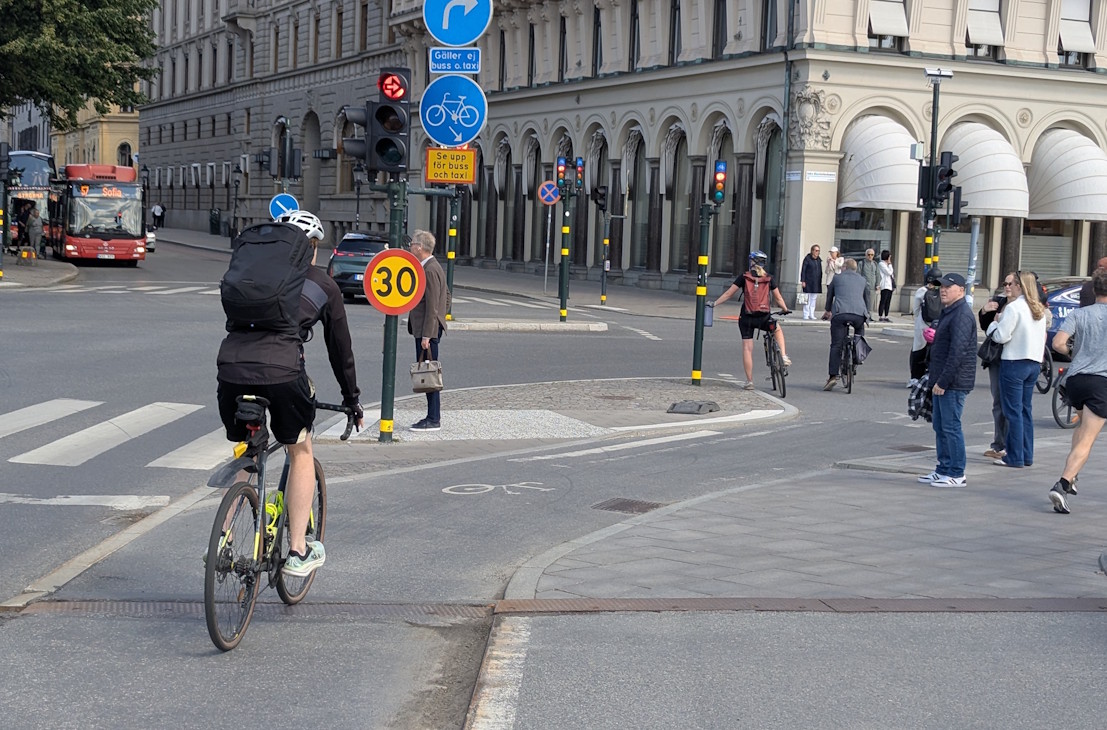
This is often coupled with traffic calming measures to ensure safer motor vehicle interactions for active users either travelling alongside or crossing.
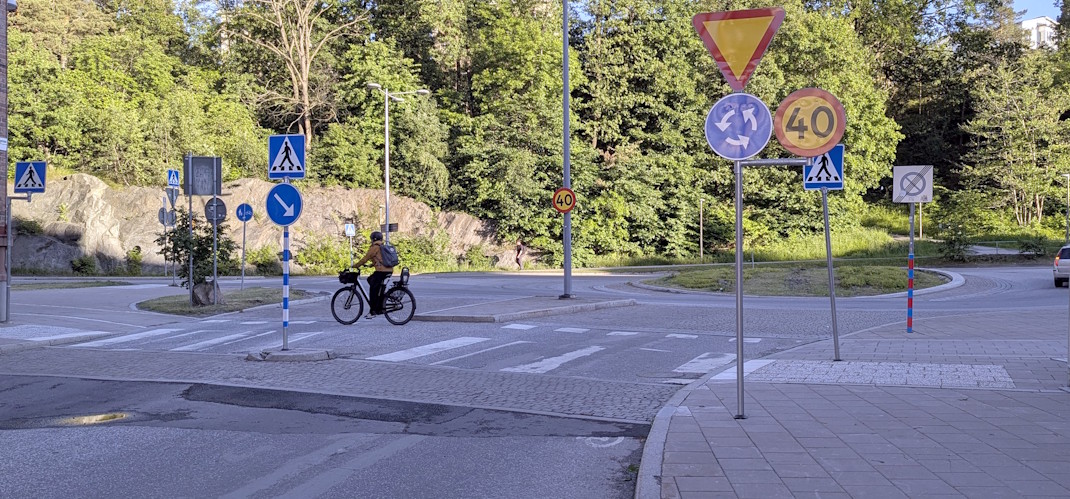
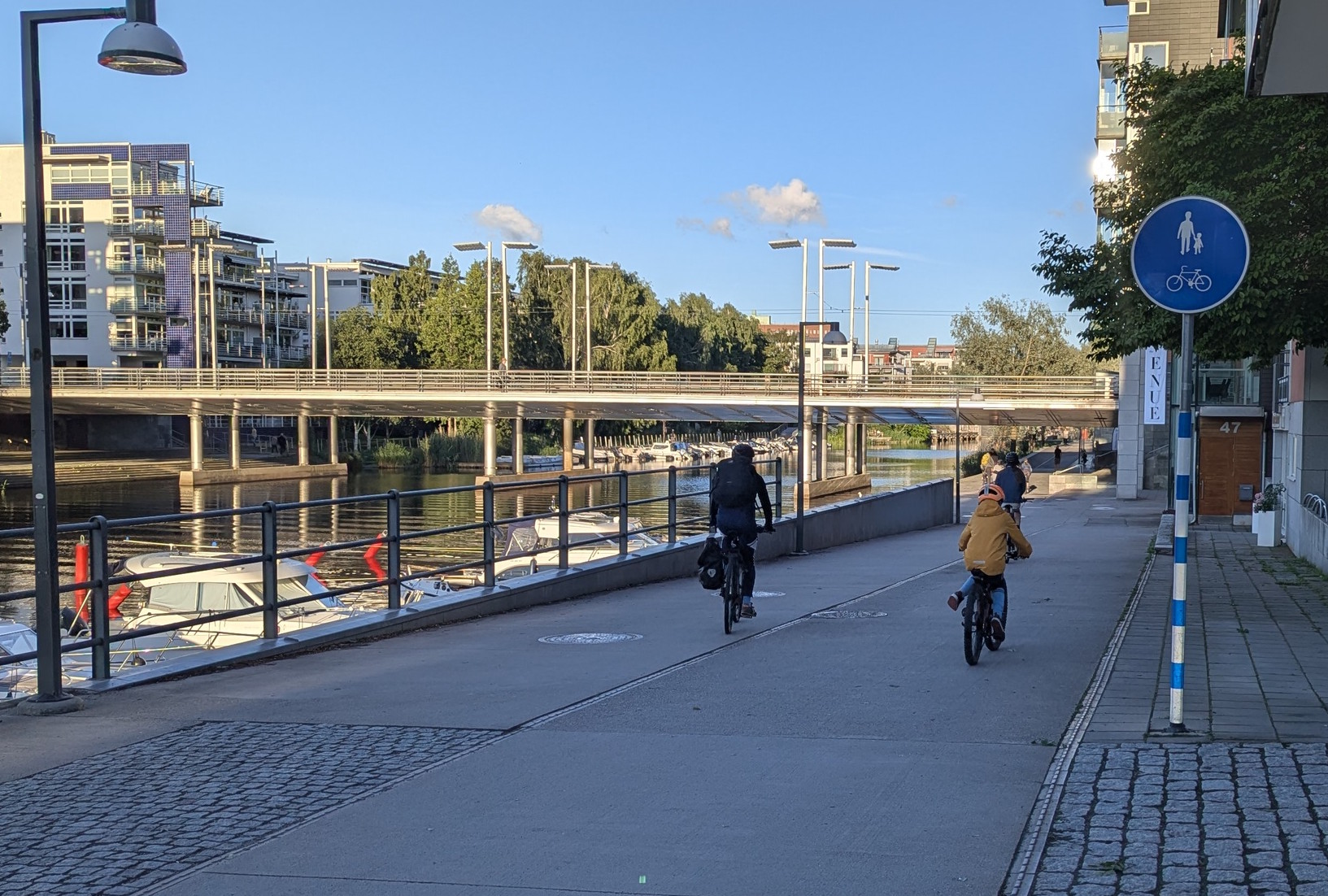
Cycle facilities could be a mixture of occasional off-road paths and sometimes on-road cycle lanes – the latter usually working well when coupled with the aforementioned lower speed limits.
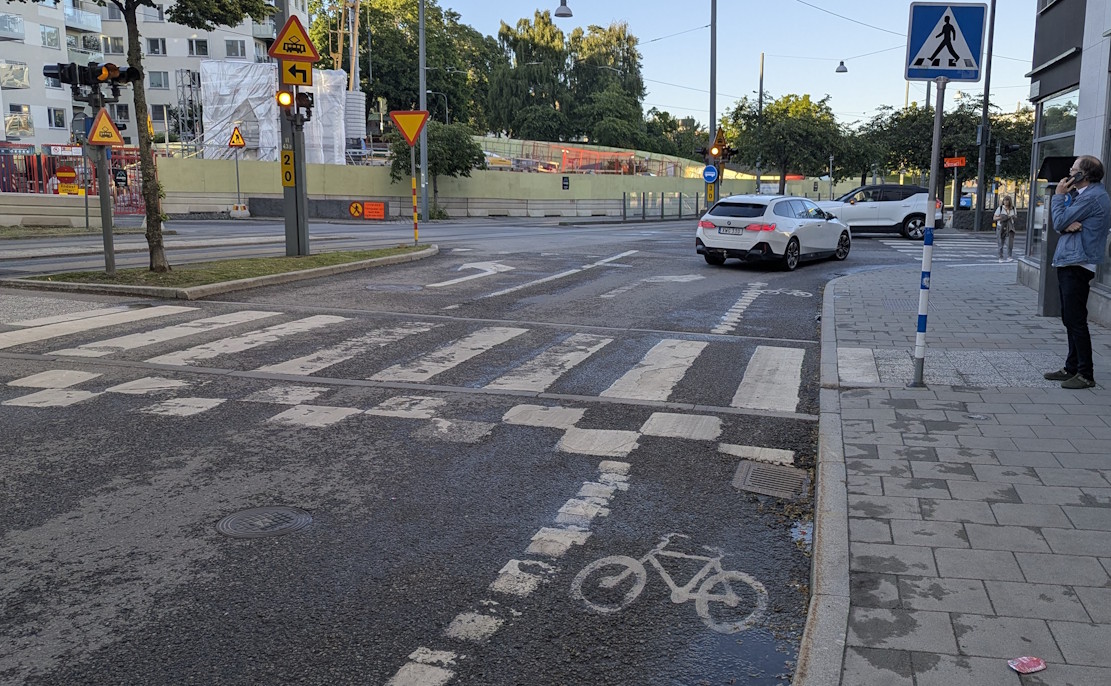
Sometimes the pathways were shared by all users, but we did see some examples that separated pedestrians from cyclists.
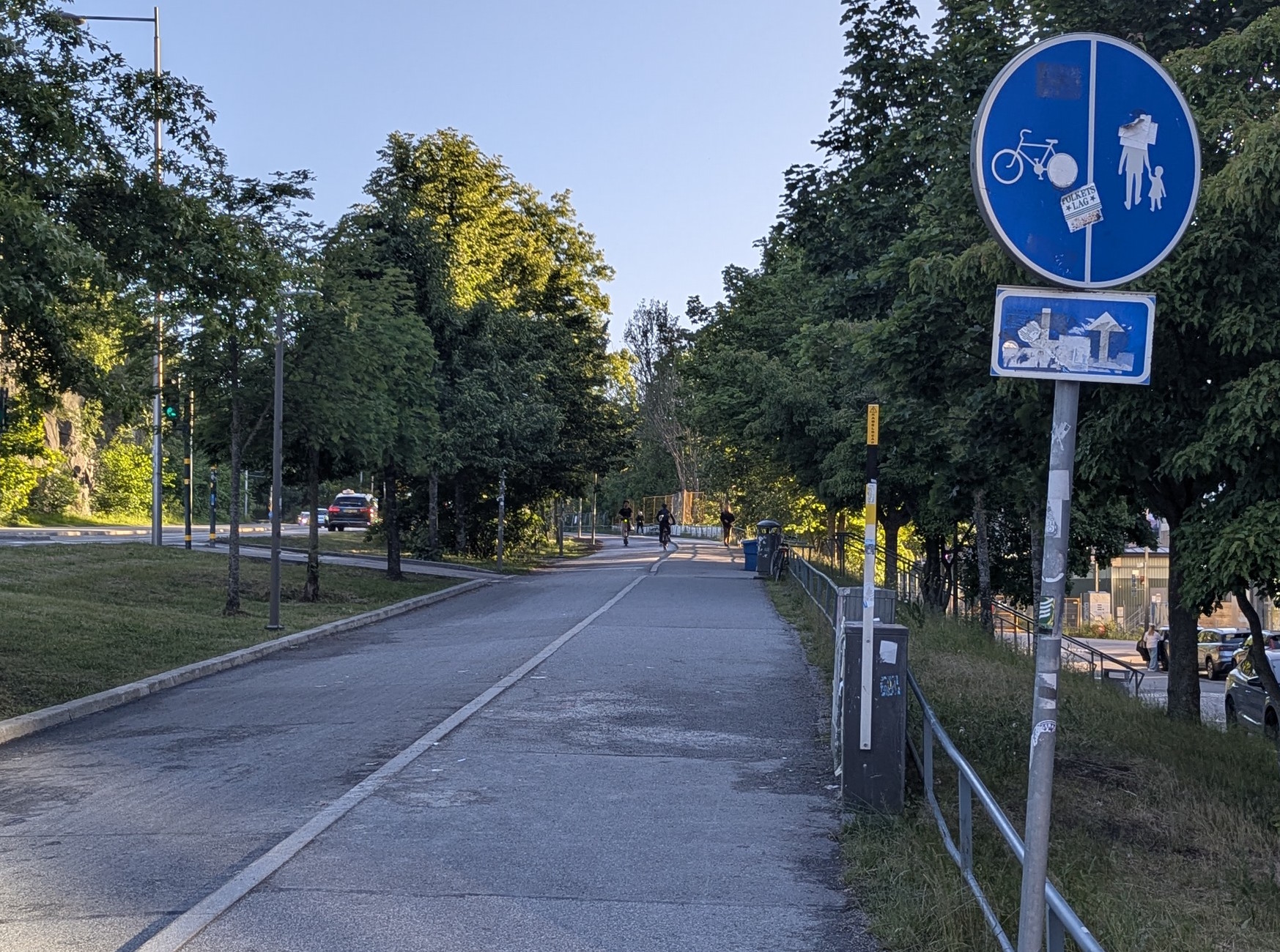
Safe crossings were also important for pedestrians and cyclists. When not just a standard priority “zebra” crossing, signalised crossings were also quite common.
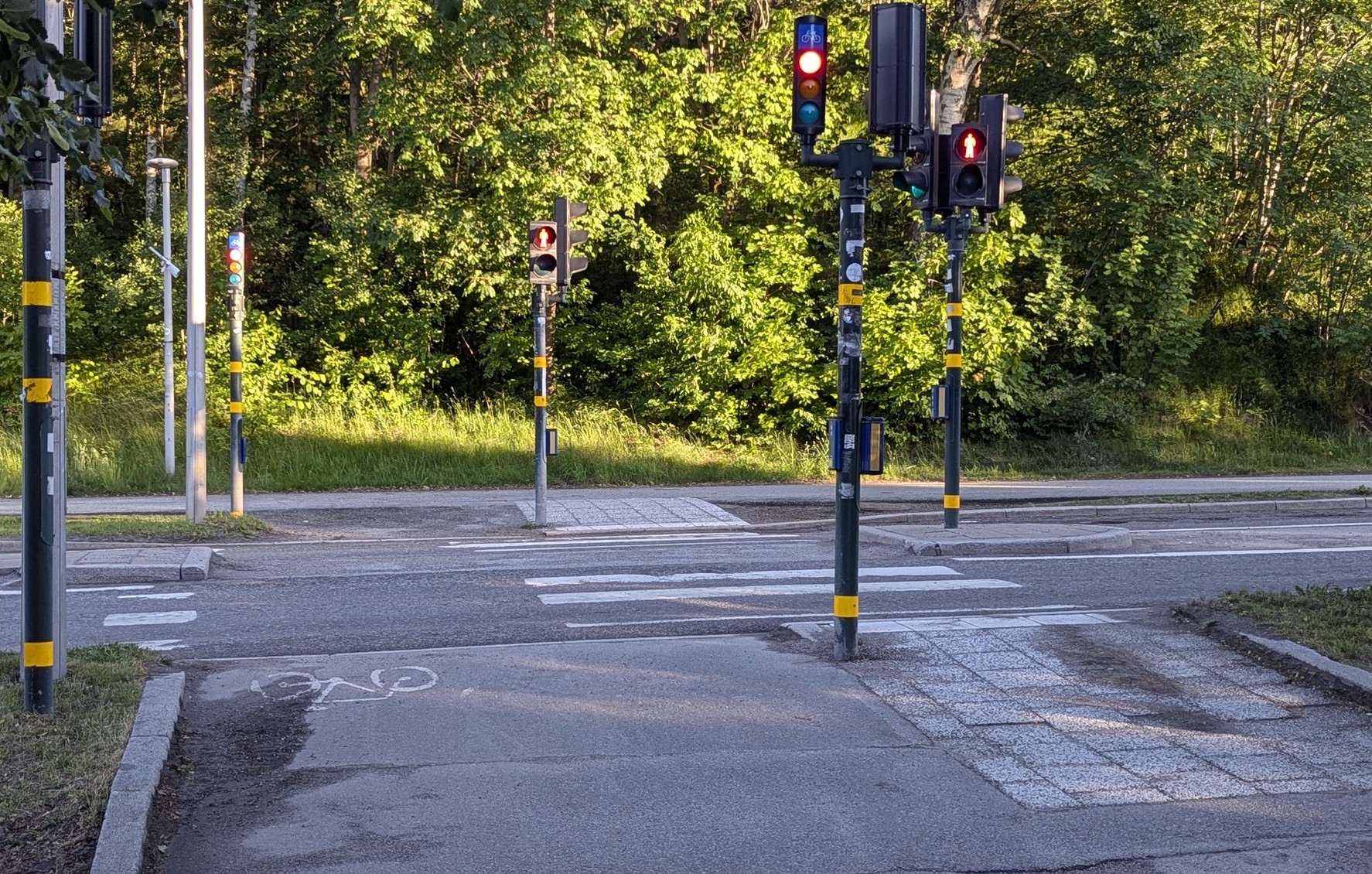
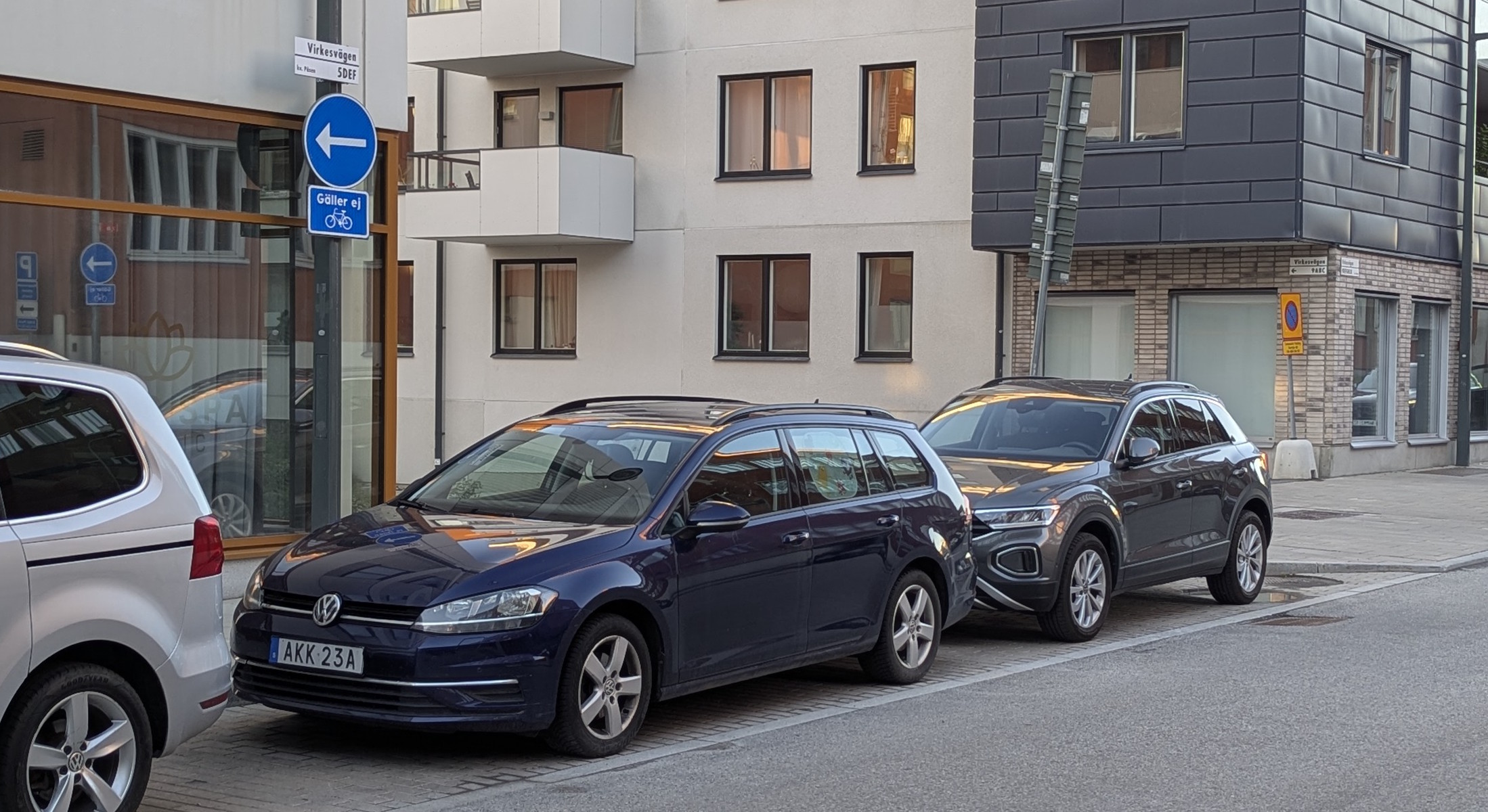
As we noted in several other European cities, it was also useful to provide network advantages for cyclists over motorists. This could be allowing for contra-flow cycling on one-way traffic streets…
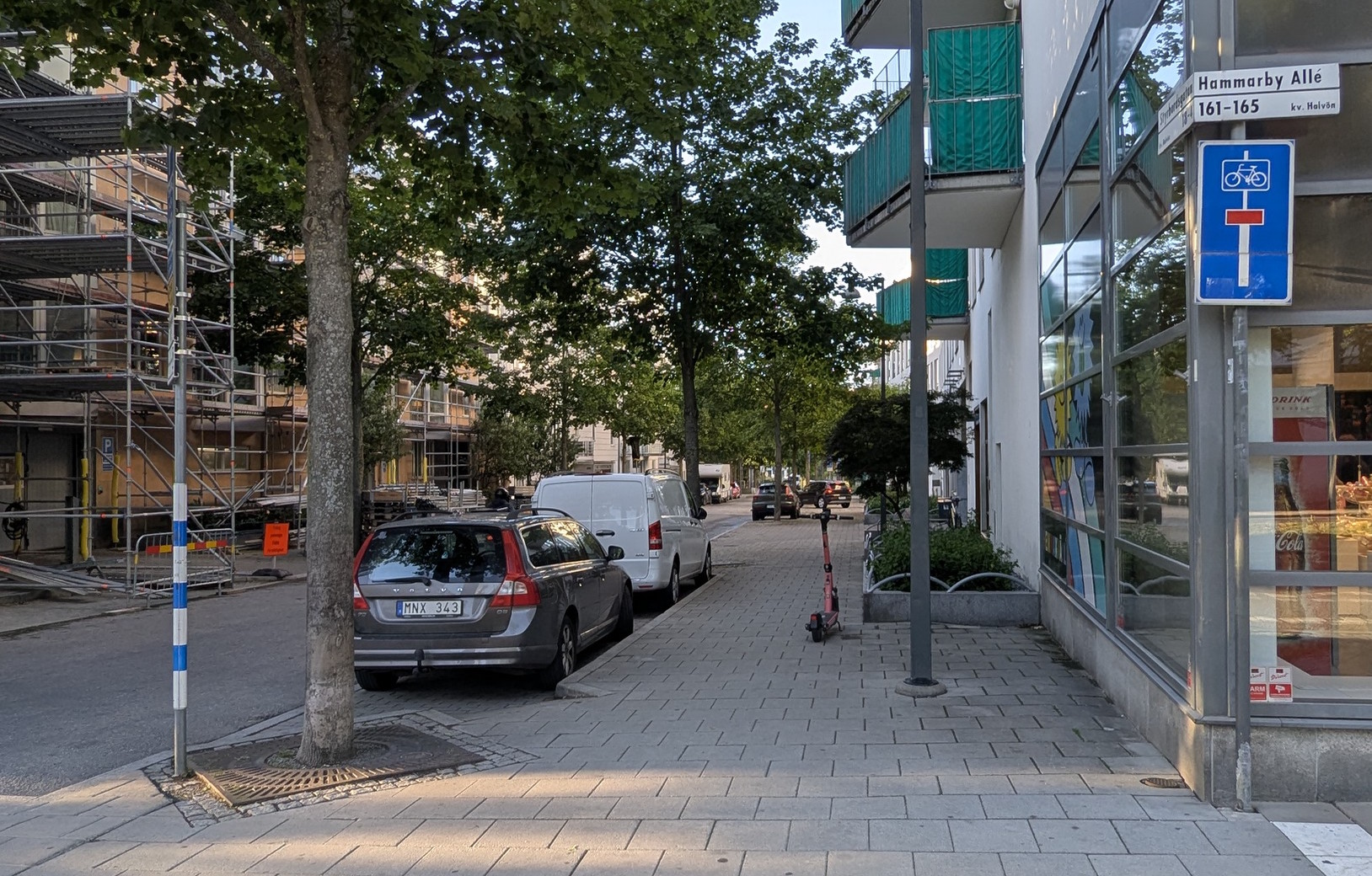
…or by letting cyclists connect through the end of “no exit” streets for motorists.
Here are a few more photos we saw from around Stockholm:
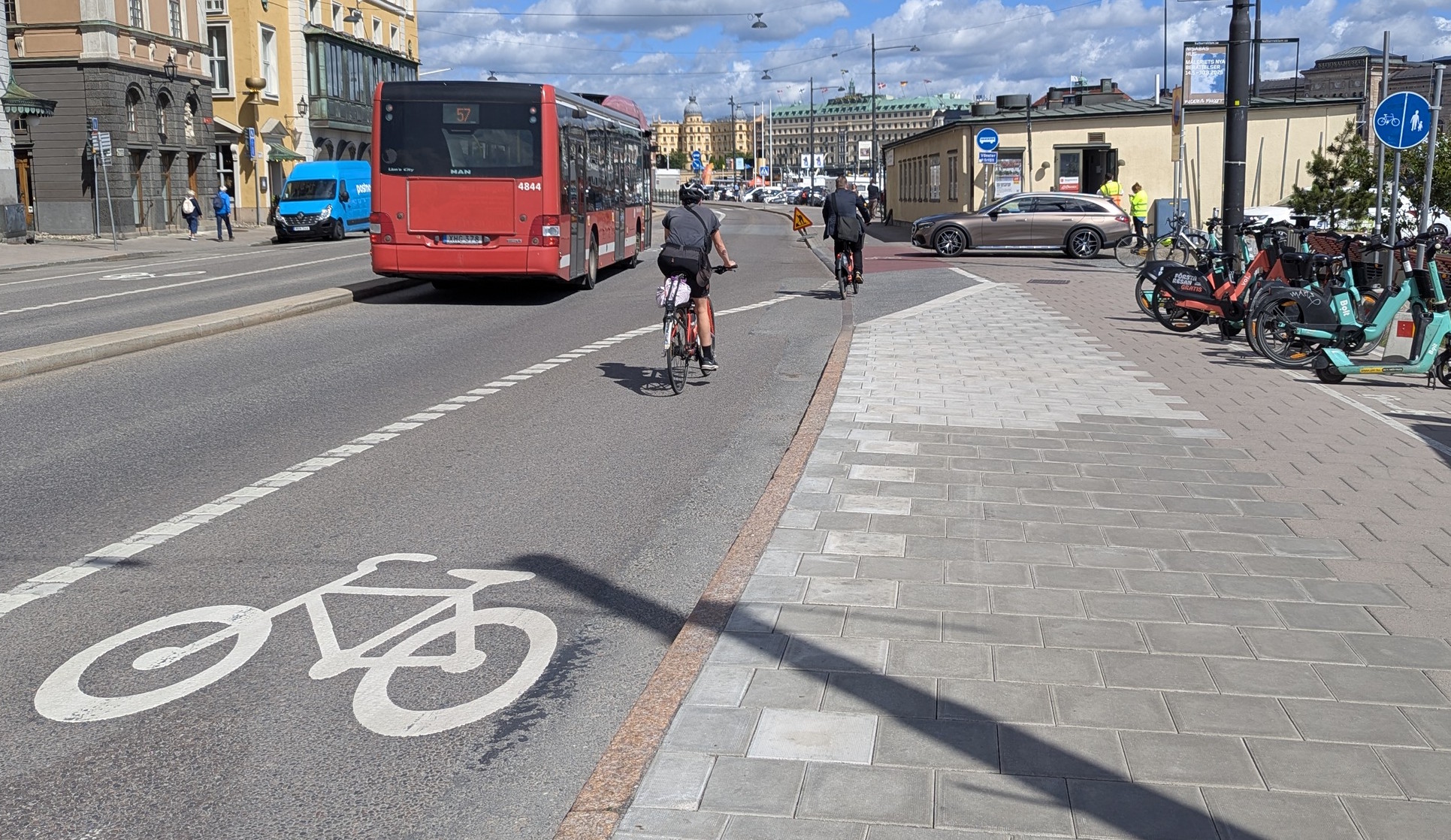
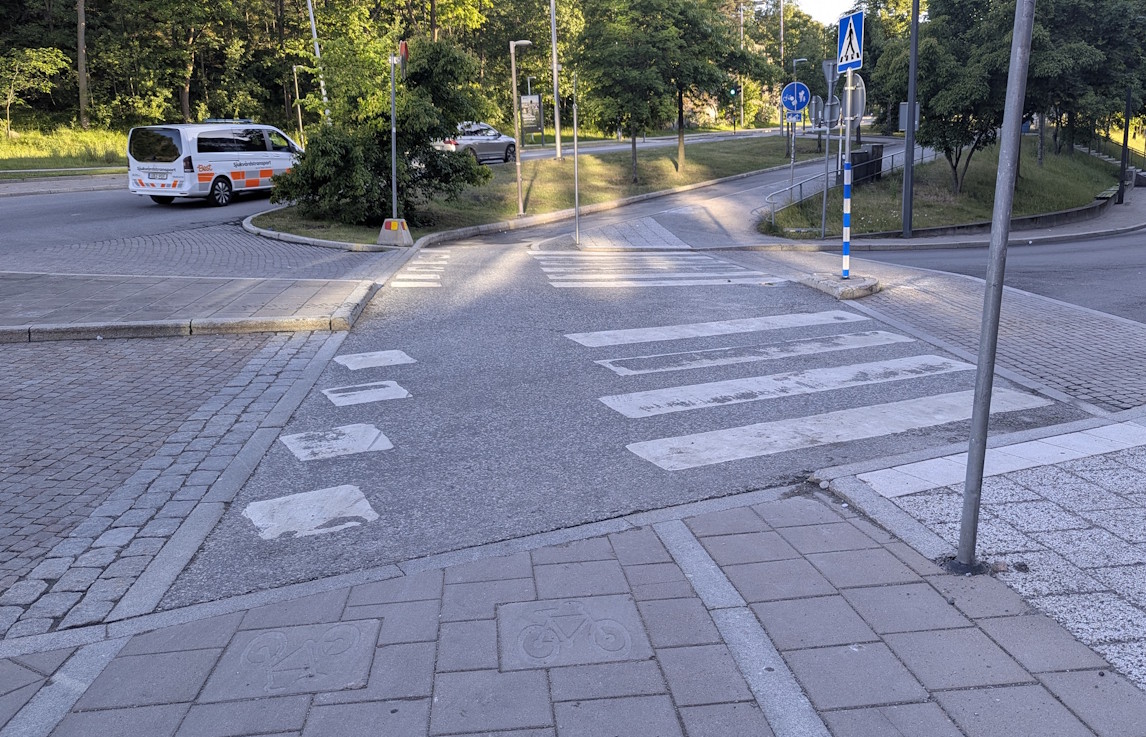
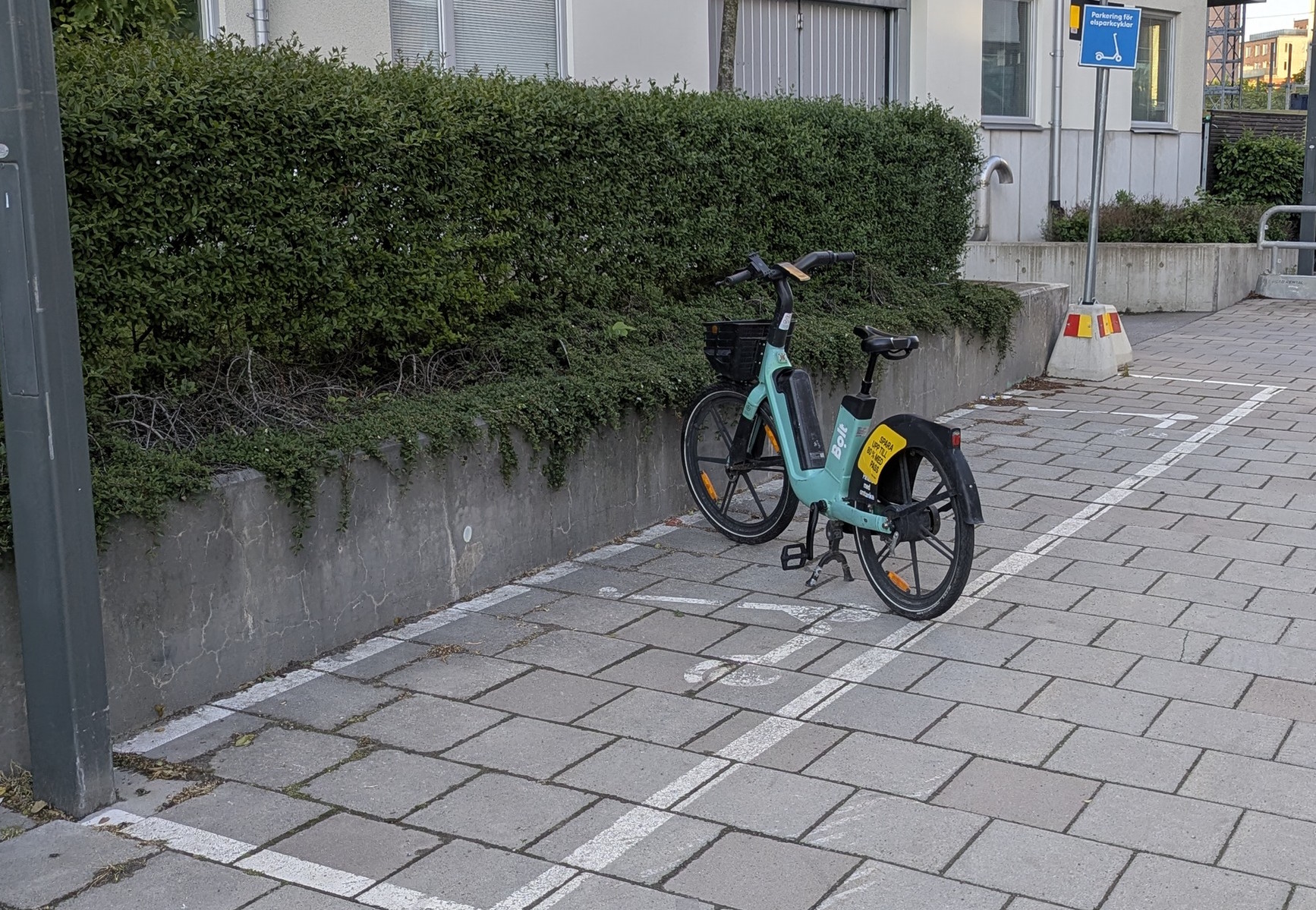
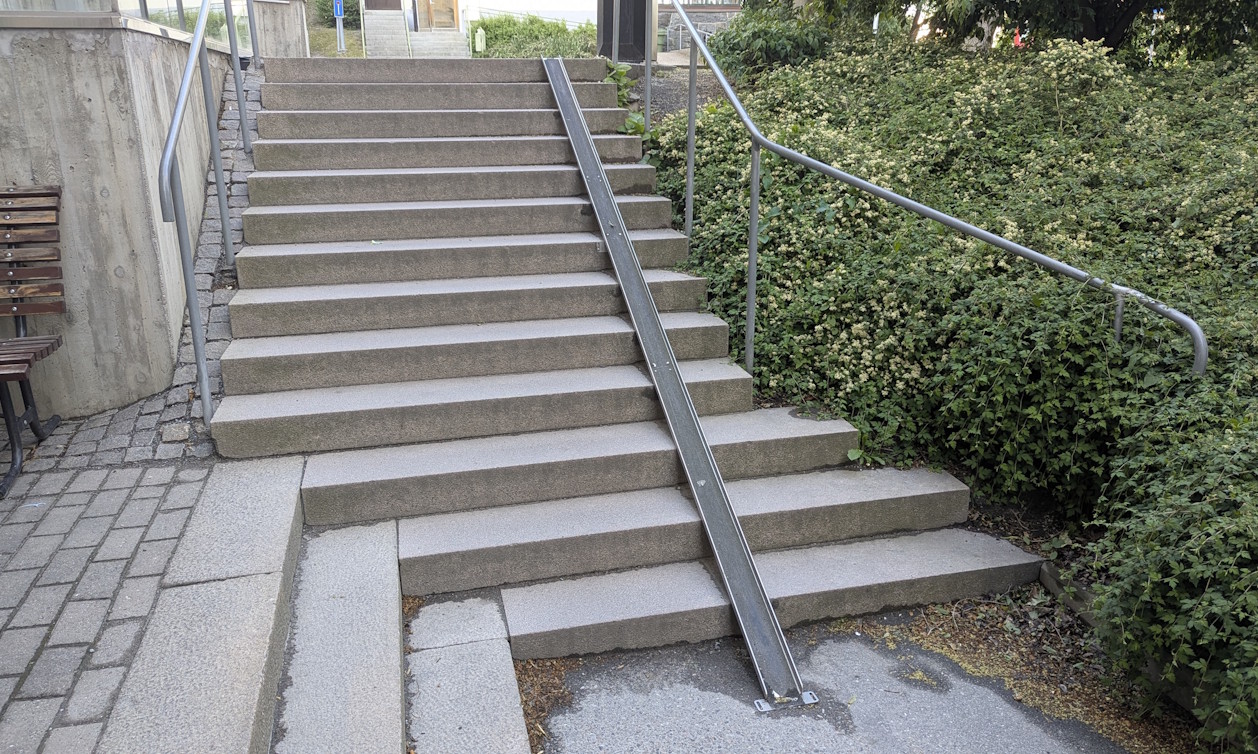
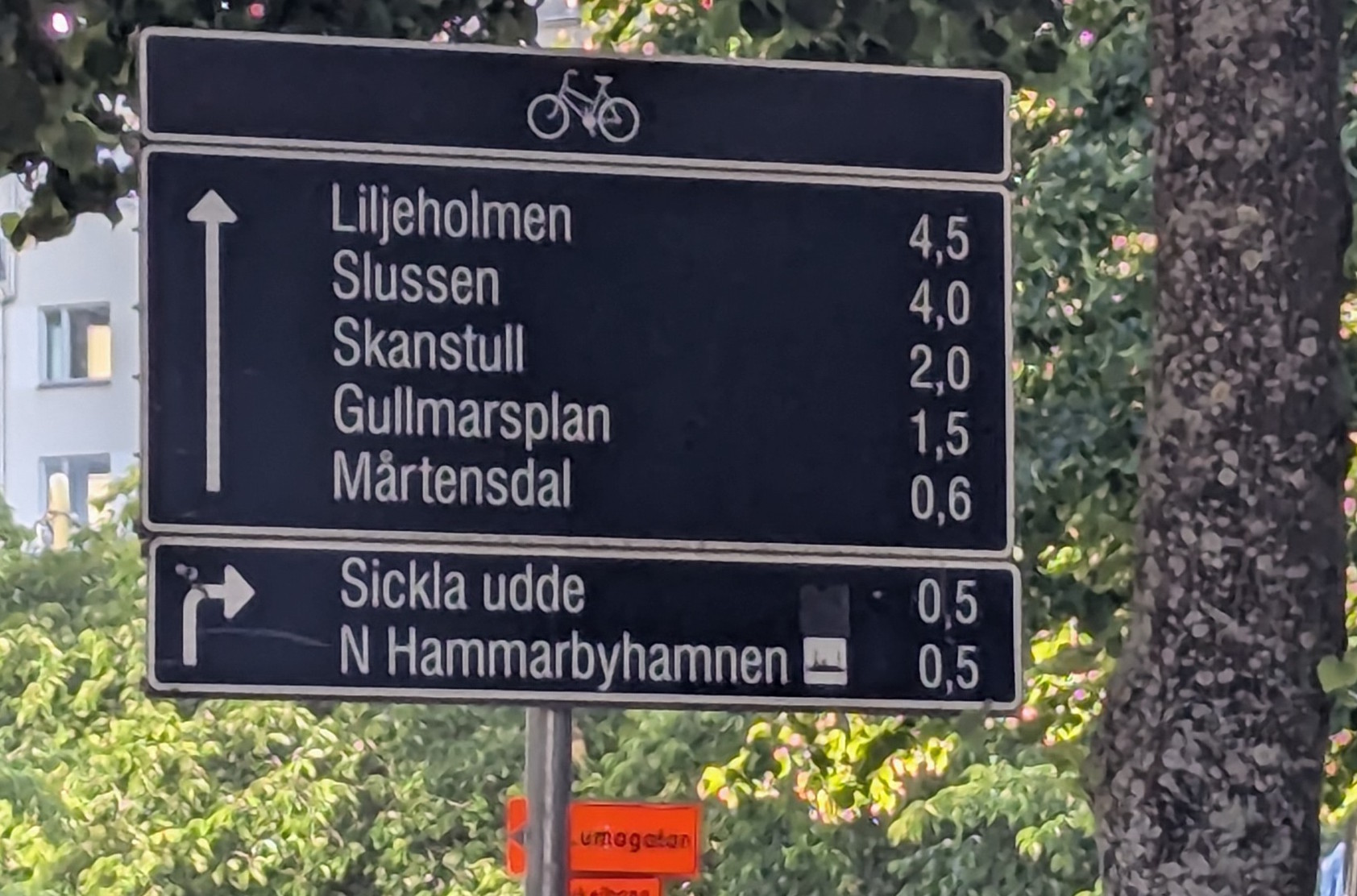
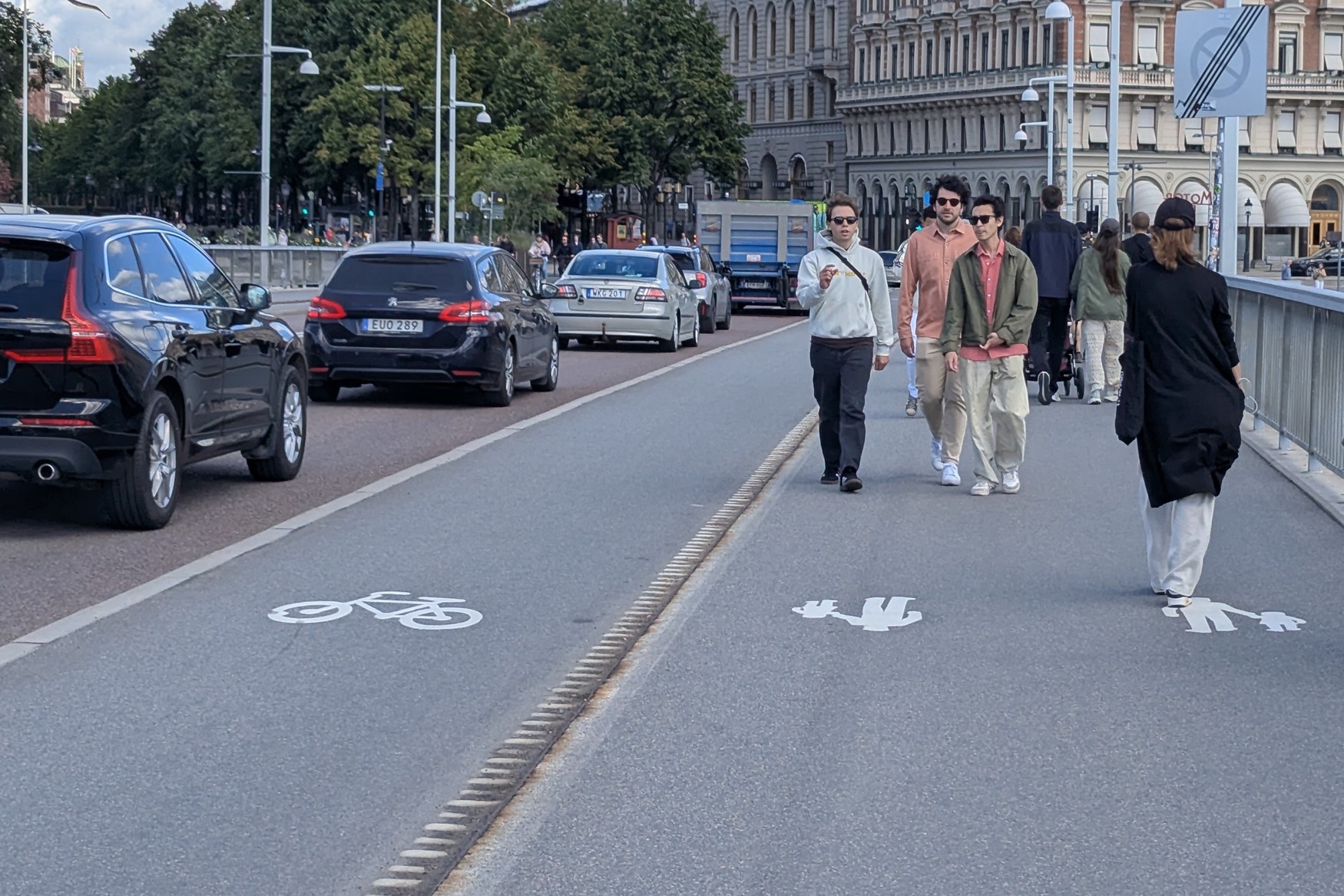
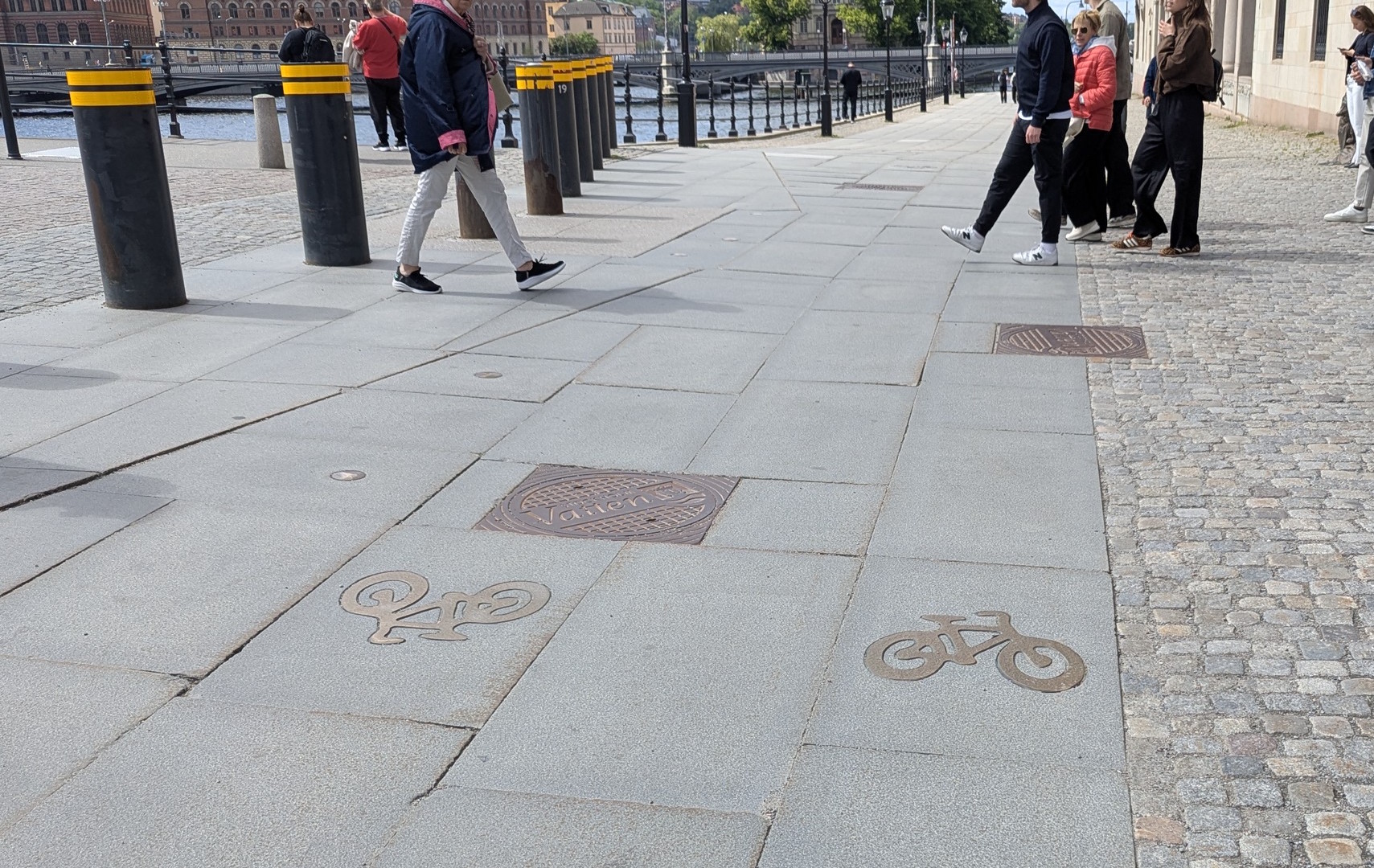
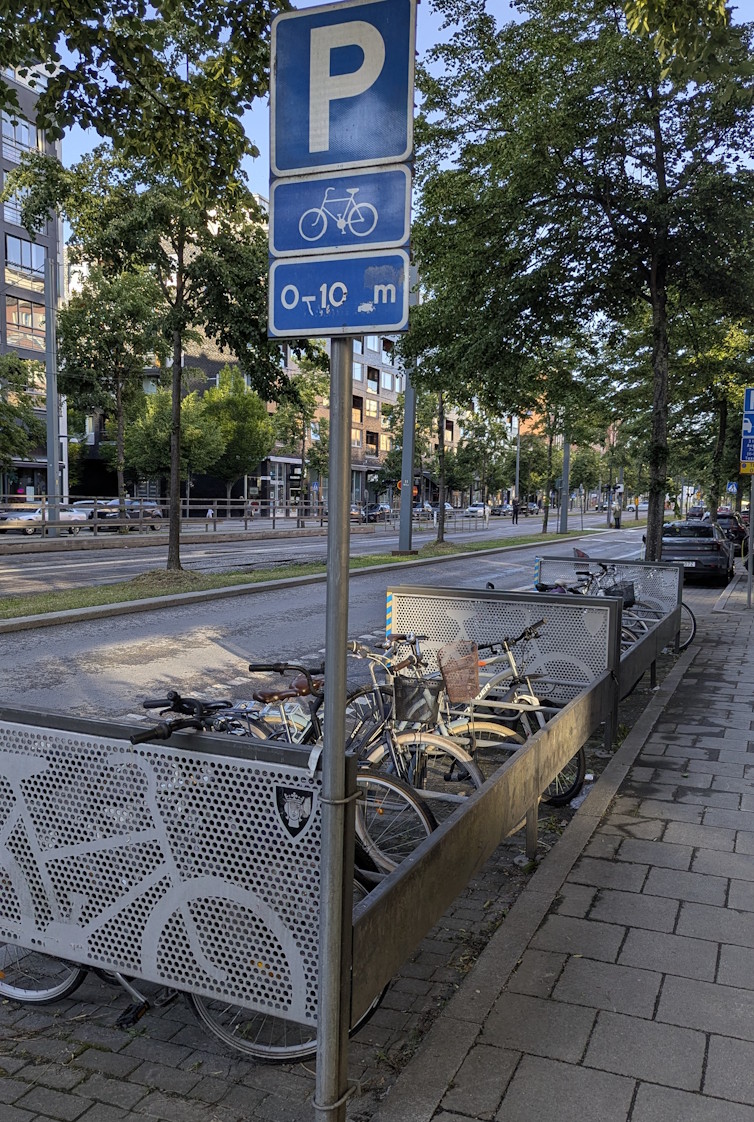
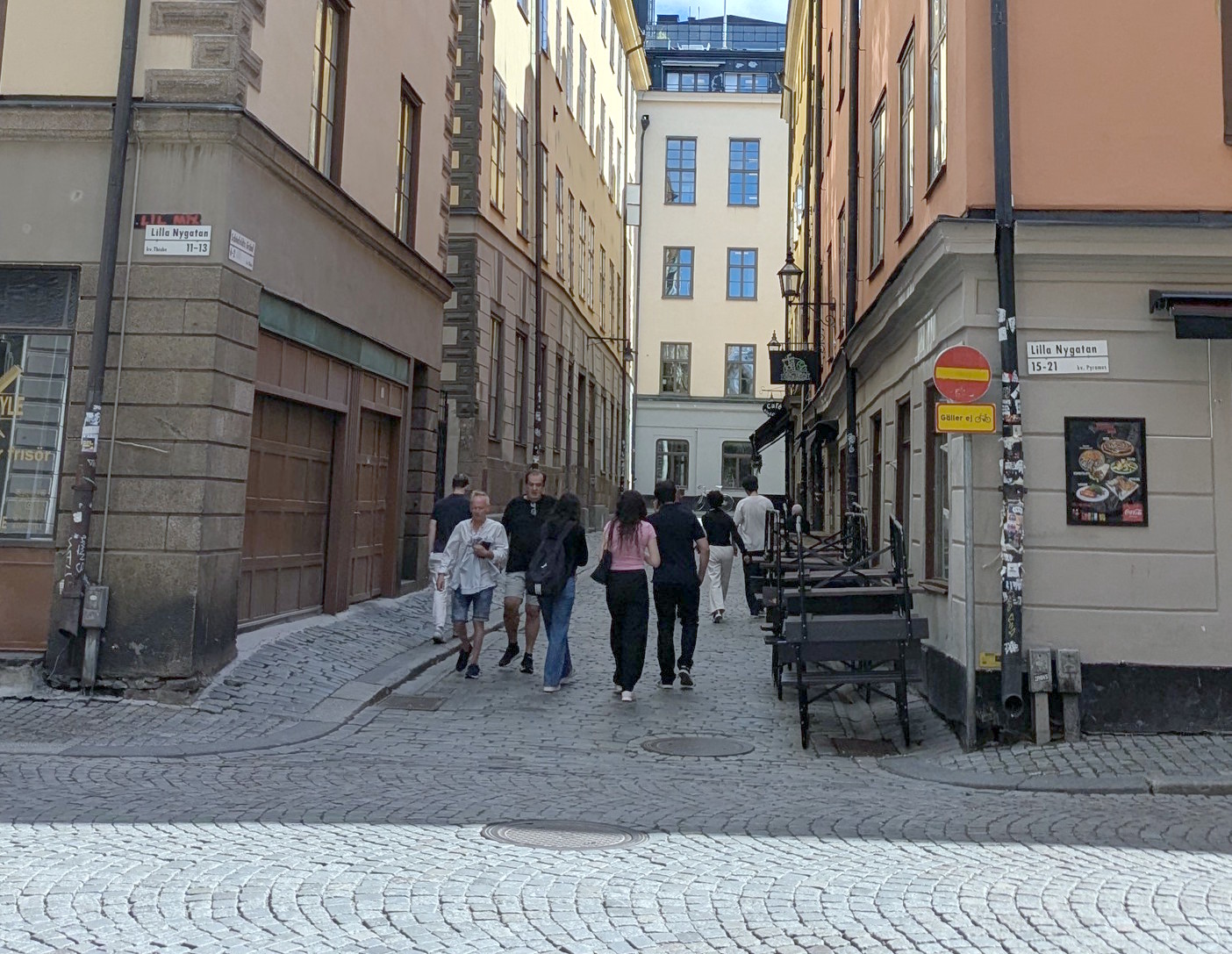
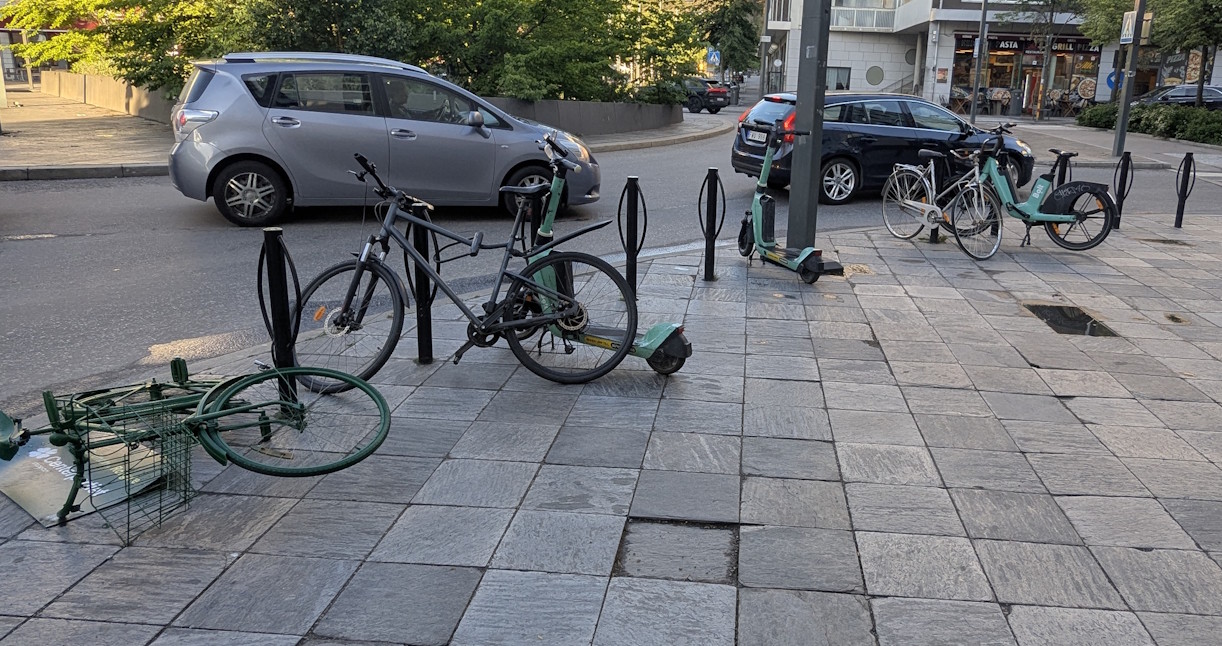
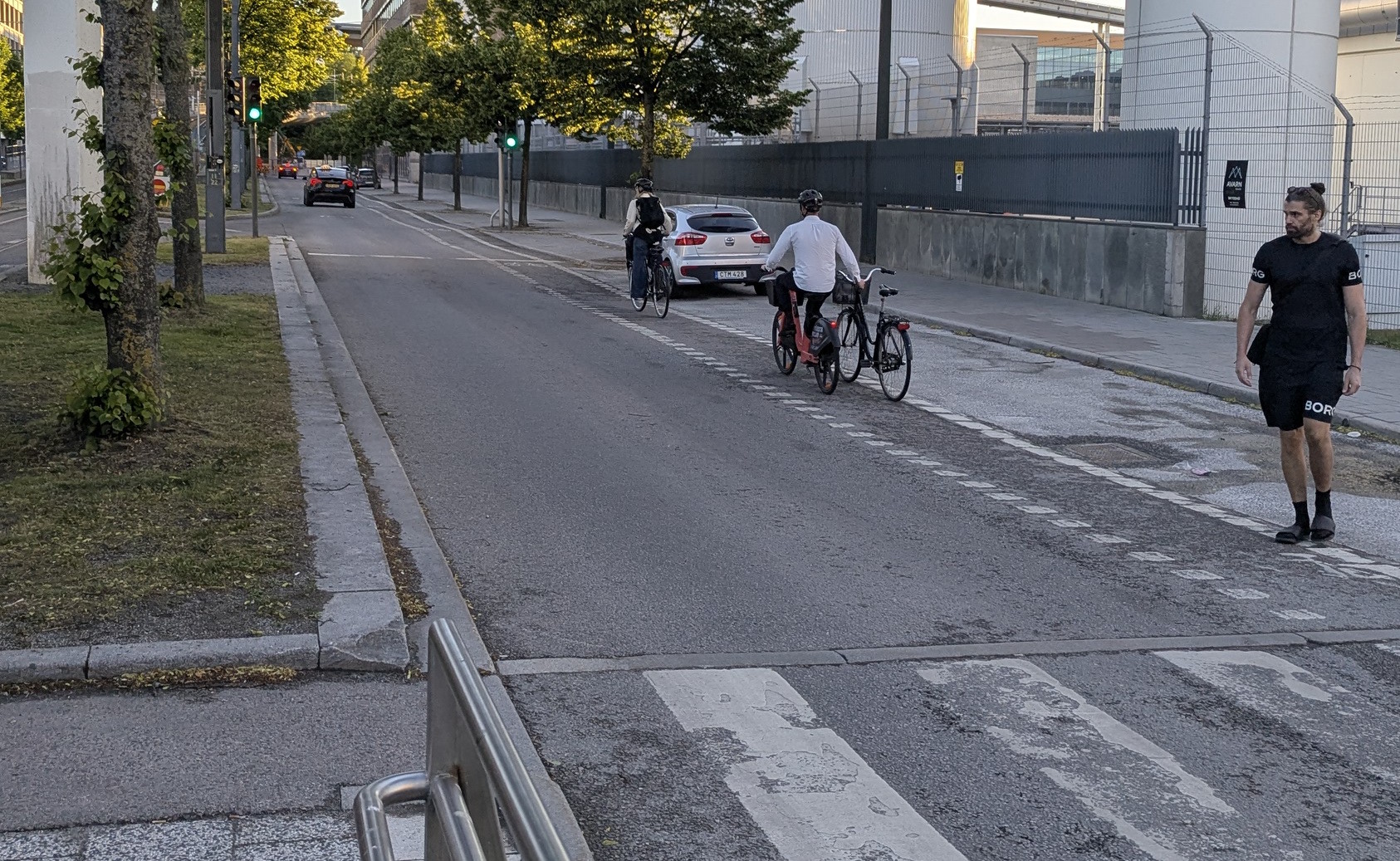
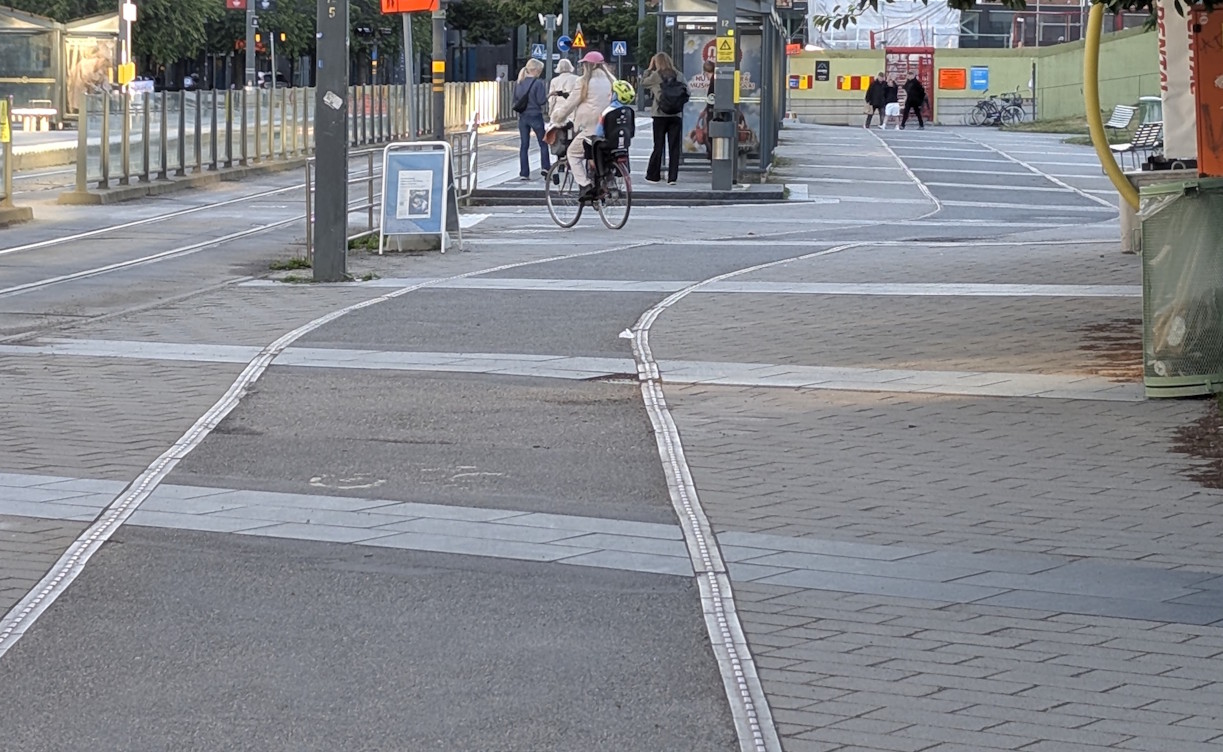
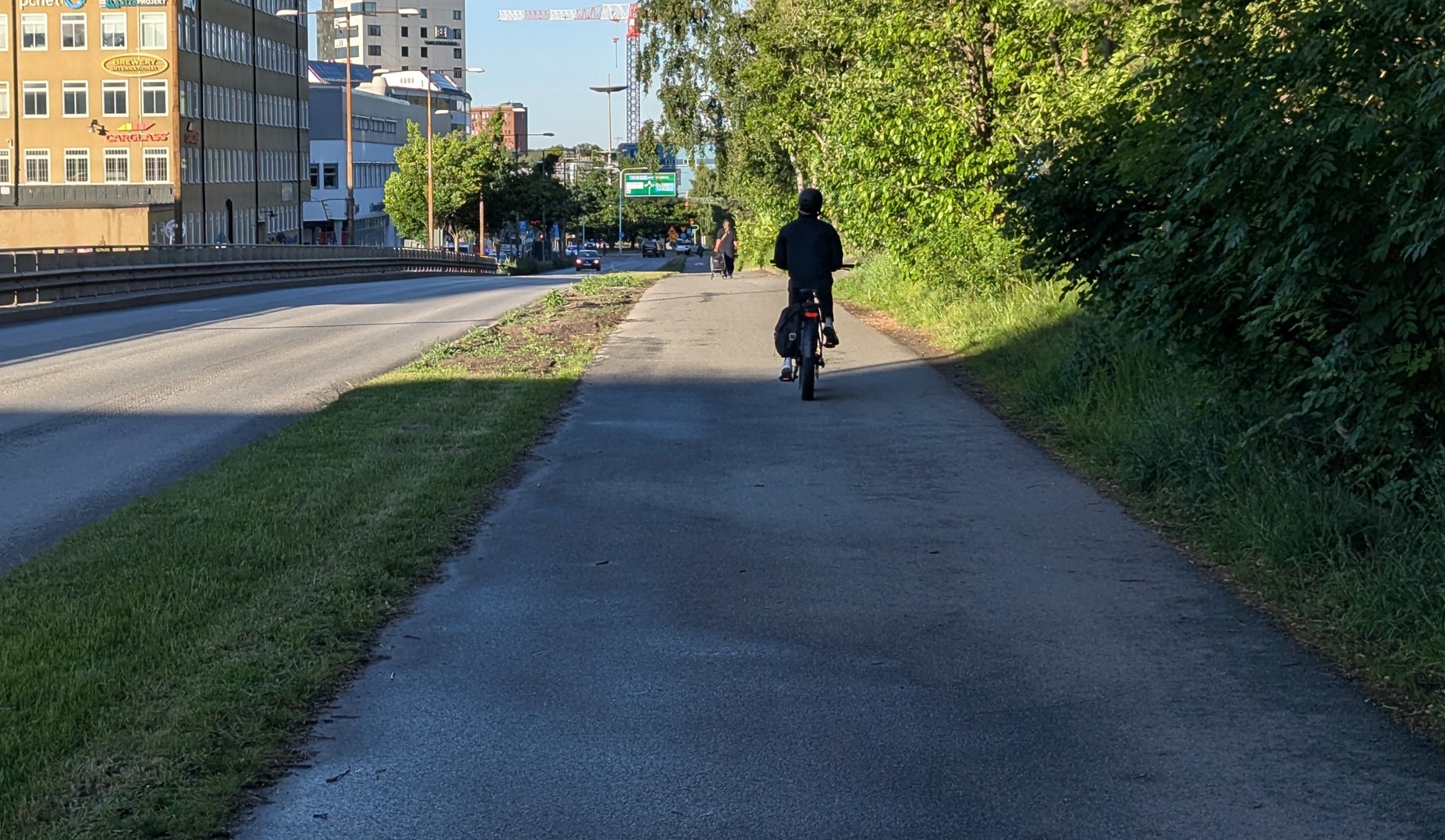
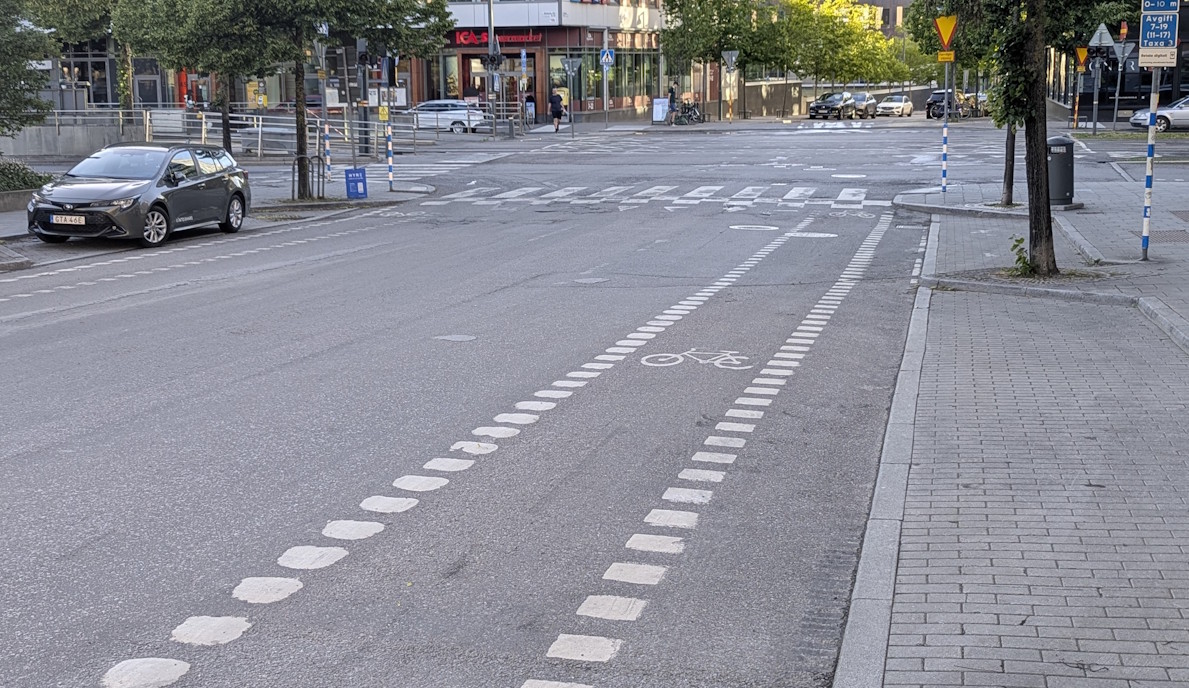
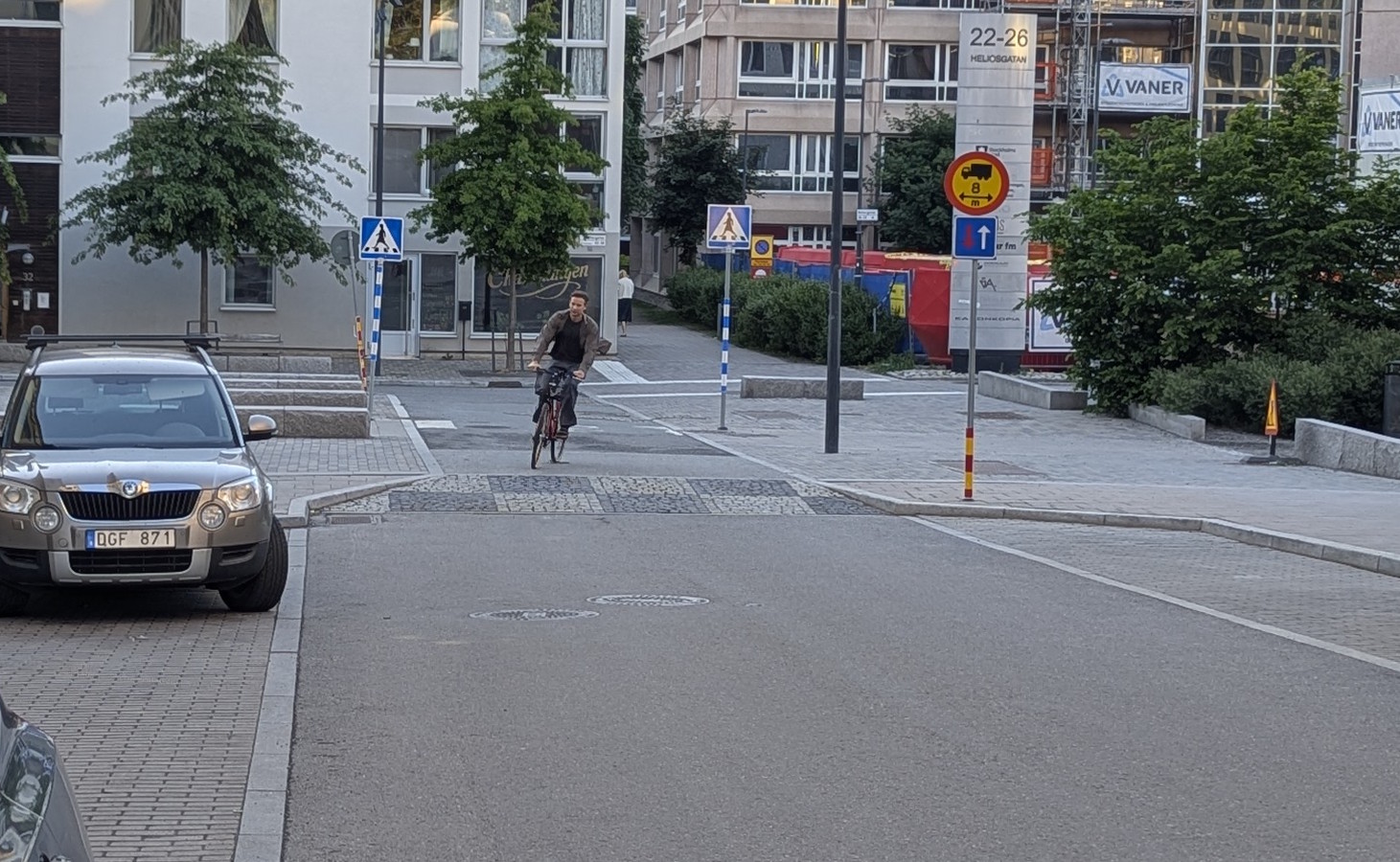
Once again, it was encouraging to see good cycle-friendly measures across this city. Their latest 2026-30 Road Safety Acton Plan also proposes to roll out further safety improvements for cycling.
Have you visited Stockholm? What do you think of their cycling provision?